
100 Facts About Egyptian Pyramids
100 Mind-Blowing Facts About Egypt’s Mysterious Pyramids
100 Facts About Egyptian Pyramids Historical Context
- Oldest Pyramids: Egyptian pyramids date back to the Old Kingdom (c. 2686–2181 BCE), with the earliest being the Step Pyramid of Djoser at Saqqara (c. 2630 BCE).
- Purpose: Primarily built as tombs for pharaohs, believed to ensure their journey to the afterlife and deification as Osiris.
- Number of Pyramids: Over 100 pyramids have been identified in Egypt, mostly along the Nile’s west bank.
- Evolution: Pyramid designs evolved from mastabas (flat-roofed tombs) to step pyramids, then true pyramids with smooth sides.
- Peak Construction: The 4th Dynasty (c. 2613–2494 BCE) saw the height of pyramid building, including the Giza pyramids.
- Decline: Pyramid construction declined after the 6th Dynasty, with later pharaohs favoring rock-cut tombs (e.g., Valley of the Kings).
- Abydos Connection: While Abydos is not a pyramid site, its Umm el-Qaab necropolis contains early royal tombs (c. 3100–2700 BCE) predating pyramid development.
- First Architect: Imhotep, architect of Djoser’s Step Pyramid, is credited with inventing pyramid construction and was later deified.
- Cultural Symbol: Pyramids symbolized the primordial mound (benben) from which creation emerged in Egyptian mythology.
- Astronomical Alignment: Many pyramids are aligned with cardinal points, reflecting Egyptian astronomical knowledge.
Major Pyramids and Sites
- Step Pyramid of Djoser: Built at Saqqara, it’s the first known pyramid, designed as six stacked mastabas.
- Giza Plateau: Home to the three most famous pyramids: Khufu, Khafre, and Menkaure (c. 2589–2504 BCE).
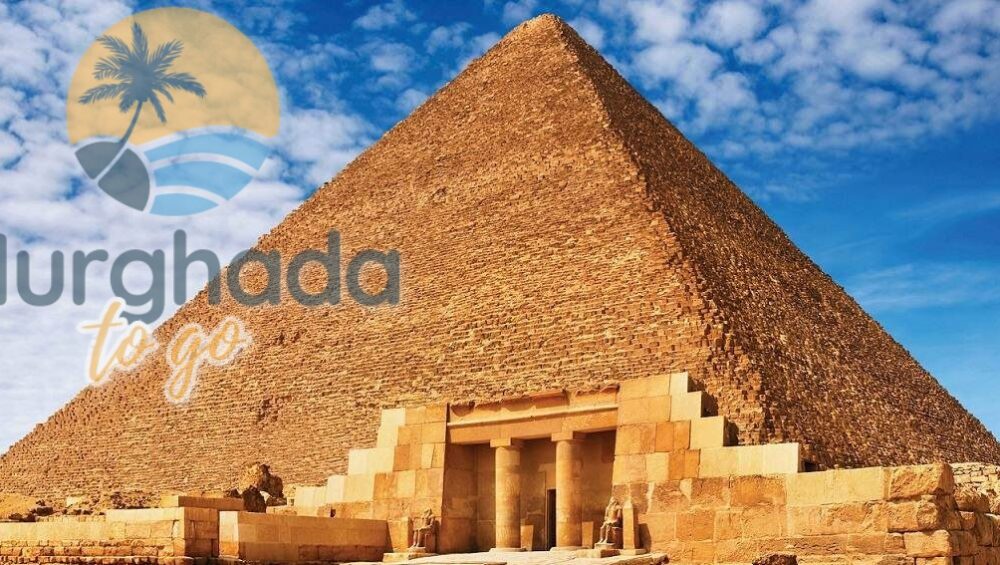
- Great Pyramid (Khufu): The largest pyramid, originally 146.6 meters tall, built c. 2589–2566 BCE.
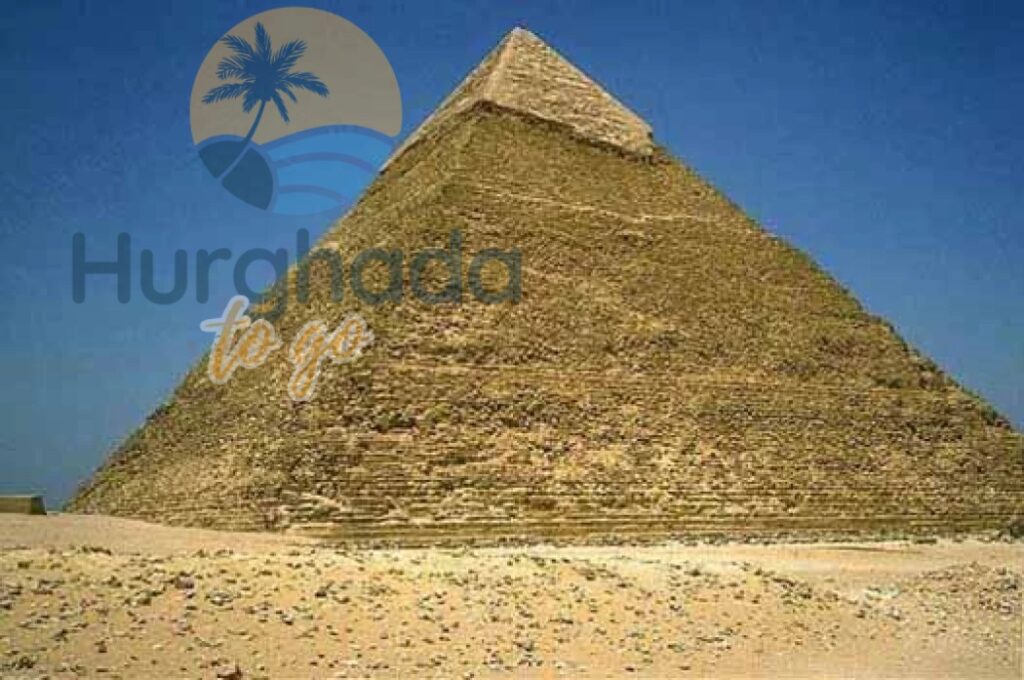
- Pyramid of Khafre: Slightly smaller than Khufu’s, notable for its intact limestone casing at the apex.
- Pyramid of Menkaure: The smallest of Giza’s main pyramids, built c. 2510 BCE.
- Sphinx Connection: The Great Sphinx, near Khafre’s pyramid, likely represents the pharaoh as a protector.
- Sneferu’s Pyramids: Sneferu (4th Dynasty) built three major pyramids: Meidum, Bent, and Red Pyramids.
- Meidum Pyramid: Collapsed during construction, marking an early attempt at a true pyramid.
- Bent Pyramid: At Dahshur, it has a mid-construction angle change (55° to 43°), showing engineering adjustments.
- Red Pyramid: Sneferu’s final pyramid at Dahshur, Egypt’s first successful true pyramid (c. 2590 BCE).
- Saqqara’s Other Pyramids: Includes pyramids of Userkaf, Unas, and Teti, with later ones smaller in scale.
- Abydos’s Role: Abydos’s Osireion (behind Seti I’s temple) mimics Old Kingdom pyramid substructures, suggesting a symbolic link to royal tombs.
Construction Techniques
- Materials: Most pyramids used local limestone, with finer Tura limestone for outer casings.
- Granite Use: Red granite from Aswan was used for inner chambers (e.g., Khufu’s King’s Chamber).
- Labor Force: Built by skilled workers and seasonal laborers, not slaves, as evidenced by workers’ villages.
- Worker Numbers: Estimates suggest 20,000–40,000 workers built the Great Pyramid over 20 years.
- Ramps: Straight, zig-zag, or encircling ramps were likely used to haul stones to higher levels.
- Tools: Copper tools, chisels, and dolerite hammers were used to cut and shape stones.
- Precision: The Great Pyramid’s base is level to within 2.1 cm, showcasing advanced engineering.
- Stone Weight: Average stones weighed 2.5 tons; some granite blocks in Khufu’s pyramid weighed up to 80 tons.
- Quarries: Stones were sourced locally (Giza quarry) or transported from Aswan (600 km away) via the Nile.
- Logistics: Boats carried heavy granite blocks; sledges and lubricated tracks moved stones on land.
Architectural Features
- True Pyramid: A pyramid with smooth, sloping sides, perfected in the 4th Dynasty.
- Step Pyramid: Earlier form with terraced levels, like Djoser’s pyramid.
- Pyramid Complex: Included a main pyramid, mortuary temple, causeway, valley temple, and satellite pyramids.
- Mortuary Temple: Adjacent to the pyramid for offerings and rituals after the pharaoh’s death.
- Causeway: A covered walkway linking the valley temple to the mortuary temple.
- Valley Temple: Near the Nile for funeral processions and initial rituals.
- King’s Chamber: In the Great Pyramid, a granite-lined chamber held Khufu’s sarcophagus.
- Queen’s Chamber: A misnamed chamber in the Great Pyramid, possibly for symbolic use.
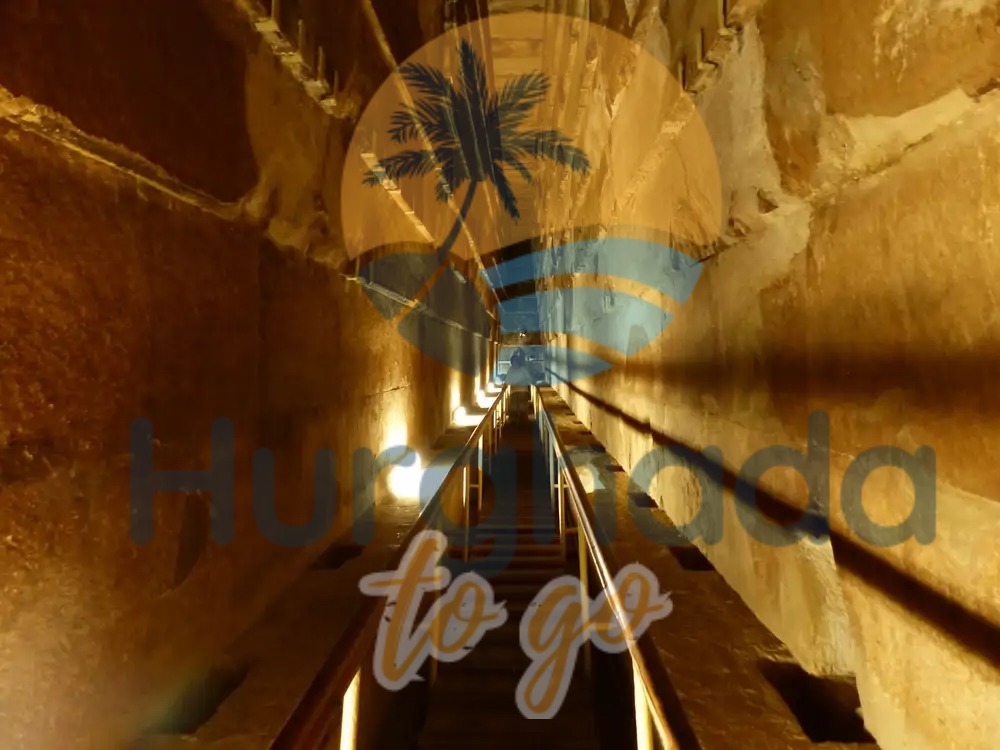
- Grand Gallery: A corbelled passage in the Great Pyramid, leading to the King’s Chamber.
- Air Shafts: Narrow shafts in the Great Pyramid, possibly for ventilation or symbolic star alignment.
Religious and Cultural Significance
- Osiris Connection: Pyramids facilitated the pharaoh’s transformation into Osiris in the afterlife.
- Solar Symbolism: The pyramid’s shape mimicked the sun’s rays, linking pharaohs to Re (Ra).
- Benben Stone: A sacred conical stone in Heliopolis inspired pyramid capstones (pyramidions).
- Pyramid Texts: Found in 5th–6th Dynasty pyramids (e.g., Unas), these spells guided the pharaoh’s soul.
- Abydos Rituals: Abydos’s Osireion, with its underworld symbolism, paralleled pyramid substructures for Osirian rituals.
- Stellar Alignment: Some shafts in the Great Pyramid align with stars like Sirius (Isis) and Orion (Osiris).
- Funerary Goods: Pyramids contained boats, statues, and offerings for the afterlife.
- Deification: Pharaohs were deified in death, with pyramids as eternal monuments.
- Pilgrimage: Like Abydos, pyramid sites attracted pilgrims seeking divine favor.
- Festival Links: Abydos’s Osiris Mysteries may have inspired similar rites at pyramid complexes.
Specific Pyramids and Features
- Unas’s Pyramid: At Saqqara, it contains the earliest known Pyramid Texts (c. 2350 BCE).
- Teti’s Pyramid: Also at Saqqara, it has well-preserved substructures and texts.
- Pepi I’s Pyramid: Features extensive Pyramid Texts and a star-decorated chamber ceiling.
- Djedefre’s Pyramid: At Abu Rawash, largely destroyed but notable for its high-quality granite.
- Sahure’s Pyramid: At Abusir, part of a 5th Dynasty complex with detailed reliefs.
- Niuserre’s Pyramid: At Abusir, known for its well-preserved causeway and temple.
- Mastaba Origins: Early tombs at Abydos’s Umm el-Qaab resemble mastabas, precursors to pyramids.
- Pyramidions: Capstone stones, often gilded, symbolized the pharaoh’s ascent to the heavens.
- Boat Pits: Khufu’s pyramid has five boat pits, one containing a reassembled solar boat (now in a museum).
- Subterranean Chambers: Many pyramids have underground rooms for symbolic or practical use.
Decline and Later Use
- Middle Kingdom Pyramids: Smaller, mudbrick pyramids (e.g., Amenemhat III’s at Hawara) were built c. 2055–1650 BCE.
- New Kingdom Shift: By the 18th Dynasty, pharaohs used hidden tombs in the Valley of the Kings.
- Nubian Pyramids: Later, smaller pyramids were built in Nubia (modern Sudan) by Kushite kings (c. 800–350 BCE).
- Robbery: Most pyramids were looted in antiquity, leaving few intact burials.
- Coptic Reuse: Some pyramid complexes, like Abydos’s temples, were repurposed by Coptic Christians.
- Medieval Quarrying: Giza’s casing stones were stripped for Cairo’s buildings in the Middle Ages.
- Tourism: Pyramids became tourist attractions in Greco-Roman times, as noted by Herodotus (5th century BCE).
- Abydos’s Endurance: While pyramids declined, Abydos remained a religious hub into Roman times.
Modern Discoveries and Studies
- Excavation Pioneers: Auguste Mariette and Flinders Petrie excavated Saqqara and other sites in the 19th century.
- Giza Mapping: The Giza Mapping Project (1980s–present) uses modern tech to study the plateau.
- ScanPyramids Project: Since 2015, muon tomography has revealed voids in the Great Pyramid.
- Workers’ Villages: Excavations at Giza uncovered bakeries, breweries, and worker housing.
- Osireion Studies: Abydos’s Osireion, studied by Henri Frankfort (1930s), parallels pyramid substructures.
- Conservation: UNESCO and Egyptian authorities work to preserve pyramids from erosion and tourism.
- Tourist Access: Giza, Saqqara, and Dahshur are open to visitors; some interiors require special tickets.
- Abydos Context: Dorothy Eady (Omm Sety) linked the Osireion to pyramid-like underworld rituals.
- Carbon Dating: Used to confirm construction dates of some pyramids and associated materials.
- Digital Modeling: 3D scans help reconstruct pyramid complexes and track degradation.
Misconceptions and Controversies
- Slave Labor Myth: Popularized by Hollywood, but workers were paid and housed, as per archaeological finds.
- Alien Theories: Fringe claims of extraterrestrial builders lack evidence; pyramids are human-made.
- Abydos “Helicopter”: Eroded hieroglyphs in Seti I’s temple, not pyramids, fuel pseudo-archaeological myths.
- Pyramid Power: New Age claims of pyramids’ mystical energy are unsupported by science.
- Lost Technology: No evidence supports advanced tech; construction used ramps and simple tools.
- Age Disputes: Mainstream dating places pyramids in the Old–Middle Kingdoms, not earlier.
- Hidden Chambers: Recent scans suggest voids in the Great Pyramid, but their purpose is unclear.
- Osireion Myths: Some claim the Osireion predates Seti I, but inscriptions confirm its 19th Dynasty origin.
- Treasure Myths: Most pyramids were looted; no vast treasures have been found.
- Numerology: Claims of precise mathematical ratios (e.g., pi) in the Great Pyramid are often exaggerated.
Miscellaneous Facts
- Height Record: The Great Pyramid was the world’s tallest man-made structure until the 14th century CE.
- Tourism Impact: Over 14 million visitors annually visit Giza, straining preservation efforts.
- Nile Proximity: Pyramids were built near the Nile for transport and symbolic reasons.
- Pyramid Towns: Workers’ settlements, like at Giza, had bakeries, hospitals, and cemeteries.
- Animal Burials: Some pyramid complexes include animal tombs (e.g., baboons at Saqqara).
- Graffiti: Ancient workers left marks on stones, some with team names like “Friends of Khufu.”
- Restoration: Modern efforts include rebuilding parts of Menkaure’s pyramid with original stones.
- Global Influence: Pyramids inspired structures in Mesoamerica, though unrelated in origin.
- Abydos’s Legacy: While not a pyramid site, Abydos’s royal tombs influenced early pyramid designs.
- World Heritage: Giza and other pyramid sites are UNESCO World Heritage Sites (since 1979).
Notes
- Abydos Connection: While Abydos lacks pyramids, its Umm el-Qaab tombs (c. 3100–2700 BCE) and the Osireion’s underworld symbolism tie it to the funerary traditions that shaped pyramid complexes. The Osireion’s design, with its water-filled moat and mound, echoes the symbolic “primordial mound” of pyramid architecture.
- Sources: Facts draw from Egyptological works (e.g., Mark Lehner’s The Complete Pyramids, Dieter Arnold’s Building in Egypt), archaeological reports (e.g., Chicago Oriental Institute), and modern studies (e.g., ScanPyramids).
- Visiting: For pyramid exploration, Giza, Saqqara, and Dahshur are accessible; Abydos requires a separate trip (190 km from Luxor). Tickets for Giza’s interior (e.g., Khufu’s chamber) cost ~E£400/€20 (2025 estimates).
Details on the Voids in the Great Pyramid of Giza
The Great Pyramid of Giza, built for Pharaoh Khufu (c. 2589–2566 BCE) during Egypt’s 4th Dynasty, is the largest pyramid in Egypt and one of the most studied ancient monuments. Since 2015, the ScanPyramids Project has used advanced non-invasive technologies to detect previously unknown voids within the pyramid, sparking significant interest among Egyptologists, archaeologists, and the public. These voids—spaces or cavities within the structure—have raised questions about their purpose, size, and significance. Below is a detailed exploration of the known voids, their discovery, characteristics, and potential ritual or architectural roles, with connections to broader Egyptian pyramid design and the Osireion at Abydos where relevant.
Discovery of the Voids
- ScanPyramids Project:
- Launched in 2015 by the Egyptian Ministry of Antiquities, Cairo University, and the Heritage Innovation Preservation (HIP) Institute, the project employs non-destructive techniques to study Giza’s pyramids.
- Technologies include muon tomography, infrared thermography, 3D laser scanning, and photogrammetry.
- Muon tomography detects cosmic-ray muons (subatomic particles) passing through the pyramid, revealing density variations that indicate voids or chambers.
- Key Discoveries:
- 2016: North Face Anomaly:
- Thermal imaging detected a temperature anomaly on the pyramid’s north face, near the original entrance, suggesting a small void or passageway.
- Located at ground level, this anomaly hinted at an undiscovered space behind the chevron blocks (inverted V-shaped stones).
- 2017: Big Void (ScanPyramids North-East Void):
- Muon tomography revealed a large void above the Grand Gallery, named the “Big Void” or “Great Void.”
- Announced in Nature (November 2017), this discovery garnered global attention.
- 2018–2023: Additional Anomalies:
- Further scans confirmed smaller voids or corridors, particularly near the north face and above the King’s Chamber.
- In 2023, a 9-meter-long corridor was confirmed behind the north face chevron blocks, dubbed the “North Face Corridor.”
- 2016: North Face Anomaly:
Characteristics of the Major Voids
- Big Void:
- Location: Above the Grand Gallery, roughly parallel to it, at ~40–50 meters above ground level.
- Size: Estimated at least 30 meters long, with a cross-section similar to the Grand Gallery (~2 meters high, 1–2 meters wide).
- Shape: Likely a large, elongated chamber or corridor, though its exact configuration is unknown.
- Detection: Muon detectors placed in the Queen’s Chamber and outside the pyramid recorded significantly fewer muons in this area, indicating a low-density space.
- Access: No known entrance has been identified; it’s inaccessible without invasive exploration.
- Debated Features: Some hypothesize it’s a second Grand Gallery-like structure, while others suggest a series of smaller chambers or a structural void.
- North Face Corridor:
- Location: Behind the north face chevron blocks, near the original entrance (~17 meters above ground).
- Size: Approximately 9 meters long, 2 meters wide, with a corbelled ceiling (similar to the Grand Gallery).
- Discovery: Confirmed in March 2023 via muon tomography and endoscopic imaging, which revealed a narrow, empty passage.
- Features: The corridor has a gabled roof to distribute weight, suggesting a structural or symbolic purpose.
- Access: Currently sealed; the chevron blocks hide the entrance, and no direct connection to known chambers is confirmed.
- Smaller Voids:
- Additional anomalies have been detected around the King’s Chamber and Queen’s Chamber, possibly indicating minor structural gaps or relieving chambers.
- These are less defined, with sizes ranging from a few meters to less than a meter in cross-section.
Potential Ritual Significance
While the exact purpose of the voids remains speculative, their ritual significance can be inferred from the Great Pyramid’s religious and architectural context, with parallels to structures like the Osireion at Abydos. Below are plausible interpretations:
- Symbolic Role in Afterlife Journey:
- Osiris Connection: The Great Pyramid, like the Osireion, was designed to facilitate the pharaoh’s transformation into Osiris, the god of the underworld. Voids may have symbolized hidden or sacred spaces for the soul’s journey, akin to the Osireion’s underworld-like moat and platform.
- Pyramid Texts Precedent: Later pyramids (e.g., Unas, c. 2350 BCE) contain Pyramid Texts with spells for navigating the afterlife. The voids could have been symbolic “gateways” or chambers for Khufu’s spiritual ascent, aligning with stars like Orion (Osiris).
- Hidden Chambers: Egyptian tombs often included sealed or inaccessible spaces (e.g., serdab for statues), representing the divine or inaccessible realms. The Big Void might have served a similar esoteric purpose.
- Ritual Spaces for Priests:
- Abydos Parallel: The Osireion, restricted to elite priests for Osiris Mysteries, suggests the Great Pyramid’s voids could have been used for secret rituals during Khufu’s funeral or posthumous worship.
- Grand Gallery Connection: The Big Void’s proximity to the Grand Gallery, a towering passage possibly used for processions, suggests it might have been a “higher” ritual space, perhaps for offerings or symbolic reenactments of Khufu’s deification.
- North Face Corridor: Its location near the entrance suggests it could have been part of the funeral procession’s path or a space for initial rites, similar to Abydos’s temple-to-Osireion corridor.
- Cosmological Symbolism:
- Stellar Alignment: The Great Pyramid’s “air shafts” align with stars like Sirius (Isis) and Orion (Osiris), suggesting a celestial focus. The Big Void might have been oriented to enhance this symbolism, representing the heavens or a cosmic chamber.
- Primordial Mound: Like the Osireion’s central platform, which evokes the creation mound, the voids could symbolize the cosmic order (ma’at) or the pharaoh’s rebirth, mirroring mythological themes.
- Funerary Function:
- Undiscovered Burial Chamber: Some Egyptologists (e.g., Zahi Hawass, cautiously) speculate the Big Void could be an undiscovered burial chamber, though no evidence confirms Khufu’s mummy was moved from the King’s Chamber.
- Cenotaph Hypothesis: Similar to the Osireion as a symbolic tomb for Osiris, the voids might be cenotaphs or symbolic spaces for Khufu’s ka (spirit), ensuring his eternal presence.
Architectural and Structural Theories
- Relieving Chambers:
- The King’s Chamber has five relieving chambers (stacked granite beams) to distribute weight. The Big Void might be a larger relieving space to reduce stress on the Grand Gallery or other chambers.
- The North Face Corridor’s gabled roof suggests a structural role, possibly to protect the entrance from collapse.
- Construction Gaps:
- Voids could be intentional gaps left during construction to reduce material use or facilitate building (e.g., spaces for maneuvering stones).
- The Big Void’s size suggests it wasn’t purely structural, as smaller gaps would suffice for weight relief.
- Unfinished Chambers:
- The voids might represent abandoned or unfinished chambers, as seen in Sneferu’s Bent Pyramid, where design changes left unused spaces.
- The North Face Corridor could have been an early entrance passage, sealed when the pyramid’s design was finalized.
- Anti-Theft Design:
- Sealed voids might have been decoys to confuse tomb robbers, a common practice in later New Kingdom tombs (e.g., Valley of the Kings).
- The Great Pyramid was looted in antiquity, but no evidence suggests the voids were accessed.
Comparison to the Osireion
The Osireion at Abydos, a subterranean structure built by Seti I (c. 1290 BCE), offers a useful parallel for understanding the Great Pyramid’s voids:
- Underworld Symbolism: The Osireion’s water-filled moat and central platform symbolize Osiris’s resurrection and the primordial mound, much like the Great Pyramid’s voids may represent hidden afterlife spaces.
- Restricted Access: Both the Osireion and the voids were likely inaccessible to the public, reserved for priests performing rituals, suggesting an elite, esoteric function.
- Architectural Mimicry: The Osireion’s Old Kingdom-style design echoes the Great Pyramid’s era, implying a shared tradition of symbolic substructures.
- Ritual Context: The Osireion hosted Osiris Mysteries, with water-based rites. The Great Pyramid’s voids might have similarly facilitated rituals tied to Khufu’s deification, though no water features are confirmed.
Current Research and Challenges
- Ongoing Studies:
- The ScanPyramids Project continues to refine muon data, aiming to map the Big Void’s exact shape and connections.
- In 2023, an endoscope inserted through a crack in the north face confirmed the North Face Corridor, but further exploration requires approval to avoid damage.
- Limitations:
- Non-Invasive Constraints: Drilling or excavation risks damaging the pyramid, so research relies on imaging.
- Interpretation Debates: Egyptologists disagree on the voids’ purpose (structural vs. ritual), with no consensus due to lack of direct access.
- Looting History: The pyramid’s looting in antiquity (possibly First Intermediate Period, c. 2181–2055 BCE) complicates identifying original contents.
- Future Exploration:
- Proposals include micro-robots or advanced imaging to explore the Big Void without invasive methods.
- The Egyptian Ministry of Antiquities prioritizes preservation, limiting aggressive exploration.
Controversies and Misconceptions
- Fringe Theories:
- Pseudo-archaeological claims (e.g., alien construction or hidden treasure rooms) lack evidence and are dismissed by experts.
- The voids’ discovery fueled speculation about “secret chambers” with mystical purposes, but no artifacts or inscriptions support this.
- Abydos Parallel: Similar to the Abydos “helicopter” hieroglyphs (eroded carvings mistaken for modern machines), the voids are often sensationalized, but mainstream research attributes them to architectural or ritual functions.
- Skepticism: Some Egyptologists (e.g., Mark Lehner) caution that the Big Void might be a structural gap rather than a chamber, urging restraint until more data is collected.
Visiting and Modern Context
- Access: The Great Pyramid’s known chambers (King’s Chamber, Queen’s Chamber, Grand Gallery) are open to tourists with a special ticket (~E£400/€20, 2025 estimate). The voids are inaccessible and not part of tours.
- Preservation: The Giza Plateau, a UNESCO World Heritage Site, faces challenges from tourism and environmental wear. The voids’ discovery has heightened calls for careful management.
- Public Interest: The voids have drawn global attention, with updates covered by outlets like National Geographic and BBC News.
Conclusion
The voids in the Great Pyramid, particularly the Big Void and North Face Corridor, represent one of the most exciting recent discoveries in Egyptology. Detected via cutting-edge muon tomography, they suggest hidden spaces that could be structural (e.g., relieving chambers) or ritual (e.g., symbolic spaces for Khufu’s afterlife journey). Their significance parallels the Osireion’s role at Abydos as a restricted, underworld-focused ritual space, emphasizing Egypt’s obsession with death, rebirth, and divine kingship. While their exact purpose remains unclear without further exploration, they underscore the Great Pyramid’s complexity and its enduring mysteries. Ongoing research may reveal more, but preservation concerns limit invasive methods, keeping the voids tantalizingly out of reach.
Easy & Secure Booking
Reserve your unforgettable Cairo from Hurghada:
🌐 Official Website: hurghadatogo.com
📧 Email: [email protected]
📱 WhatsApp: +201009255585