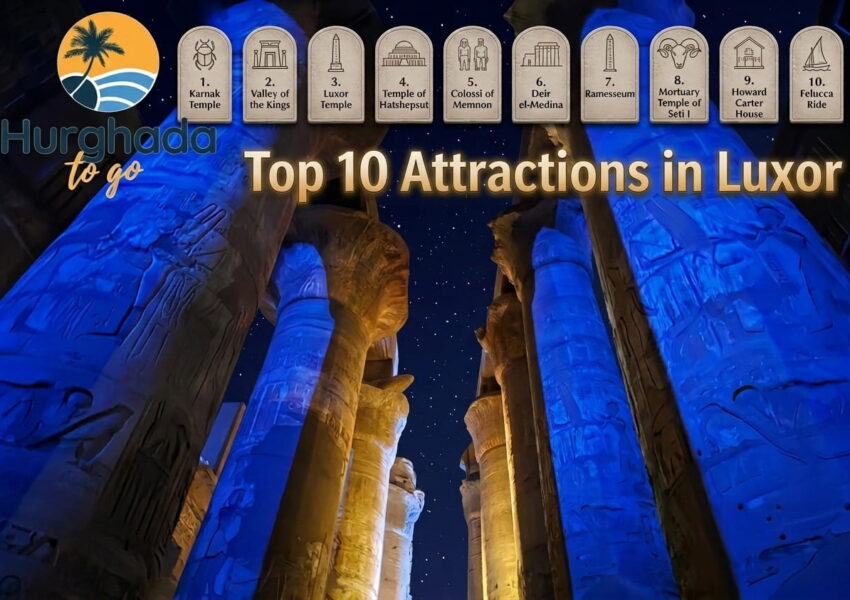
Ausflug von Hurghada nach Luxor

Ausflug von Hurghada nach Luxor mit dem Bus 2026

Tagesausflug von Hurghada nach Luxor mit dem Bus

Erleben Sie einen unvergesslichen Tagesausflug von Hurghada nach Luxor in kleinen Gruppen – ohne Massentourismus! Besuchen Sie die berühmten Sehenswürdigkeiten Luxors wie das Tal der Könige, den Tempel der Hatschepsut, die Memnonkolosse und den Karnak-Tempel. Unser deutschsprachiger Reiseführer begleitet Sie auf der gesamten Tour und erzählt spannende Geschichten über Pharaonen, Mumifizierung und die Geschichte des Alten Ägypten.

  • Abholung: Wir holen Sie um 04:00 Uhr morgens von Ihrem Hotel ab.

  • Erste Fahrt: Etwa 1 Stunde Fahrt bis zu einem Kontrollpunkt, um die erforderlichen Reisegenehmigungen als touristisches Unternehmen zu prüfen.

  • Weiterfahrt: Nach dem Checkpoint fahren wir eine weitere Stunde.

  • Pause: Kurzer Stopp zum Toilettengang und Frühstück.

  • Letzte Fahrt bis Luxor: Etwa 2 Stunden Fahrt bis zum ersten Ziel.

Besichtigungen in Luxor:

  • Karnak-Tempel:

    • Start unserer Tour in Luxor, der Stadt mit einem Drittel aller weltweiten Monumente – das größte Freiluftmuseum der Welt.

    • Treffen mit einem zertifizierten Archäologen, der Ihnen die Geschichte erzählt und erklärt, wie diese Menschen eine so gewaltige Zivilisation aufgebaut haben.

    • Besuch dauert ca. 2 Stunden.

  • Mittagessen:

    • In einem lokalen Restaurant am Nil.

    • Buffet mit verschiedenen Speisen.

  • Besuch des Künstlervillages:

    • Dort arbeiteten früher Menschen beim Ausgraben der Gräber und konnten die Originalmonumente wie Statuen sehen.

    • Heute gibt es Alabasterfabriken, in denen Sie sehen können, wie Originalmonumente hergestellt wurden.

    • Möglichkeit, einzigartige Souvenirs zu erwerben.

  • Mortuary-Tempel der Königin Hatschepsut:

    • Einzigartige Architektur und historischer Ort, an dem Hatschepsut ihre göttliche Abstammung darstellte.

    • Besuch dauert ca. 1 Stunde.

  • Tal der Könige:

    • Erklärung durch den Archäologen über die Auswahl des Ortes für die Königsgräber und den Wandel der Begräbnistraditionen.

    • Besuch von 3 Gräbern mit Szenen für das Jenseits.

    • Besuch dauert ca. 2 Stunden.

  • Kolosse von Memnon:

    • Erklärung, warum diese zwei riesigen Statuen diesen Namen tragen.

    • Möglichkeit für schöne Fotos.

Rückfahrt nach Hurghada:

  • Fahrt: Ca. 2 Stunden zurück.

  • Pause: 20–30 Minuten Stopp.

  • Letzte Etappe: Weitere 2 Stunden Fahrt.

  • Ankunft in Hurghada: Ca. 20:00 Uhr.

Höhepunkte des Ausflugs:

  • Abholung von Ihrem Hotel in Hurghada, El Gouna, Makadi oder Soma Bay mit einem klimatisierten Minivan

  • Karnak-Tempel: Entdecken Sie die imposante Architektur und Geschichte

  • Mittagessen: In einem ausgewählten Restaurant in Luxor

  • Memnonkolosse: Einzigartige Überreste des Tempels von Amenophis III

  • Tal der Könige: Besichtigung von 3 Pharaonengräbern mit ausführlicher deutschsprachiger Führung

  • Tempel der Königin Hatschepsut: Lernen Sie die mächtige Frau des Alten Ägypten kennen

Wissenswertes über Luxor:

Luxor besteht aus drei Teilen: der Stadt Luxor am Ostufer des Nils, dem Karnak-Tempelbezirk und Theben am Westufer. Die Stadt war über Jahrhunderte eine der mächtigsten Residenzen des Alten Ägypten. Das Westufer diente als Reich der Toten, das Ostufer als Reich der Lebenden. Luxor ist auch Startpunkt vieler Nilkreuzfahrten.

Im Preis enthalten:

  • Transfers in einem klimatisierten Bus

  • Deutschsprachiger Reiseführer

  • Flasche Wasser während der Fahrt

  • Alle Eintrittsgelder gemäß Programm

  • Mittagessen

Nicht im Preis enthalten:

  • Getränke im Restaurant

  • Nilfahrt

  • Trinkgelder

Bezahlung:

  • Online mit Visa oder Mastercard

  • Barzahlung in Euro

  • Banküberweisung

Abholung & Rückkehr:

  • Abholung: ca. 04:00 Uhr

  • Rückkehr: ca. 20:00 Uhr

Dauer & Termine:

  • Ausflugsdauer: ca. 16 Stunden

  • Ausflüge: täglich

Preis:

  • 90 Euro pro Person

Das Tal der Könige: Eine der faszinierendsten Nekropolen der Welt

Das Tal der Könige (arabisch: Wadi el-Muluk oder Biban el-Moluk, englisch: Valley of the Kings) liegt am Westufer des Nils bei Luxor (dem antiken Theben) in Oberägypten. Es diente über fast 500 Jahre – vom Neuen Reich (ca. 1550–1069 v. Chr., 18. bis 20. Dynastie) – als Begräbnisstätte für Pharaonen, Königinnen und hohe Adlige. Statt sichtbarer Pyramiden wählten die Herrscher hier versteckte Felsgräber, um Raub zu erschweren. Der Ort ist von steilen Bergen umgeben, darunter die natürliche Pyramide el-Qurn (“das Horn”).

Bis heute wurden über 65 Gräber und Kammern entdeckt (nummeriert als KV1 bis KV65), darunter viele unvollendete. Die Gräber sind reich mit Wandmalereien dekoriert, die Szenen aus der ägyptischen Mythologie, dem Jenseitsglauben und Totenritualen zeigen – wie das Amduat (Buch des Totenreichs) oder astronomische Darstellungen.

Geschichte im Überblick

  • Ursprung: Ab Thutmosis I. (um 1500 v. Chr.) verlegte man die königlichen Gräber hierher, um sie vor Plünderern zu schützen (im Gegensatz zu den auffälligen Pyramiden).
  • Höhepunkt: Unter den Ramessiden (19. und 20. Dynastie) entstanden die prachtvollsten Gräber.
  • Entdeckung: Viele Gräber wurden bereits in der Antike geplündert. Die moderne Erforschung begann im 18./19. Jahrhundert.
  • Berühmtester Fund: 1922 entdeckte Howard Carter das fast unberührte Grab von Tutanchamun (KV62) – ein Sensationsfund, der eine weltweite Ägypten-Begeisterung auslöste.

Wichtige Gräber (Auswahl)

  • Tutanchamun (KV62): Klein, aber berühmt durch den intakten Schatz (heute größtenteils im Ägyptischen Museum in Kairo).
  • Sethos I. (KV17): Eines der längsten und schönsten Gräber mit exquisiten Reliefs.
  • Ramses II. (KV7): Groß, aber stark beschädigt durch Überschwemmungen.
  • Ramses III. (KV11): Beeindruckende Darstellungen von Schlachten und Ritualen.

Heute ist das Tal der Könige eine UNESCO-Weltkulturerbestätte und eine der meistbesuchten Attraktionen Ägyptens. Viele Gräber sind abwechselnd geöffnet, um sie zu schützen. Ein Besuch lohnt sich besonders frühmorgens, um die Hitze zu meiden – und kombiniert oft mit dem nahegelegenen Tal der Königinnen oder dem Tempel der Hatschepsut.

Das Grab von Tutanchamun (KV62): Der berühmteste Fund der Ägyptologie

Das Grab KV62 im Tal der Könige ist das Begräbnis des jungen Pharaos Tutanchamun (regierte ca. 1332–1323 v. Chr., 18. Dynastie). Es wurde am 4. November 1922 vom britischen Archäologen Howard Carter (finanziert von Lord Carnarvon) entdeckt und ist bis heute der einzige fast vollständig intakte königliche Grabfund aus dem Alten Ägypten. Der sensationelle Schatz – über 5.400 Objekte – löste weltweit eine “Tut-Manie” aus.

Warum war das Grab so besonders?

  • Fast unberührt: Im Gegensatz zu fast allen anderen Gräbern im Tal der Könige war KV62 nur zweimal in der Antike von Grabräubern betreten worden, die jedoch gestört wurden. Die Siegel waren größtenteils intakt.
  • Grund: Tutanchamun starb jung und unerwartet (vermutlich mit 18–19 Jahren). Sein Grab war wahrscheinlich ursprünglich für einen anderen (vielleicht einen hohen Beamten) gedacht und wurde hastig für den Pharao fertiggestellt – daher klein und unauffällig gelegen.
  • Lage: Am Boden des Tals, unter Arbeiterhütten aus der Ramessidenzeit verborgen, was es vor Plünderern schützte.

Der moderne Eingang mit Treppen:

Aufbau des Grabes

Das Grab ist relativ klein (ca. 100 m²) und besteht aus:

  • Vorkammer (Antechamber): Gefüllt mit Alltagsgegenständen, Thronen, Betten, Streitwagen.
  • Grabkammer (Burial chamber): Mit dem Sarkophag und den verschachtelten Särgen; Wände mit prächtigen Malereien (einzige bemalte Grabkammer eines Pharaos im Tal).
  • Schatzkammer (Treasury): Mit Kanopen (für Organe), Schreinen und dem berühmten Anubis-Schakal.
  • Annex (Anhangkammer): Gefüllt mit Ölen, Weinen und Lebensmitteln.

Die Wandmalereien zeigen Szenen aus dem Totenbuch, Tutanchamun mit Göttern (Osiris, Anubis, Hathor) und die Begräbnisrituale durch seinen Nachfolger Aye.

Die berühmtesten Funde

  • Die goldene Totenmaske: 11 kg massives Gold, mit Lapislazuli und Glas – eines der ikonischsten Artefakte der Menschheitsgeschichte.

Die berühmtesten Funde

  • Verschachtelte Särge: Drei Särge, der innerste aus purem Gold (110 kg), mit der Mumie.

Verschachtelte Särge Verschachtelte Särge

Die meisten Schätze sind heute im Ägyptischen Museum in Kairo oder seit 2023/2024 zunehmend im neuen Grand Egyptian Museum (GEM) in Gizeh ausgestellt.
Mythen und Fakten

Fluch des Pharao: Nach der Entdeckung starben mehrere Beteiligte (z. B. Lord Carnarvon an einer Infektion). Das war Sensationspresse – wissenschaftlich gibt es keinen Fluch, viele Teammitglieder lebten lange.
Mumie: Wurde 1925 geborgen; zeigt Spuren einer Beinverletzung und möglicher Malaria als Todesursache.

Das Grab KV62 ist heute eine der Top-Attraktionen in Luxor und meist geöffnet (mit Replica der Kammer zum Schutz).


Auf Wunsch können Sie den Hurghada–Kairo Flug inkl. Grand Egyptian Museum direkt buchen.

WhatsApp : +201009255585

hidden gems in hurghada

7 Hidden Gems in Hurghada That Most Tourists Never See

7 Hidden Gems in Hurghada That Most Tourists Never See


You’ve probably heard of Giftun Island, the dolphin house, and the usual resort strip along Hurghada’s coast. They’re beautiful, yes — but they’re also crowded, commercialized, and exactly where every brochure sends you.

If you want the real Hurghada — the one locals love and repeat visitors guard jealously — rent a car (or hire a trusted driver) and escape the main tourist bubble. Here are my personal favorite off-the-beaten-path spots that still feel like discoveries in 2025.

hidden gems in hurghada

1. El Dahar Old Town – The Real Souk (Away from the Tourist Traps)

Everyone says “go to El Dahar souk,” but 95% of visitors end up in the overpriced section near the mosque with the big sign. Walk 10 minutes deeper behind the fruit market and you’ll hit the authentic part: narrow alleys where locals buy their spices, fresh fish straight off the boats at 6 a.m., and handmade copper coffee pots. My favorite stall is “Abu Ahmed” for Sudanese coffee poured from ridiculous heights — 15 EGP and the strongest kick you’ll have all week.

2. Abu Shaqaaf Beach (Paradise Found 25 km North)

No facilities, no umbrellas, no entrance fee — just crystal water and a reef drop-off you can reach by swimming 50 meters. Locals call it “Paradise Beach,” but you’ll barely see another soul on weekdays. Bring snorkel gear, water, and an umbrella. The coral here is healthier than Giftun because no boats are allowed to anchor.

3. The Bedouin Village Near Makadi (Moon Valley Night Experience)

Skip the overpriced “Bedouin dinner safari” sold in every hotel. Instead, drive 30 km south toward Safaga, turn left at the petrol station onto the desert track, and look for the hand-painted sign “Moon Valley Camp.” Real Bedouin family (not actors) runs it. You’ll drink tea brewed over open fire, eat goat cooked underground, and stargaze in total darkness. Around 400–500 EGP per person if you negotiate directly — half the hotel price and ten times more authentic.

4. The Abandoned “Ghost Hotel” in El Gouna Back Lagoons

A half-finished 90s resort that was never completed. Now it’s an eerie, beautiful photography spot with empty swimming pools filled with turquoise seawater and graffiti-covered walls. Enter from the northernmost lagoon in El Gouna (park near Mangroovy Beach). Go early morning or late afternoon for the light. Zero security — just don’t be stupid and climb unstable structures.

5. Al-Mahmya Light House & Fishermen’s Bay (Giftun Island Back Side)

Everyone goes to the main Mahmya beach on the front of Giftun. Take a private boat (ask for “the fishermen side” or the old lighthouse). You’ll have a deserted white beach, insane snorkeling with turtles almost guaranteed, and zero crowds. Cost: 800–1200 EGP for a private speedboat (split between 4–6 people).

6. Coffee & Shisha at “Fishawi El Gouna” – Locals’ Hangout

While tourists pay 150 EGP for a cappuccino on the marina, walk 3 minutes behind Downtown El Gouna to Fishawi café. Same view of the lagoons, but you’ll pay 25 EGP for fresh mint tea and sit with Egyptian families and expats who’ve lived here 20 years. Best at sunset.

7. Wadi Gemal Island (The “Maldives of Hurghada” – Day Trip)

Technically 2 hours south (near Marsa Alam), but 100% worth it if you have a 4×4 or driver. Mangroves, emerald water, and a sandbar so white it hurts your eyes. Very few people make the trip because it’s outside the normal tourist radius. Bring everything (food, water, snorkel) — there are literally zero facilities and that’s exactly why it’s perfect.

Final Tip From Someone Who Lived Here 3 Years

The secret to Hurghada isn’t finding “untouched” places (most have been discovered). It’s timing and attitude. Go on weekdays, wake up early or stay out late, talk to locals instead of guides, and always ask “where do YOU go?” They’ll point you to the real magic.

Save this post, skip the standard excursions next time you’re here, and thank me later.

Which of these are you adding to your list? Drop a comment below — I’m always looking for new hidden spots too.

Safe travels & see you under the Red Sea sun

Magawish Island Hurghada day trip : The Perfect Hurghada Day Trip That Still Feels Like a Secret (2025 Guide) Hidden Gems in Hurghada

If you’re in Hurghada and want one perfect day on the Red Sea without the Giftun Island crowds, book (or better yet, negotiate) a trip to Magawish Island. It’s close, stupidly beautiful, and somehow still flies under most tourists’ radar.

Here’s everything you need to know to do it right.

Magawish Island Hurghada day trip

Why Magawish Is Worth It

  • Only 15–20 minutes by boat from Hurghada Marina or the public jetty
  • Crystal-clear lagoon protected by a horseshoe reef — calm water even on windy days
  • Some of the healthiest coral you’ll see on a day trip (big table corals, healthy brain corals, and tons of fish)
  • Maximum 50–80 people per day (compared to 500+ on big Giftun boats)
  • Feels like a private island even when you share it

How to Get There (Two Ways)

  1. The “Resort” Way – Easy but More Expensive The island is technically owned by Magawish Grand Hotel (formerly Hilton). They run official boats:
    • Price: 1750–1950 EGP adults (usually includes lunch + soft drinks)
    • Departure: 9:00 AM from their private jetty
    • Includes: snorkel equipment, 2 stops, lunch buffet, shaded area
    • Book online or through your hotel (search “Magawish Island trip”)
  2. The Local Way – Half the Price, Same Island Walk to the public tourist boats near Hurghada Marina (or ask your hotel security to call “Captain Hosny” or “Captain Ramadan”).
    • Price: 400–550 EGP per person (negotiate hard for groups)
    • What you get: same island, same snorkeling stops, simple lunch (kofta, rice, salad), soft drinks
    • Pro tip: Go with the wooden boats that say “Paradise – Magawish – Giftun” — they all stop at Magawish first before the crowded islands.

What to Expect on the Day

08:30–09:15 – Boat leaves First snorkel stop (20–30 mins) – right at the reef edge in front of the island. Turtles are common here. 10:00 – Arrive at Magawish beach You get roughly 3–3.5 hours on the island. White sand, turquoise water that goes from ankle-deep to chest-deep for 200 meters. Perfect for kids and non-swimmers too.

Lunch around 13:00 (grilled chicken or fish, pasta, salad, bread, fruit) Second snorkel stop on the way back (usually the “Orange Bay” side of Giftun) Back in Hurghada by 15:30–16:00

Insider Tips From Someone Who Goes Monthly

  • Bring reef-safe sunscreen and a rash guard — the sun is brutal even in winter
  • Water shoes are useful — some coral pieces on the shore
  • The left side of the island (when facing the sea) has the best snorkeling straight off the beach
  • If you do the local boat, pay after you return (standard practice)
  • Weekdays = almost empty. Avoid Fridays and Egyptian holidays if you hate crowds
  • Ask to stop at the “small lagoon” on the way back — captains know it and it’s usually just your boat

Is It Better Than Giftun or Mahmya?

Honestly? For a relaxed day with great snorkeling and space to breathe — yes. Giftun is more dramatic, Mahmya is more polished, but Magawish hits the sweet spot: beautiful, easy, and still feels special.

If you only have one boat day in Hurghada, make it Magawish.

Have you been yet? Drop your photos or questions below — I answer everything.

See you on the island

Abu Hashish Reef Hurghada snorkeling : Hurghada’s Best-Kept Snorkeling Secret (2025 Guide) Hidden Gems in Hurghada

If you’re tired of the crowded house reefs at Sahl Hasheesh or the over-fished spots near Giftun, head 20–25 km south of Hurghada to Abu Hashish Reef (sometimes written Abu Hasheesh or Abu Hashifa). Locals call it “The Aquarium” for a reason — it’s one of the healthiest, most colorful reefs you can reach without a liveaboard.

Abu Hashish Reef Hurghada snorkeling

Why Abu Hashish Is Special

  • Huge coral garden that starts in just 1–2 meters of water and drops to 20+ m
  • Insane fish life: giant moray eels, lionfish, octopus, turtles (almost every trip), schools of barracuda, and occasional reef sharks
  • Very little boat traffic — most big day-trip boats never come here
  • Perfect for both snorkelers and divers

How to Get There (3 Realistic Ways)

  1. Private Speedboat (Best Option) Price: 2500–3500 EGP for the whole boat (4–8 people) Time: 20–25 minutes from Hurghada Marina Ask for “Abu Hashish drift” or “Abu Hashish + El Fanadir combo.” Recommended captains (2025 numbers still active):
    • Captain Sameh → +20 106 826 6618
    • Captain Mido “Blue Boat” → +20 109 999 3673 They’ll do 2–3 drifts over the reef and stop at a quiet sandbank for lunch.
  2. From Sahl Hasheesh or Makadi by Boat Many hotels in Sahl Hasheesh (Old Palace, Oberoi, Premier Le Rêve) offer Abu Hashish as a private trip for 40–60 € per person. More expensive but zero hassle.
  3. Shore Entry (Advanced Snorkelers Only) There is a tiny public beach right in front of the reef (GPS: 27.0435, 33.8913). You can park, walk in, and snorkel the southern part of the reef, but:
    • Strong current possible
    • No shade or facilities
    • Entry/exit over sharp coral — full-foot fins and gloves recommended Only do this if you’re experienced and go with at least one buddy.

Best Time & Conditions

  • May–October: calmest water, 29–32 °C
  • November–March: can be windy, but still excellent visibility (20–35 m)
  • Go early morning (8–9 AM start) to have the reef almost to yourself

What You’ll Actually See (Real Recent Sightings)

  • Massive “cabbage patch” table corals the size of cars
  • A resident green turtle nicknamed “Fatima”
  • Free-swimming giant morays (2 m+)
  • Clouds of anthias and fusiliers turning purple/orange at noon
  • Octopus changing color right in front of you (slow movements = they don’t hide)

Quick Tips

  • Bring your own mask/snorkel if you’re picky — rental gear on local boats is often scratched
  • Ask the captain for a drift snorkel from south to north — the current is gentle and you fly over the best coral
  • No touching, no feeding, no standing on coral (the reef here is still pristine — let’s keep it that way)

Abu Hashish is the reason many repeat visitors to Hurghada eventually stop doing the big group boats altogether. Once you’ve snorkeled here, everything else feels… average.

Have you snorkeled Abu Hashish yet? Tell me in the comments what you saw — I’m always jealous of the lucky eagle ray sightings!

Tight bubbles

Desert Breath installation near Hurghada : The Mind-Blowing Spiral Art Installation in the Egyptian Desert (2025 Visitor Guide) Hidden Gems in Hurghada

Imagine two perfect spirals – one made of cones, one made of holes – slowly disappearing into the sand, covering an area larger than 10 football fields. That’s Desert Breath, a massive land-art masterpiece created in 1997 by the Greek art group D.A.ST. Arteam, and it’s just 45–60 minutes from Hurghada.

Even in 2025, almost nobody who visits Hurghada knows it exists. And that’s exactly why you should go.

What Is Desert Breath?

  • Location: Eastern Sahara Desert, 20 km northwest of Hurghada (GPS: 27.3795° N, 33.6330° E)
  • Size: 100,000 m² (25 acres)
  • Materials: Just sand and air – 89 protruding cones and 89 sunken cones forming two interlocking spirals that radiate from a central 30-meter-wide “bowl” filled with water (when it rains)
  • Concept: A visual representation of infinity and the passage of time. The artists intended it to slowly erode and vanish back into the desert – and 28 years later, it’s doing exactly that.

Why It’s Worth the Trip

  • You’ll probably have the entire installation to yourself (I’ve been 7 times and only once shared it with 3 other people)
  • Sunrise and sunset turn the shadows into something unreal
  • Perfect 360° desert silence – no generators, no music, no vendors
  • One of the most Instagrammable spots in Egypt that isn’t overrun

How to Visit in 2025 (Realistic Options)

Option 1 – Private 4×4 (Recommended) Hire a desert driver with a proper 4×4 (not a quad – they’re not allowed near the artwork). Cost: 1200–1800 EGP total for the car (up to 4 people) for 3–4 hours Ask for “Desert Breath” or “the spiral in the desert.” Most drivers now know it because of TikTok. Best drivers who actually know the exact spot:

  • Mohammed “Desert Fox” → +20 100 600 4145
  • Ahmed Sabry → +20 106 777 3073

Option 2 – Join a Small-Group Sunrise Tour A few reputable operators now include it:

  • Red Sea Desert Adventures
  • Hurghada Desert Safari (ask specifically for Desert Breath, not the standard Bedouin village route) Price: 30–45 USD per person including breakfast in the desert.

Option 3 – Self-Drive (Only if you’re experienced) Any 4×4 SUV (Toyota Fortuner, Pajero, etc.) can reach it. From Hurghada–Safaga road, turn west at km 27 onto the desert track, then follow the power lines for ~12 km. You’ll see the spirals from far away. Do NOT attempt in a normal car – you will get stuck.

Best Time to Visit

  • Sunrise (leave Hurghada 4:30–5:00 AM) – long shadows make the cones look 3D
  • Sunset (leave ~2 hours before sunset) – golden hour is insane
  • Avoid midday – shadows disappear and it’s brutally hot

Rules & Etiquette

  • Do NOT climb the cones (they’re already collapsing faster because of this)
  • Stay on the ridges, don’t walk inside the spirals
  • Take only photos, leave only footprints
  • Bring water and a hat – zero shade

Current State (November 2025)

The erosion is visible but still incredibly impressive. The central water bowl now holds rainwater for weeks after rare desert storms, creating a perfect mirror reflection of the sky. Some of the smaller cones have flattened completely – a reminder that one day this will all be gone.

Desert Breath isn’t just art. It’s a humbling experience that makes the Pyramids feel almost… ordinary.

If you only do one “different” thing in Hurghada, skip the quad bikes and come here instead.

Have you seen it yet? Drop a photo below – I’m collecting sunset shots from every year to watch it disappear.

Safe travels, and enjoy the silence.

Hurghada Grand Aquarium visit : Dive Into the “Red Sea in Glass” (2025 Visitor Guide) Hidden Gems in Hurghada

If you’re in Hurghada chasing sun-soaked beaches and coral reefs, take a break from the waves and step inside the Hurghada Grand Aquarium. Opened in 2015, this isn’t your average fish tank—it’s a sprawling 20,000+ m² complex blending marine wonders with a mini zoo, rainforest vibes, and serious conservation vibes. Home to over 500 animals from 200+ species across 22 exhibits, it’s the perfect rainy day (or hot afternoon) escape for families, solo travelers, or anyone obsessed with the underwater world.

Think of it as the Red Sea bottled up: sharks gliding overhead, turtles cruising by, and interactive touch pools that turn kids into mini marine biologists. Even in 2025, it’s evolving with new breeding programs for endangered species and eco-education that hits harder than a standard tour.

Why Visit? (It’s More Than Just Fish)

  • Educational Edge: Beyond the oohs and aahs, learn about Red Sea ecosystems, conservation efforts, and why that plastic straw matters. Guided talks and daily shows (like shark feeding) make it interactive without feeling preachy.
  • Family-Friendly Magic: Touch tanks for starfish and sea cucumbers? Check. Rope bridge over the mini zoo? Double check. It’s got that “wow” factor for all ages.
  • Unique Twist: Not just aquariums—wander a lush rainforest exhibit with exotic birds and land critters, then hit the outdoor zoo for rescued animals.
  • Value in 2025: With Egypt’s tourism booming, it’s a chill contrast to crowded boat trips. Plus, it’s nonprofit-focused on ocean protection.

Location & How to Get There

Tucked on Villages Road, Hurghada 1, Red Sea Governorate 84511, Egypt, it’s about 15–20 minutes north of central Hurghada by taxi (200–250 EGP one-way). From major resorts like Sahl Hasheesh or Makadi, it’s a 30–45 minute drive. Pro tip: Use a ride app like Uber or Careem for ease, or book a transfer through your hotel (often bundled with tickets for 300–400 EGP round-trip).

Opening Hours & Tickets (November 2025 Update)

Open daily from 9:00 AM to 1:00 AM—yes, late nights for that magical, less-crowded vibe. No reservations needed; just show up and buy at the gate. But if you’re in a group or want transfers, book via their site or Viator for peace of mind.

Ticket Prices (cash or card accepted):

  • Foreign Adults: 32–35 USD (~1700 EGP)
  • Egyptian/Resident Adults: 350–500 EGP
  • Kids (4–12): Half price or ~15 USD
  • Under 4: Free

Add-ons: Professional photos (100–200 EGP), animal feeding sessions (50 EGP), or shark dive experiences (extra 500+ EGP). Phone pics are free, but no flash—protect those critters!

What to Expect: A Hour-by-Hour Breakdown

Plan for 2–3 hours to do it justice (longer with kids). Here’s the flow:

  • Entry & Rainforest Zone (First 20 Mins): Step into a humid, bird-filled jungle with exotic plants and aviaries. Spot flamingos, parrots, and maybe a sneaky monkey.
  • Aquarium Exhibits (45–60 Mins): Wander 22 tanks showcasing Red Sea stars—clownfish darting through anemones, massive groupers, lionfish with their punk-rock spines. Don’t miss the vibrant coral reef replica; it’s like snorkeling without getting wet.
  • Underwater Tunnel (The Highlight – 15 Mins): This 24-meter glass walkway under a mega-tank is pure magic. Watch blacktip sharks, eagle rays, and turtles swim inches above your head. Go slow—it’s hypnotic.
  • Interactive Touch Pools & Shows (30 Mins): Get hands-on with sea stars, urchins, and rays. Catch the shark feeding at 11 AM or 3 PM—crowd-pleaser alert!
  • Mini Zoo & Rope Bridge (30–45 Mins): Outdoors, meet rescued crocs, tortoises, and goats. Cross the wobbly rope bridge for elevated views—adventurous but safe.

End with a gelato or falafel at the on-site café (affordable, 50–100 EGP).

Insider Tips From Repeat Visitors

  • Beat the Heat/Crowds: Hit it post-7 PM for cooler temps and glowing tanks under lights. Weekdays are quieter than weekends.
  • Gear Up: Comfy shoes for all that walking (indoor/outdoor mix), reef-safe sunscreen for zoo time, and a reusable water bottle—refills are free.
  • Animal Welfare Note: Some reviews flag enclosure sizes, but the aquarium’s breeding programs and rescues show real effort. Focus on the positives and support their conservation shop.
  • Combo It: Pair with a nearby spot like the marina for dinner. Taxis wait outside.
  • Accessibility: Wheelchair-friendly paths, but the rope bridge and some exhibits have stairs—ask staff for alternatives.

Is It Worth It in 2025?

Absolutely—for 4.1/5 stars from 11k+ reviews, it’s a solid 8/10. Pricier than a beach day, but the immersion and education level it up. Skip if you’re all about wild snorkeling; come if you want the sea served on a platter.

Diving into the Grand Aquarium? Share your fave exhibit or shark encounter below—I’m always hunting for the next underwater thrill.

Safe splashes & see you in the tunnel

9 Quiet Beaches Near Hurghada That Still Exist in 2025 (No Music, No Crowds, No Hassle) Hidden Gems in Hurghada

Tired of the resort beach bars blasting Amr Diab at 120 dB? Here are the real quiet beaches within 5–90 minutes of Hurghada where you can actually hear the waves (and your own thoughts).

#Beach NameDistance from HurghadaHow to ReachCrowd Level (2025)FacilitiesBest For
1Abu Shaqaaf (“Paradise Beach”)25 km northTaxi or private carAlmost empty weekdaysNoneSnorkeling + total peace
2Ras Abu Soma (north side)45 km southTaxi → walk 800 m past gateVery quietNoneLong walks, turtles
3Sharm El Naga Bay50 km southTaxi or shared minibusCalm weekdaysBasic café + umbrellasFamilies who want quiet
4Makadi Bay – Public Section35 km southTaxi (ask for “old Makadi village” beach)QuietNoneCrystal water, no hotels in sight
5Soma Bay – “Secret Beach”48 km southDrive past Kempinski, park at the very endEmptyNoneSunset + photography
6El Gemsha Bay22 km northTaxi → 4×4 last 2 kmDesertedNoneWild feeling, flamingos
7Mangroovy Beach (north end)18 km north (El Gouna)Careem/Uber to Mangroovy → walk north 10 minQuiet after 4 PMCafé nearbyKite beach without the kites
8Abu Minqar Island (low tide)15 km northPrivate boat or join small groupEmptyNoneSandbar that appears 2× day
9Wadi El Gemal (Hamata side)2 hours southPrivate car or day-trip driverAlmost nobodyNoneThe “Maldives of Egypt”

My Personal Top 3 for Real Silence

  1. Abu Shaqaaf – Weekdays you’ll have 2 km of perfect sand and reef to yourself. Bring umbrella + water.
  2. Ras Abu Soma north – Walk past the security gate of the abandoned resort, then 800 m more. Turquoise water, zero people, occasional turtle.
  3. Sharm El Naga – The only one with basic facilities (café, toilet, 150 EGP entry) but still peaceful on weekdays. Best house reef you can reach without a boat.

How to Reach Them Cheaply

  • Taxi one-way: 300–500 EGP (negotiate round-trip with waiting)
  • Careem/Uber: works perfectly until Makadi/Soma Bay
  • Best drivers who know every secret spot: → Basem “Mr. Beach” +201000980850

Golden Rules for Keeping Them Quiet

  • Go Monday–Thursday
  • Never before 10 AM or after 4 PM in summer (too hot anyway)
  • Take your rubbish with you – these places stay perfect because almost nobody goes
  • Don’t post the exact GPS on TikTok

Save this list. Next time someone tells you “all beaches in Hurghada are crowded”, send them here and watch their face when they discover they’ve been lied to their entire holiday.

Which one are you escaping to first? Drop a comment (or a photo when you’re lying there alone).

See you on the quiet side

Hurghada Red Sea budget travel tips : Budget Travel Tips for 2025 (Under $30/Day Possible!) Hidden Gems in Hurghada

Hurghada’s turquoise waters, vibrant reefs, and endless sunshine scream “luxury escape”—but here’s the secret: you can soak it all up for pennies on the dollar. In 2025, with Egypt’s tourism boom keeping competition fierce, savvy travelers are scoring deals left and right. Whether you’re a backpacker dodging the resort rip-offs or a couple plotting a week of sun and shawarma, this guide breaks it down: from $15/night crash pads to snorkel trips that won’t sink your wallet. Let’s dive in (pun intended) and make your Red Sea adventure as cheap as it is epic.

1. Getting There & Around: Skip the Airport Taxi Trap

Hurghada International Airport (HRG) is your gateway, with budget flights from Europe via EasyJet or TUI starting at €50–€100 round-trip in shoulder season (March–May or Sept–Nov). From India or elsewhere? Expect $200–$400 RT via Air Cairo or EgyptAir.

Local Transport Hacks:

  • Uber/Careem Over Taxis: Safer and 30–50% cheaper. A 15-min ride from the airport to El Dahar? 100–150 EGP ($3–$5). Download the apps pre-arrival—English-friendly and no haggling.
  • Public Buses/Minibuses: Dirt-cheap at 5–10 EGP ($0.15–$0.30) per ride around town. Wave down a white microbus on Sheraton Road for beach hops. For longer hauls (e.g., to Makadi Bay), GoBus is AC-comfy at 50–100 EGP ($1.50–$3).
  • Walking El Dahar: The old town’s souks and eateries are pedestrian paradise—free and immersive.
  • Pro Tip: Exchange cash at town banks (not airport kiosks) for 5–10% better rates. Grab a Vodafone/Orange SIM for 200 EGP ($6) with 20GB data—essential for maps and rides.

2. Where to Crash: Clean Beds Under $20/Night

Ditch the all-inclusives (unless bundled cheap) and head to El Dahar for authentic vibes and rock-bottom prices. Average nightly rate? $12–$25 in 2025, 60% below U.S. averages.

Budget SpotLocationPrice/Night (2025)Why It’s a Steal
Sea Waves HostelSheraton St (central)$10–$15 (dorm/private)AC rooms, free Wi-Fi, 5-min beach walk. Clean, social vibe for solos.
Roma HotelEl Dahar$15–$20Rooftop views, included breakfast, near souks. Family-run charm.
Golden Rose HotelOld Town$12–$18Quiet, free breakfast/Wi-Fi, 10-min to public beach. No-frills perfection.
White Roof HostelMarina Area$8–$15Budget dorms, pool access, near nightlife. Great for groups.
Marina Square HostelNew Marina$10–$20Private rooms, sea views, walking distance to bars. Modern & affordable.

Insider Hack: Book direct via WhatsApp or Hostelworld to skip fees—many offer 10–20% off for walk-ins in low season. Aim for El Dahar over resorts for that local souk energy without the markup.

3. Eat Like a Local: Fuel Up for $3–$7/Meal

Hurghada’s street food scene is a flavor bomb—69% cheaper than U.S. eats. Skip tourist traps; hit El Dahar for ful (fava beans) breakfasts at 20 EGP ($0.60).

Daily Eats Breakdown:

  • Breakfast: Ful medames or ta’ameya (falafel) from carts: 15–25 EGP ($0.50–$0.80).
  • Lunch/Dinner: Koshari (rice, lentils, pasta) at GAD Restaurant: 30–50 EGP ($1–$1.50). Or shawarma wraps: 25 EGP.
  • Snacks: Fresh mangoes or baklava from souks: 10–20 EGP.
  • Drinks: Mint tea or hibiscus: 10 EGP. Bottled water: 5–10 EGP (stick to sealed—tap’s a no-go).

Tip: Bargain at markets for picnic supplies—grab flatbreads and cheese for beach days. Total food budget? $10–$15/day easy.

4. Free & Cheap Activities: Reefs & Dunes Without the Splurge

You don’t need deep pockets for Hurghada’s highlights—public beaches are free, and group tours slash costs. Shoulder season means fewer crowds, better deals.

ActivityCost (EGP/USD)Details & Booking Tip
Public Beaches (e.g., El Sawaky)Free–30 EGP ($0–$1)White sand, calm waters. Rent snorkel gear for 150 EGP ($5)/day.
Snorkeling Boat Trip (Orange Bay/Magawish)1,000–1,500 EGP ($25–$40) ppShared half-day incl. lunch/gear. Negotiate at marina for groups—aim under $30.
Quad Bike Desert Safari750–1,000 EGP ($20–$25)1–2hr ride + Bedouin tea. Book small-group via locals (avoid hotel upsells).
El Dahar Souk StrollFreeHaggle for spices/souvenirs (start at half price). Evening free walking tours via apps.
Grand Aquarium250–300 EGP ($8–$10)Sharks & rays indoors—perfect rainy-day steal.

Pro Move: Book excursions in-person at the marina or via WhatsApp locals (e.g., Captain Hosny for boats)—20–30% off online prices. Weekdays = emptier spots, bigger discounts. For day trips to Luxor? Budget bus/flight combos under $50 RT.

5. Visa, Safety & Extra Savings Hacks

  • Visa: $25 USD on arrival (crisp bills!). e-Visa online for $25 too—apply early.
  • Safety: Tourist police everywhere; stick to well-lit areas. Women: Cover shoulders/knees at sites. Overall, safer than Cairo.
  • Haggle Everything: Markets, taxis, tours—it’s cultural. Start low, smile big.
  • SIM & Apps: $5 data plan + Google Translate for menus/menus.
  • Health: Bottled water only; reef-safe sunscreen (buy local for 50 EGP).

Your 7-Day Sample Budget: $200–$250 Total

  • Flights/Visa: $250 (separate)
  • Accommodation: $100 (7 nights @ $15)
  • Food: $70 ($10/day)
  • Transport: $20
  • Activities: $60 (2 snorkels + quad + freebies)

Hurghada proves Egypt’s magic doesn’t require a fat wallet—it’s all about timing, talking to locals, and ditching the “tourist tax.” You’ll leave with tan lines, full belly, and stories richer than any pyramid.

Got a fave cheap eat or hack I missed? Spill in the comments—let’s keep the budget vibes flowing.

Sun’s out, savings in—happy trails

Beyond the Resorts: Uncovering Hurghada’s Best Kept Secrets

So, you’ve booked your trip to Hurghada. You’re dreaming of endless sunshine, the Red Sea’s warm embrace, and vibrant marine life. But what if we told you the most memorable experiences lie just beyond the all-inclusive buffet? For the traveller who craves authentic adventure, Hurghada is a treasure chest waiting to be opened. Let’s dive into the hidden gems in Hurghada that will transform your holiday from great to unforgettable.

1. Magawish Island: Your Slice of Private Paradise

First on our list of unmissable hidden gems in Hurghada is the stunning Magawish Island. Contrary to its name, it’s actually a slender sandbar nestled on a reef, creating the illusion of a private island. A Magawish Island Hurghada day trip is an absolute must for those seeking pristine beaches and tranquil, crystal-clear waters.

The journey itself is part of the magic. A short, scenic boat ride from the mainland transports you to a world of powdery white sand and breathtaking lagoons. It’s the perfect spot to unwind, sunbathe, and take those iconic “deserted island” photos. Whether you join a dedicated tour or charter a private boat, a day here feels like discovering a secret that only a few are lucky enough to share.

2. Abu Hashish Reef: A Snorkeler’s Underwater Dream

You can’t talk about the top hidden gems in Hurghada without mentioning the spectacular Abu Hashish Reef. While many boat trips take you to well-known spots, Abu Hashish Reef Hurghada snorkeling offers a more intimate and awe-inspiring encounter with the Red Sea.

Located just a short boat ride from the coast, this reef is a vibrant underwater metropolis. As you glide through the water, you’ll be surrounded by kaleidoscopic coral gardens teeming with life—from playful clownfish and graceful angelfish to schools of glittering sardines. The accessibility and sheer density of marine life make Abu Hashish Reef Hurghada snorkeling an essential experience for both beginners and seasoned snorkelers. It’s a living aquarium that showcases why the Red Sea is a world-class diving destination.

3. Desert Breath: Where Art Meets the Infinite

Now, let’s venture inland for one of the most surreal and captivating hidden gems in Hurghada. About 40 kilometers from the city, in the vast expanse of the desert, lies the mesmerizing Desert Breath installation. This monumental land art project, created by HurghadaToGo. Arteam, is a spiral of cones and pits that plays with concepts of infinity and space.

A trip to the Desert Breath installation near Hurghada is a profound contrast to a day spent on the water. The sheer scale and precision of the artwork, set against the stark, beautiful desert landscape, is a humbling and photogenic experience. It’s best visited at sunrise or sunset when the low light casts long shadows, amplifying its dramatic effect. Finding this place feels like stumbling upon an ancient, alien message—a truly unique and thought-provoking stop.

Crafting Your Perfect Adventure

The beauty of these hidden gems in Hurghada is that they can be combined to create the ultimate adventure day. Imagine a morning of incredible Abu Hashish Reef Hurghada snorkeling, followed by a relaxing afternoon on a Magawish Island Hurghada day trip, before capping off the evening with a visit to the awe-inspiring Desert Breath installation near Hurghada.

By stepping off the beaten path, you’ll discover that Hurghada has so much more to offer than its famous resorts. These experiences are the stories you’ll bring home—the secret spots that made your trip truly one-of-a-kind.

Ready to explore? Check out our curated tours or contact us to build a custom itinerary that includes these incredible hidden gems

Kairo vun Hurghada mat Minivan

Een Dagestour op Kairo vun Hurghada mat Minivan: Eng Episch Rees duerch d’Wüst an d’Geschicht 2026

Een Dagestour op Kairo vun Hurghada mat Minivan

De ganze Cairo an engem Dag – Private Minivan-Tour

Dagestour op Kairo vun Hurghada – Eng Onvergiesslech Rees mam Minivan

Eng Rees op Kairo ass net just eng Excursioun – et ass eng Rees an d’Welt vun de Pharaonen, an d’Geschicht vun enger vun den eelste Zivilisatioune vun der Welt, an eng Erfarung déi dech fir ëmmer begleed. Bei HurghadaToGo bidden mir eng komfortabel, gutt organiséiert an absolut faszinéierend Dagestour vun Hurghada op Kairo mam modernen Minivan, perfekt fir déi Leit, déi Flexibilitéit, Komfort a méi privat Atmosphär sichen.

Hei erzielen ech dir Schrëtt fir Schrëtt, wéi esou en Dag ausgesäit – vun der fréi Mueresofhuelung bis zum Sonnenënnergang hannert de Pyramiden.

Kairo vun Hurghada mat Minivan

Ufank vum Abenteuer – 01:00 bis 02:00 Auer Moies

D’Rees fänkt un, wann déi meescht Leit nach fest schlofen. Den ägypteschen Himmel ass däischter, d’Luuchten an de Resorten dämmereg, an déi roueg Stroosse vun Hurghada loossen nach net erahnen, wéi vill Liewen den neien Dag mat sech bréngt.

Eise lizenzéierten, propperen a klimatiséierte Minivan kënnt punktlech beim Hotel un. De Guide begréisst jidderee mat engem Lächlen a séier ass d’Stëmmung am Auto entspaant, trotz der fréi Stonn.

D’Rees ass gemütlech, d’Sëtzer bequem, an duerch déi kleng Grupp ass et net overcrowded – déi perfekt Aart a Weis fir déi 4,5 bis 5 Stonnen Streck ze genéissen.

Duerch d’Wüst – Eng Landschaft déi dech kleng an awer fräi mécht

Wann d’Sonnenopgang ufänkt, erschéngt déi egyptesch Wüst a senge schéinste Faarwen:

  • Gold

  • Orange

  • Rosa

  • Sandbeige

Et ass eng Kuliss wéi aus engem Film.

Mir fueren duerch immens, onendlech Flächen, mat Fielsformatiounen a klenge Beduineplazen. Heiansdo kreest e Falke ganz héich iwwert d’Wüst. Et ass roueg, meditativ a majestéitesch.

No ongeféier 2 Stonnen maache mir eng kleng Paus – eng Geleeënheet fir Kaffi, Toilett an e bëssen d’Beine strecken.

Éischte Grousse Stop: D’Ägyptescht Museum / Grand Egyptian Museum

Wann ee bei Kairo an d’Stad erakënnt, fillt een direkt, datt een an engem anere Rhythmus ukomm ass:
Autohupen, Liewen, Stëmmen, Geschicht an Moderne, déi sech mëschen.

Ee vun de wichtegsten Deeler vun der Tour ass e Besuch am Ägyptesche Museum bzw. dem neie Grand Egyptian Museum (GEM), wann dëst am Programm ass.

Hei gesäis du:

  • De berühmte Schatz vum Kinneck Tutankhamun

  • Antik Skulpturen, déi iwwer 4000 Joer al sinn

  • Sarcophagen, Reliquien a Mummies

  • Déi verluer Geschicht vun engem Räich, dat d’Mënschheet gepräägt huet

Eise Guide erzielt net just “Fakten“ – hien bréngt d’Geschicht zum Liewen, mat klengen Anekdoten, Geheimnisser a faszinéierende Detailer iwwer déi egyptesch Götterwelt.

Kairo vun Hurghada mat Minivan

Mëttegiessen um Nil – Eng Kuliss fir d’Seel

No dësem kulturelle Bad geet et bei d’Mëttesiessen. Vill vun eise Gäscht entscheede sech fir essen um Boot um Nil – e flotte Mësch vu Panorama, gudder Loft, an ägyptescher Hauskichen.

Du kriss normalerweis:

  • Grilléiert Poulet

  • Lokalt Geméis

  • Reis

  • Nuddelen

  • Frësche Salat

  • Tahina an aner Saucen

  • Téi oder Karcadé

D’Boot beweegt sech ganz lues, sou datt een déi legendär Nilkuliss richteg genéisse kann.

Kairo vun Hurghada mat Minivan

Giza – De monumentalen Héichpunkt vun der Rees

Du hues schonn Biller gesinn… Filmer… Dokumentatiounen…
Awer näischt, absolut näischt vergläicht sech domat, wanns du fir d’éischt d’Pyramiden vu Giza mat den eegenen Aen gesäis.

Si si massiv, onreal, mysteriéis.
Si maachen dech gläichzäiteg kleng an awer staark – well s de an engem Moment stees, dee Mënschen net all Dag erliewen.

Du gesäis:

🔺 D’Grouss Pyramid vum Cheops

🔺 D’Pyramid vum Khafre

🔺 D’Pyramid vum Menkaure

🦁 D’Sphinx – déi schweigend Wuechterin vun der Geschicht

Eis Tour gëtt dozou virgesi fir:

  • Foto-Stops

  • Optioun fir e Kamelritt

  • Fräizäit fir d’Stätte eleng ze erliewen

  • Erklärunge vum Guide iwwer Mythologie, Bauweise an nach méi

D’Pyramiden sinn méi grouss wéi s du demsolches virstelle kanns – dat muss ee gesinn hunn.

Kairo vun Hurghada mat Minivan


Optional: Parfumhaus oder Papyri-Wierkstatt

Wann d’Grupp et wëll, hu mir e kuerzen, net opdringleche Besuch an enger lokaler Wierkstatt:

  • Papyri-Gemälder (hiergestallt wéi an der Antik)

  • Naturparfumen a mëttelalterlech Rezepturen

Alles natierlech optional, ouni Kafzwang an net opdrénglech, wéi mir et bei HurghadaToGo garantéieren.


Den Retour – E Dag voller Erënnerungen

Géint 16:30 – 17:30 mécht d’Rees sech lues op de Wee zréck op Hurghada.
Vill Gäscht schlofen an, aner lauschteren Musek oder kucken Fotoen duerch.
D’Sonnenënnergang iwwert der Wüst ass magësch, wéi wann d’Natur sech selwer verneigt virun engem Dag voller Geschichten.

Um Owend géint 21:00 – 21:45 kënnt dir erëm beim Hotel un – midd, awer glécklech, mat engem Rucksak voller Erënnerungen.

Kairo vun Hurghada mat Minivan

Firwat HurghadaToGo?

  • Komfortabel Minivans

  • Erfueren, lizenséiert Guides

  • Kee Stress, keng versteckte Käschten

  • Kleng Gruppen

  • Ganz transparent a professionell Organisatioun

  • Méi Privatsphär a Flexibilitéit wéi grouss Busgruppen

Kairo vun Hurghada mat Minivan


Conclusioun – Eng Must-Do-Erfarung an Ägypten

Eng Dagestour vun Hurghada op Kairo mam Minivan ass eent vun deene experiences, déi dech verännert. Déi iwwer 4500 Joer al Monumenter, d’Gäschtfrëndlechkeet vun de Leit, d’Liewen um Nil an d’Vibes vun der Metropol maachen dësen Dag zu engem Highlight vun all Ägypten-Vakanz.

Wann s du Geschichte léifs, wann s du Kultur wëlls erliewen, wann s du gären op Spuren vun de Götter an de Pharaonen trëppels –
da gëtt et näischt Besseres wéi dës Tour.

Fazit: Ass déi Tour derwäert?
1000 % JO!
Och wann et laang ass, ass et déi eenzeg Manéier, fir vun Hurghada aus déi richteg Pyramiden, de Sphinx an dat Egyptian Museum an engem Dag ze gesinn. Mat engem private Minivan feelt een sech wéi e VIP – kee Waarden, kee Stress, nëmme pure Genoss.
Wann Dir och wëllt buchen:
🔗 www.hurghadatogo.com
Oder schreift eis op WhatsApp: +201009255585 (mir schwätzen och Däitsch!)
Bis geschwënn a bis bald zu Hurghada!

Epic Egypt Journey 10 Days Cairo Aswan Luxor Hurghada tour Adventure from 1760 Euro

10 days Cairo Aswan Luxor Hurghada tour Adventure

10 days Cairo Aswan Luxor Hurghada
Unveiling Ancient Wonders and Red Sea Bliss:
10 days Cairo Aswan Luxor Hurghada tour Adventure with HurghadaToGo

Welcome to the ultimate Egyptian escapade, where the timeless mysteries of the Nile meet the sun-kissed shores of the Red Sea.
At HurghadaToGo, we’re passionate about crafting unforgettable journeys that blend Egypt’s rich history with modern luxury. Our 10 Days Cairo, Aswan, Luxor & Hurghada Tour is the perfect overland odyssey for history buffs, culture seekers, and beach lovers alike. Starting from just 1760 Euro per person (based on double occupancy in our standard packages—customize yours for the best fit!), this classic tour takes you through iconic sites with seamless private transfers, expert guides, and 5-star stays. Available every day, with hassle-free pickup and drop-off at Cairo Airport, it’s designed for your convenience.

Whether you’re gazing at the eternal pyramids, sailing past Philae Temple, or unwinding in Hurghada’s crystal waters, this itinerary promises magic at every turn. Ready to dive in? Let’s map out your adventure day by day, drawing from the timeless allure of Egypt’s treasures as detailed in our curated experience.

Tour Highlights: What Awaits You

Before we embark, here’s a sneak peek at the wonders you’ll explore, ensuring a comprehensive immersion into Egypt’s pharaonic legacy and coastal paradise:

  • Giza’s Eternal Guardians: The majestic Pyramids of Giza, the enigmatic Great Sphinx, the Valley Temple, and Saqqara’s ancient Step Pyramid—architectural marvels that whisper tales of the Old Kingdom.
  • Cairo’s Cultural Heart: Dive into the treasures of the Grand Egyptian Museum, the Egyptian Museum’s vast artifact collections, the historic Salah El Din Citadel with its Ottoman-era Mohamed Ali Mosque, the modern National Museum of Egyptian Civilization, the charming Al Muizz Street (a Fatimid-era architectural gem), and the vibrant Khan El Khalili Bazaar teeming with spices, souvenirs, and haggling energy.
  • Aswan’s Nubian Charms: Witness the engineering triumph of the High Dam, the intriguing Unfinished Obelisk of Queen Hatshepsut, the sacred Philae Temple dedicated to Isis (a UNESCO masterpiece relocated to Lake Nasser), and the dramatic Abu Simbel Temples carved by Ramses II to honor himself and his beloved queen.
  • Luxor’s Pharaonic Legacy: Explore the sprawling Karnak Temple Complex—the largest religious site on Earth with its hypostyle hall of towering columns—Luxor Temple illuminated for the evening’s Opet Festival vibes, the hidden tombs of the Valley of the Kings brimming with royal mummies and treasures, the stunning terraced Hatshepsut Temple at Deir el-Bahri, and the colossal Colossi of Memnon standing sentinel over the Nile.
  • Hurghada’s Tropical Escape: Days of pure indulgence on pristine beaches, swimming in turquoise Red Sea waters, snorkeling among vibrant coral reefs (optional add-ons available), and discovering the city’s lively streets for shopping and local flavors.

With all this packed into 10 days and 9 nights, you’ll leave with stories, photos, and a deeper connection to one of the world’s oldest civilizations. This tour isn’t just a trip—it’s a narrative woven from 5,000 years of human ingenuity, divine worship, and natural splendor.

Your Day-by-Day Itinerary: A Journey Through Time and Tide

Our itinerary is meticulously planned to balance exploration with relaxation, incorporating private air-conditioned transport, expert Egyptologist guides, and culturally sensitive pacing. Each day builds on the last, transitioning from urban antiquity to desert oases and finally to seaside serenity.

Day 1: Touchdown in Cairo – Welcome to the Land of Pharaohs

Your Egyptian saga begins the moment you step off the plane at Cairo International Airport. Our dedicated HurghadaToGo representative will greet you with a personalized sign, assist with baggage inspection, passport formalities, and any customs queries, then transfer you in a luxurious private air-conditioned vehicle to your 5-star hotel in the vibrant heart of Cairo. After check-in and some time to unwind from your journey, prepare for an enchanting evening aboard a traditional Nile River dinner cruise.

Touchdown in Cairo

Glide past illuminated landmarks while savoring a multi-course meal featuring Egyptian specialties like koshari and grilled meats, accompanied by mesmerizing performances: lively folk dancing, soulful singing, and the hypnotic Tannoura whirling dervish show that spins tales of Sufi mysticism under the starry sky. Meals: Dinner (including soft drinks). Overnight: 5-star hotel in Cairo. Pro Tip: The Nile’s gentle rhythm is the perfect antidote to jet lag—arrive rested and ready for pharaonic pursuits. If you’re an early riser, consider a pre-dawn optional hot air balloon ride over the Pyramids (extra fee).

Day 2: Pyramids, Sphinx, and Saqqara – Cairo’s Ancient Marvels

Rise to a sumptuous hotel breakfast overlooking the bustling city, then embark on a full day of Giza’s iconic wonders with your private Egyptologist guide. Start at the Giza Pyramids Complex, home to the Great Pyramid of Khufu—the last surviving Wonder of the Ancient World and a 146m testament to Old Kingdom engineering. Ascend (optionally) into its inner chambers, then ponder the riddles of the Great Sphinx, the mythical lion-man guardian carved from limestone, and the adjacent Valley Temple where mummification rituals preserved pharaohs for eternity.

Next, head to the state-of-the-art Grand Egyptian Museum, a modern marvel showcasing over 100,000 artifacts, including the enigmatic Hanging Obelisk, the towering Ramses II statue, and Tutankhamun’s golden sarcophagus and chariots in immersive galleries. Break for a scenic lunch at a restaurant with panoramic views of the Pyramids or the Nile, featuring fresh salads, falafel, and tagines.

Afternoon takes you to Saqqara, the world’s oldest stone monument: the Step Pyramid of King Djoser, designed by Imhotep around 2650 BC with its six stepped tiers and underground labyrinth— a blueprint for later pyramids. Return to your hotel as the sun sets, reflecting on a day steeped in eternity. Meals: Breakfast, Lunch. Overnight: 5-star hotel in Cairo. Why You’ll Love It: Our guides don’t just narrate—they decode hieroglyphs and myths, making each stone feel alive. Expect camel rides or solar boat museum visits as optional enhancements.

Pyramids Sphinx and Saqqara

Day 3: Soar to Aswan – Dams, Obelisks, and Temple Treasures

Enjoy a leisurely breakfast at your hotel before checking out and heading to Cairo Airport for a short domestic flight to Aswan, the sun-drenched gateway to Nubia and the Nile’s southern frontier. Upon landing, your private vehicle awaits for a seamless transfer to the city’s highlights. Begin with the monumental High Dam, a 3,830m-long engineering feat completed in 1970 that created Lake Nasser and revolutionized Egypt’s agriculture—stand atop its crest for views of the vast reservoir. Then, explore the Unfinished Obelisk in ancient granite quarries, Queen Hatshepsut’s ambitious 42m, 1,200-ton project abandoned due to cracks, offering insights into ancient stoneworking techniques.

Savor a relaxed lunch at a Nile-view restaurant, perhaps trying Aswan’s famous fish dishes amid felucca sails. Afternoon brings the ethereal Philae Temple, a Ptolemaic-era sanctuary to goddess Isis, dramatically relocated by UNESCO to Agilika Island to escape the dam’s floods—its pylons and colonnades glow against the lake’s azure waters, with tales of sacred rituals and Roman influences. Check into your 5-star Aswan retreat, perhaps with a riverside balcony for sunset felucca cruises (optional). Meals: Breakfast, Lunch. Overnight: 5-star hotel in Aswan. Transportation: Domestic flight Cairo-Aswan. HurghadaToGo Touch: We prioritize shaded transfers and bottled water to keep you cool in Aswan’s tropical heat—pure comfort amid the antiquity.

Day 4: Dawn at Abu Simbel – Then Onward to Luxor

An early start calls for breakfast boxes packed with fresh fruits and pastries, fueling your private excursion to the legendary Abu Simbel Temples—a 3-hour drive south into Nubian sands (or upgrade to a scenic flight for €280 pp). Hewn into a sandstone cliff by Ramses II in the 13th century BC, these colossal facades feature four 20m statues of the pharaoh as a god-king; enter the Great Temple of Amun-Ra with its inner sanctum where sunlight pierces twice a year, and the smaller Temple of Hathor honoring Queen Nefertari with vibrant reliefs of divine marriages.

Return to Aswan for a flavorful lunch at a local restaurant specializing in Nubian cuisine like tamiya and ful medames. Afternoon: transfer to Aswan’s train station for a comfortable first-class seated train ride to Luxor (about 3 hours), arriving as the sun dips low. Check into your 5-star Luxor hotel, with time to relax by the pool or stroll the corniche. Meals: Breakfast, Lunch. Overnight: 5-star hotel in Luxor. Transportation: Private vehicle to Abu Simbel; 1st-class train Aswan-Luxor. Insider Scoop: Time your visit for the sun-illumination phenomenon (Feb/Oct)—it’s like the gods aligning just for you. Our guides share untold stories of Ramses’ propaganda genius.

Dawn at Abu Simbel

Day 5: Luxor’s East Bank – Temples of Power and Glory

After a fortified breakfast, cross the Nile to Luxor’s East Bank for a deep dive into the city’s sacred core. Your day centers on the awe-inspiring Karnak Temple Complex, the largest religious building ever constructed (spanning 200 acres from the Middle Kingdom to Ptolemaic times), dedicated to Amun-Ra with its forest of 134 papyrus-shaped columns in the Great Hypostyle Hall—wander avenues of sphinxes and sacred lakes where rituals once fed the gods.

Enjoy a leisurely lunch at a Nile-view restaurant, perhaps with kofta and molokhia soup, before returning to your hotel for a quick refresh. As evening falls, the tour transforms into an Egyptian evening spectacle at Luxor Temple, illuminated by dramatic lights; built by Amenhotep III and expanded by Tutankhamun, it hosted the annual Opet Festival procession—imagine priests carrying Amun’s barque under the stars, with optional sound-and-light shows narrating its 3,400-year history. Meals: Breakfast, Lunch. Overnight: 5-star hotel in Luxor. Highlight Alert: Karnak’s scale is mind-bending—our private pacing lets you linger in the Avenue of Rams, tracing 1,000+ years of empire.

Day 6: West Bank Wonders – Kings, Queens, and Road to the Red Sea

Breakfast signals the start of Luxor’s West Bank exploration, the “City of the Dead” across the Nile. Check out from your hotel and head to the Valley of the Kings, a hidden wadi hiding 63 pharaonic tombs (including Tutankhamun’s intact burial with its golden mask and chariots—entry to 3 tombs included). Marvel at the vivid wall paintings depicting the afterlife journey. Next, the architectural poetry of Hatshepsut Temple at Deir el-Bahri—a terraced mortuary complex rising from cliffs, adorned with reliefs of the female pharaoh’s Punt expeditions and divine birth.

Savor an oriental lunch at a local restaurant, featuring mezze platters and lamb dishes, before paying homage to the Colossi of Memnon, two 18m quartzite statues of Amenhotep III that once “sang” at dawn due to seismic cracks. Conclude with a scenic 4-hour private drive through the Eastern Desert to Hurghada, arriving at your beachfront 5-star haven as the Red Sea horizon beckons. Meals: Breakfast, Lunch. Overnight: 5-star hotel in Hurghada. Transportation: Private A/C vehicle Luxor-Hurghada. Transition Vibes: From shadowy tombs to salty breezes—Egypt’s contrasts create unforgettable pivots. Hydration stations and audioguides enhance the West Bank magic.

Day 7: Hurghada Haven – Beach Bliss and Beyond

Awaken to the sound of waves with a beachside breakfast, then surrender to Hurghada’s embrace. This full free day is yours to curate: lounge on powdery white sands, plunge into the Red Sea’s warm shallows for a swim, or sip unlimited soft drinks while nibbling fresh seafood lunches. For the adventurous, optional snorkeling trips reveal coral gardens teeming with clownfish and rays (extra €50-100 pp), or indulge in a spa session with sea views. Evenings unwind with hotel entertainment, perhaps a beach barbecue dinner under palm fronds. Meals: Breakfast, Lunch, Dinner, Soft Drinks. Overnight: 5-star hotel in Hurghada. HurghadaToGo Perk: We provide curated maps and reservations for hidden coves—turn downtime into discovery without the hassle.

Day 8: Explore Hurghada – Your Way

Another sun-soaked breakfast launches your second free day in paradise. Venture into Hurghada’s bustling marina for souvenir shopping (papyrus art, essential oils), a boat safari to Giftun Island for glass-bottom views of marine life, or simply people-watch at a seaside café with hibiscus tea. Afternoons are for siestas or water sports like banana boating; dinners feature all-you-can-eat buffets with international twists on Egyptian fare.

Stargaze from your balcony, the desert sky unpolluted and infinite. Meals: Breakfast, Lunch, Dinner, Soft Drinks. Overnight: 5-star hotel in Hurghada. Flex Factor: Solo explorers? Join our optional group quad-biking desert tour (€60 pp). Families? Kid-friendly aqua parks await—tailor it to your tribe.

Day 9: Back to Cairo – Museums, Mosques, and Markets

Fuel up with breakfast before checking out and flying back to Cairo (1-hour domestic flight). Your afternoon cultural crescendo begins at the Egyptian Museum in Tahrir Square, a treasure trove of 120,000+ artifacts spanning 5,000 years—from Narmer Palette to Akhenaten’s heretic art. Lunch at an outstanding downtown restaurant revives you for the Salah El Din Citadel, a 12th-century fortress atop Muqattam Hills offering city vistas, and its star: the alabaster Mohamed Ali Mosque with its Ottoman domes and clock tower.

Delve into the sleek National Museum of Egyptian Civilization, home to royal mummies in a climate-controlled hall. Stroll Al Muizz Street, Cairo’s oldest thoroughfare lined with Mamluk palaces and mosques like the Qalawun Complex. Cap it with the sensory overload of Khan El Khalili Bazaar, haggling for lanterns, perfumes, and gold amid coffeehouse chatter. Return to your Cairo hotel, memories overflowing. Meals: Breakfast, Lunch. Overnight: 5-star hotel in Cairo. Transportation: Domestic flight Hurghada-Cairo. Grand Finale: Cairo’s pulse bookends your journey—from arrival’s chaos to departure’s cherished chaos. Optional Sufi whirling show for night owls.

Salah El Din Citadel

Day 10: Farewell, Egypt – Until Next Time

Savor a final breakfast amid hotel farewells, then our team escorts you to Cairo Airport for seamless departure procedures, including lounge access if upgraded. As your flight lifts off, carry the Nile’s whisper and the sea’s sparkle—safe travels home. Meals: Breakfast.

What’s Included: Seamless Luxury from Start to Finish

At HurghadaToGo, we handle the details so you can focus on the awe, ensuring a stress-free classic tour:

  • Accommodations: 3 nights 5* Cairo, 1 night 5* Aswan, 2 nights 5* Luxor, 3 nights 5* Hurghada (based on package; see pricing for specifics).
  • Flights & Transport: Cairo-Aswan and Hurghada-Cairo domestic flights; private A/C vehicles for all transfers/tours; Aswan-Luxor first-class train.
  • Meals: As detailed (B=Breakfast, L=Lunch, D=Dinner, SD=Soft Drinks; mostly B/L, full board in Hurghada).
  • Expert Guidance: Private licensed English-speaking Egyptologist throughout historical sites.
  • Entry Fees: All mentioned sites (e.g., Pyramids, Karnak, Valley of Kings—3 tombs).
  • Extras: Airport pick-up/drop-off, all taxes, service charges, mineral water/soft drinks in vehicles.

This comprehensive inclusion list means more immersion, less logistics—our 24/7 support team is always on call.

What’s Not Included (But We Can Arrange!)

To keep things flexible:

  • International flights and Egypt entry visa (€25 on arrival).
  • Tipping (~€8-10/day total for guide/driver; we suggest envelopes for ease).
  • Optional add-ons: Abu Simbel by flight (€280 pp), hot air balloon (€120 pp), snorkeling/diving in Hurghada (€50-150 pp), sound-and-light shows (€30 pp).
  • Personal expenses (laundry, extra drinks) and travel insurance (we recommend comprehensive coverage).

Pricing: From 1760 Euro – Tailored to You

Our competitive rates reflect value-packed luxury, with prices per person in Euro (converted from USD at current rates; subject to exchange fluctuations). Based on group size and season, with 50% off for children 6-11.99 years (free under 6). Solo travelers add a supplement. For 17+ participants, custom group rates apply—contact us!

Package CategoryGroup Size (Pax)Oct-Dec 2025 (€)Jan-Mar 2026 (€)Apr-Sep 2026 (€)Peak Periods (€)*
Affordable (4★)Solo3,5003,2803,3003,560
2-42,1902,0502,0702,230
5-81,8201,6801,6901,850
9-161,7601,6401,6401,790
Gold (5★ Standard)Solo3,8603,5603,6404,100
2-42,3702,1902,2402,500
5-81,9901,8201,8602,120
9-161,9401,7601,8002,070
Diamond (5★ Luxury)Solo4,2704,2004,2404,870
2-42,5902,5402,5602,930
5-82,2202,1602,1802,550
9-162,1602,1002,1202,490
Platinum (5★ High Luxury)Solo7,8807,8007,8808,480
2-44,4504,4004,4404,790
5-84,0504,0004,0404,380
9-164,0003,9403,9904,330

*Peak Periods: 20 Dec 2025–5 Jan 2026; 25 Mar–15 Apr 2026 (surcharges embedded). Sample Hotels (upgrades available): Affordable—Pyramids Park (Cairo), Basma (Aswan); Gold—Steigenberger Pyramids (Cairo), Sonesta (Luxor); Diamond—Hilton Conrad (Cairo), Hilton Luxor; Platinum—Four Seasons Nile Plaza (Cairo), Sofitel Winter Palace (Luxor). All with breakfast, Wi-Fi, and pools.

Prices include domestic flights, trains, and entries—transparent and all-in where noted. For exact quotes factoring current exchange (1 USD ≈ 0.92 EUR as of Nov 2025), email us.

Ready to Book Your Egyptian Epic?

This isn’t just a tour—it’s a portal to eternity, wrapped in HurghadaToGo’s signature warmth and expertise. From pyramid shadows to Hurghada’s waves, we’ll make every moment yours. Book now via our website, WhatsApp (+201009255585), or email [[email protected]] for 24/7 support, flexible payments (deposits from €200), and exclusive perks like free airport lounge access. Questions on visas, health protocols, or customizations? We’re here—your adventure starts with one click.

What to Pack: Breathable cotton clothes, sturdy walking shoes for temples, high-SPF sunblock/hat for the relentless sun, light layers for AC trains/hotels, a reusable water bottle, power adapter (Type C/F), and an insatiable curiosity. Dive into our Egypt Packing Guide for visa tips and COVID updates.

Share your travel dreams in the comments—dreaming of a private felucca sail or family Nile cruise extension? Let’s co-create your pharaonic chapter.

The Bibliotheca Alexandrina: Reviving Alexandria's Eternal Flame of Knowledge 8M+ books

The Bibliotheca Alexandrina: Reviving Alexandria’s Eternal Flame of Knowledge 8M+ books

The Bibliotheca Alexandrina: Reviving Alexandria’s Eternal Flame of Knowledge

The Bibliotheca Alexandrina-ink

Nestled on the sun-drenched shores of the Mediterranean in Alexandria, Egypt, where the ancient Pharos lighthouse once pierced the horizon, stands a modern marvel: the Bibliotheca Alexandrina. This audacious revival of the fabled Library of Alexandria isn’t just a building—it’s a phoenix rising from the ashes of lost wisdom, symbolizing humanity’s unquenchable thirst for knowledge. Opened in 2002, it honors its ancient predecessor, the greatest repository of antiquity, while embracing the digital age with cutting-edge tech and global collaboration. From its inception amid controversy to its role as a cultural beacon, the Bibliotheca Alexandrina weaves history, innovation, and ambition into a living testament to enlightenment. Join me on this deep dive into its origins, architecture, collections, impact, and future—where past and present converge under a cosmic dome.

Echoes of Antiquity: The Original Library and the Dream of Revival

The ancient Library of Alexandria, founded around 285 BCE by Ptolemy I Soter—a general of Alexander the Great—aimed to collect “all the knowledge in the world.” Housing up to 700,000 scrolls, it drew scholars like Euclid, Archimedes, and Eratosthenes, who measured Earth’s circumference. Part of the Musaeum (temple of the Muses), it fused academia with divinity, attracting texts from across the Mediterranean via royal decrees that “borrowed” and copied ships’ cargoes.

Tragedy struck: fires, wars, and neglect—blamed on Julius Caesar (48 BCE), Aurelian (270 CE), or Caliph Omar (7th century, per debated accounts)—erased much of its glory. By the 19th century, its site was lost to silt and earthquakes. The revival idea sparked in 1974 during UNESCO talks, but momentum built in the 1980s under Egyptian President Hosni Mubarak and architect Snøhetta. A 1987 international competition won by Norwegian firm Snøhetta emphasized a design evoking the sun-disc of Ra, symbolizing enlightenment. Costing $220 million (with UNESCO and Arab funding), construction began in 1995 on the presumed ancient site at Shallalat Gardens, facing seismic and political hurdles.

Architectural Splendor: A Sunlit Disc of Innovation and Symbolism

The Bibliotheca’s iconic design—a vast, tilted disc (160 meters diameter, 32 meters high at the front)—rises from the sea like a solar barge, its granite facade etched with letters from 120 global alphabets, honoring universal literacy. Clad in Aswan granite, it withstands earthquakes via base isolators. The slanted roof, perforated with 7,000 fiber-optic “stars,” floods the 11-story Main Reading Hall with natural light, accommodating 2,000 readers under a 17-meter ceiling. Eleven terraced levels cascade like papyrus scrolls, housing 8 million books.

Surrounding it: the Sphinx-lined plaza, planetarium, and cultural complexes evoke Ptolemaic grandeur. Sustainable features include solar panels and seawater cooling. Inaugurated October 16, 2002, by Mubarak, it faced backlash for cost amid poverty but won praise for its bold aesthetics—TIME called it “one of the modern wonders.”

Collections and Programs: A Digital and Scholarly Renaissance

Boasting 8 million books (including rare Arabic manuscripts), the library digitizes ancient papyri and hosts the Manuscripts Museum with treasures like a 9th-century Quran. Its Taha Hussein Café nods to Egypt’s literary giant. The Internet Archive partnership preserves web history, while the Bibalex Digital Library offers free access to millions of documents.

Programs span the Arab Observatory for Human Rights, Women’s Empowerment Center, and youth coding labs. Exhibitions on mummification, printing history, and AI ethics draw global crowds. As an International Center for Alexandria Studies, it fosters research on Mediterranean heritage, with labs in bioinformatics and nanotechnology.

Cultural Impact and Global Reach: Bridging Eras and Nations

The Bibliotheca hosts festivals like the Alexandria International Book Fair, drawing 2 million visitors yearly, and concerts under its dome. It champions open access, training librarians across Africa and the Arab world. Controversies include 2011 censorship claims during Arab Spring and debates over its “Western” design, yet it symbolizes post-colonial pride.

UNESCO-recognized, it collaborates with libraries worldwide, hosting the World Library Congress. During COVID-19, virtual exhibits sustained engagement. Critics note underfunding, but expansions like the Arts Palace and Research Park signal growth.

Legacy and Future: Illuminating Tomorrow’s Knowledge Horizon

Two decades on, the Bibliotheca Alexandrina transcends its ancient muse, embodying resilience against “book burnings” of ignorance. It inspires replicas in South Africa and Peru, proving libraries evolve. As AI and climate challenges loom, its cosmic disc reminds us: knowledge, like the sun, endures.

In Alexandria’s eternal breeze, the library whispers of rediscovery—inviting all to script the next chapter.

Have you visited or dreamed of the Bibliotheca? Share your thoughts below or explore our Egyptian mythology series!

Suggested Visits in Alexandria: A Journey Through Time on the Mediterranean Shores

As the waves of the Mediterranean lap against Alexandria’s bustling corniche, the city’s timeless allure beckons—blending Hellenistic grandeur, Pharaonic echoes, and modern vibrancy into a tapestry of discovery. Whether you’re tracing the steps of Alexander the Great or seeking serene sunsets, Alexandria rewards the curious traveler with layers of history and hidden gems. Building on our deep dive into the Bibliotheca Alexandrina, this guide curates suggested visits: a mix of ancient wonders, cultural hubs, and leisurely escapes. From subterranean tombs to seaside fortresses, here’s your roadmap to the best spots, prioritized for first-timers. Pack your sunhat, grab a falafel from a street cart, and let’s wander the “Pearl of the Mediterranean.”

1. Bibliotheca Alexandrina: The Beating Heart of Knowledge

Start your Alexandria adventure where antiquity meets innovation—the modern revival of the ancient Library of Alexandria. This sun-disc icon, housing over 8 million volumes, museums on manuscripts, and planetarium, isn’t just a library; it’s a cultural cosmos. Wander the terraced reading halls bathed in light, explore exhibits on Egyptian heritage, or catch a film under the stars. It’s a must for history buffs, open daily with free entry to the plaza (museum fees apply). Pro tip: Visit at dusk for the facade’s glow against the sea.

Alexandrina

2. Qaitbay Citadel: Echoes of the Lighthouse Legacy

Perched on the site of the fabled Pharos Lighthouse—one of the Seven Wonders— this 15th-century fortress by Sultan Qaitbay guards the eastern harbor like a sentinel from the past. Climb its ramparts for panoramic Mediterranean views, delve into naval history exhibits, and imagine ancient beacons guiding ships. Built from lighthouse ruins, it’s a poignant nod to lost glories. Entry: ~180 EGP (~$6 USD), best in the morning to beat the crowds. Pair it with a harbor boat ride for sunken city glimpses.

Qaitbay Citadel

3. Catacombs of Kom El Shoqafa: Underworld Marvels

Descend into mystery at these Greco-Roman-Egyptian hybrid tombs, a labyrinth of three levels carved from rock in the 2nd century CE. One of the Seven Wonders of the Middle Ages, it features serpentine stairs, ornate sarcophagi, and a fusion of pagan and Christian motifs—truly Alexandria’s cultural crossroads. It’s the final resting place for hundreds, blending mummification chambers with banquet halls. Tickets: ~140 EGP, wear sturdy shoes for the 100+ steps. A flashlight app helps illuminate the frescoes; avoid peak heat.

4. Pompey’s Pillar and Serapeum: Roman Splendor Amid Ruins

Towering 27 meters over the Serapeum temple ruins, this pink granite column (honoring Emperor Diocletian, not Pompey) marks a sacred library site from antiquity. Explore the subterranean crypts, sphinx-lined avenues, and scattered obelisks—remnants of a once-grand pagan center. It’s a quick, evocative hit of imperial history. Combo ticket with catacombs: ~90 EGP. Sunrise visits offer cooler temps and golden light on the stones.

5. Montaza Palace Gardens: Royal Serenity by the Sea

Escape the urban pulse in these 150-acre royal gardens, once the summer retreat of King Fuad. Stroll palm-shaded paths, admire neoclassical palaces, and picnic amid fountains and exotic flora—it’s a verdant oasis with harbor views. The Haramlek Palace (now a museum) showcases Khedival opulence. Free entry to grounds; museum ~60 EGP. Ideal for afternoons: rent a rowboat on the lagoon or savor seafood at beachside cafes.

6. Alexandria Corniche and Anfushi District: Coastal Vibes and Seafood Feasts

No visit skips the 40-km corniche—a lively waterfront promenade perfect for people-watching, street food (try koshari or grilled fish), and sunset jogs. Venture to Anfushi for authentic eats: fresh calamari at beach shacks while waves crash. It’s Alexandria’s soul—chaotic, colorful, and utterly Egyptian. Free to roam; evenings buzz with families and musicians.

7. Kom El-Dikka Roman Amphitheater: Echoes of Gladiator Days

Unearthed in the 1940s, this 2nd-century odeon seats 800, with marble tiers, mosaic floors, and adjacent baths—Europe’s only complete Roman theater in Egypt. Climb for harbor vistas and imagine ancient performances. Compact and underrated; ticket ~40 EGP. Combine with nearby Graeco-Roman Museum for artifacts like Pompeii frescoes.

8. Morsi Abu El-Abbas Mosque: Spiritual Splendor in the Old City

In the heart of Anfushi, this 18th-century mosque honors a revered Sufi saint with intricate Kufic calligraphy on its minarets and serene courtyard. It’s a pilgrimage site blending Ottoman and Andalusian styles—remove shoes and dress modestly for a peaceful interlude amid incense and prayer calls. Free entry; Fridays are vibrant but crowded.

Practical Tips for Your Alexandrian Odyssey

  • Getting Around: Use Uber/Careem for ease; taxis are cheap but negotiate. A full-day tour (~$100/person) covers top sites efficiently.
  • Best Time: October-April for mild weather; summers swelter.
  • Stay: Boutique hotels along the corniche like Steigenberger Cecil for colonial charm.
  • Day Trip from Cairo: Just 2-3 hours by train—perfect combo with pyramids.

Alexandria isn’t just sites; it’s stories etched in stone and sea. These visits weave a narrative from pharaohs to Ptolemies, inviting you to script your own.

Which spot calls to you first? Drop a comment or check our Egyptian gods series for mythical ties!

Easy & Secure Booking

The Bibliotheca Alexandrina

🌐 Official Website: hurghadatogo.com

📧 Email: [email protected]

📱 WhatsApp: +201009255585

( For quick personalized assistance WhatsApp Chat )

We also recommend you :

Luxor & Aswan Extended Tour: Temples, Tombs & River Life (6 Days)

St Paul & St Anthony Monasteries Day Tour from Hurghada/Cairo 2026

3-Night Luxor West Bank Temples & Hot Air Balloon Ride 2026

10 Best Things to Do in Egypt-ink

10 Best Things to Do in Egypt

10 Best Things to Do in Egypt

Here are 10 best things to do in Egypt, focusing on its iconic history, natural wonders, and cultural experiences:

THE 10 BEST Things to Do in Egypt (2026)

  1. Explore the Pyramids of Giza Visit the Great Pyramid of Khufu, one of the Seven Wonders of the Ancient World, and the Sphinx. Take a camel ride or join a guided tour to learn about their 4,500-year-old construction.
  2. Wander the Temples of Karnak In Luxor, marvel at the massive Karnak Temple Complex, the largest religious site ever built, with towering columns, obelisks, and hieroglyphs from the New Kingdom era.
  3. Cruise the Nile River Sail between Luxor and Aswan on a felucca or luxury cruise, passing lush riverbanks, ancient temples like Edfu and Kom Ombo, and vibrant local life.
  4. Discover the Valley of the Kings Near Luxor, enter the tombs of pharaohs like Tutankhamun, adorned with vivid wall paintings and treasures, offering a glimpse into ancient Egyptian beliefs about the afterlife.
  5. Visit Abu Simbel Temples See the rock-cut temples of Ramses II and his queen Nefertari in southern Egypt, dramatically relocated in the 1960s to save them from flooding—best at sunrise for the light show effect.
  6. Snorkel or Dive in the Red Sea Head to Hurghada or Sharm El Sheikh for world-class coral reefs, shipwrecks, and marine life like colorful fish and dolphins in the Ras Mohammed National Park.
  7. Explore Islamic Cairo Stroll through the historic district with mosques like the Citadel of Saladin, Al-Azhar Mosque, and bustling Khan El Khalili bazaar for spices, crafts, and street food.
  8. Admire the Temples of Philae Near Aswan, visit the island temple of Isis, beautifully preserved and dedicated to the goddess, accessible by boat with stunning Nile views and light-and-sound shows.
  9. Ride a Hot Air Balloon Over Luxor Float above the West Bank at dawn for breathtaking aerial views of temples, the Nile, and the Valley of the Kings— a thrilling way to see the landscape.
  10. Experience Nubian Culture in Aswan Visit colorful Nubian villages, take a boat to Elephantine Island, and enjoy traditional music, crocodile farms, and warm hospitality while learning about this indigenous heritage.

10 Epic Things to Do in Egypt 2026 and Best time to visit

1- Explore the Pyramids of Giza: A Journey Through Time

Standing proudly on the Giza Plateau just outside Cairo, the Pyramids of Giza are among the most iconic landmarks on Earth — a true wonder of ancient engineering and one of the last remaining Seven Wonders of the Ancient World.

The Great Pyramids

The site includes three main pyramids:

  • The Great Pyramid of Khufu (Cheops) – the largest and oldest, originally standing at 146 meters tall, built over 4,500 years ago.

  • The Pyramid of Khafre (Chephren) – slightly smaller, but built on higher ground, giving it an equally impressive presence.

  • The Pyramid of Menkaure – the smallest of the trio, yet remarkable for its unique architectural style and granite casing.

The Great Sphinx

Guarding the pyramids is the Great Sphinx, a colossal limestone statue with the body of a lion and the head of a pharaoh, believed to represent Khafre. It remains a symbol of mystery and power, watching over the plateau for millennia.

What to Do

  • Enter a Pyramid: Step inside the Great Pyramid to experience the narrow passageways and ancient burial chambers.

  • Panoramic Point: Visit the viewpoint offering a stunning full view of all three pyramids – perfect for memorable photos.

  • Camel or Horse Ride: Explore the desert landscape surrounding the pyramids like ancient travelers once did.

  • Sound and Light Show: In the evening, enjoy a captivating light and sound performance that tells the story of ancient Egypt under the stars.

Visiting Tips

  • The best time to visit is early morning or late afternoon when temperatures are cooler.

  • Bring comfortable shoes, sunscreen, and plenty of water.

  • Hiring a licensed Egyptologist guide enhances the experience, bringing history to life with fascinating stories and facts.

Visiting the Pyramids of Giza isn’t just a sightseeing trip — it’s a walk through history, an encounter with mystery, and a reminder of the incredible achievements of ancient civilization.

Explore the Pyramids of Giza

2- Wander the Temples of Karnak: The Heart of Ancient Thebes

Step into the Temples of Karnak, a breathtaking open-air museum that captures the grandeur of ancient Egypt like nowhere else. Located on the east bank of the Nile in Luxor, Karnak was once the spiritual center of Thebes and remains one of the largest religious complexes ever built.

A Temple for the Gods

Dedicated primarily to Amun-Ra, the king of the gods, the vast complex of Karnak took more than 2,000 years to complete, with contributions from dozens of pharaohs — each eager to leave their mark. Within its walls, you’ll find towering obelisks, massive pylons, and intricately carved statues that tell stories of divine power and devotion.

Highlights Not to Miss

  • The Great Hypostyle Hall: An awe-inspiring forest of 134 colossal columns, each rising over 20 meters high, covered in beautifully preserved hieroglyphs.

  • Sacred Lake: Once used for ritual purification by priests, it still reflects the golden glow of the sun like a mirror of history.

  • Temple of Amun-Ra: The main sanctuary, showcasing the architectural genius and religious fervor of ancient Egypt.

  • Avenue of Sphinxes: The ancient ceremonial road that once connected Karnak to the Luxor Temple — lined with statues of ram-headed sphinxes.

Visiting Tips

  • Best time: Early morning or late afternoon to avoid the heat and crowds.

  • Bring: Comfortable footwear, sunscreen, and plenty of water.

  • Don’t miss: Hiring a professional guide to reveal the hidden meanings behind the carvings and hieroglyphs.

Walking through the Temples of Karnak feels like stepping into a living chronicle of Egypt’s ancient glory — where every stone whispers the names of kings, gods, and empires long past.

Wander the Temples of Karnak

3- Cruise the Nile River: Sail Through Egypt’s Living History

Drift along the Nile River, the lifeblood of Egypt, and witness thousands of years of history unfold before your eyes. A Nile cruise is one of the most unforgettable ways to experience Egypt — combining comfort, culture, and breathtaking scenery as you sail between Luxor and Aswan.

A Journey Through Time

The Nile has been Egypt’s source of life since antiquity — its waters nurturing civilizations, temples, and timeless legends. A cruise along this majestic river takes you past ancient landmarks and vibrant villages, offering a unique perspective on Egypt’s past and present.

Highlights of a Nile Cruise

  • Luxor: Explore the awe-inspiring Karnak Temple and Luxor Temple, illuminated beautifully at night.

  • Valley of the Kings: Step into the tombs of pharaohs, including the famous Tutankhamun.

  • Edfu & Kom Ombo: Visit the twin temples dedicated to Horus and Sobek, perfectly preserved along the riverbanks.

  • Aswan: Admire the Philae Temple, High Dam, and the graceful Felucca sails gliding across the water.

Onboard Experience

Modern cruise ships offer the perfect blend of luxury and tradition — spacious cabins, panoramic sun decks, swimming pools, and fine dining while floating through one of the world’s most historic landscapes. Evening entertainment, including folklore shows and Nubian music, adds a cultural touch to your journey.

Tips for Travelers

  • Duration: Cruises typically last 3 to 5 nights between Luxor and Aswan.

  • Best time to go: From October to April, when the weather is pleasant for sightseeing.

  • What to bring: Light clothing, sun protection, and a camera to capture the golden sunsets over the Nile.

A Nile River cruise isn’t just a trip — it’s a serene voyage through the heart of ancient Egypt, where every sunrise paints the temples in gold and every evening whispers the stories of the pharaohs.

4- Discover the Valley of the Kings: Where Pharaohs Rest in Eternal Glory

Hidden within the golden cliffs of Luxor’s west bank lies the Valley of the Kings — a breathtaking necropolis where Egypt’s greatest pharaohs prepared for eternity. This sacred valley served as the royal burial ground for over 500 years, from the 16th to the 11th century BC, during Egypt’s New Kingdom period.

The Eternal Legacy

More than 60 tombs have been discovered here, belonging to powerful rulers such as Tutankhamun, Ramses II, and Seti I. Each tomb was carefully carved deep into the limestone hills, adorned with vibrant wall paintings and hieroglyphs that depict the pharaoh’s journey through the afterlife.

Highlights of the Valley

  • Tomb of Tutankhamun: The most famous of all, discovered almost intact by Howard Carter in 1922, with treasures that dazzled the world.

  • Tomb of Ramses VI: A masterpiece of color and detail, showcasing celestial scenes from the Book of the Dead.

  • Tomb of Seti I: One of the largest and most beautifully decorated, revealing the pinnacle of ancient Egyptian art.

  • Panoramic Views: The surrounding desert mountains create a dramatic backdrop — a landscape that still feels untouched by time.

Visiting Tips

  • Best time to visit: Early morning before the midday heat.

  • Tickets: Standard entry includes three tombs; others, like Tutankhamun’s, require an extra ticket.

  • Bring: A hat, sunscreen, water, and a flashlight to admire the tomb details in low light.

  • Guides: Hiring an Egyptologist guide adds incredible depth to your visit.

To walk through the Valley of the Kings is to journey into the heart of ancient Egypt — a world of mystery, beauty, and eternal life carved beneath the sands of time.

Discover the Valley of the Kings

5- Visit the Abu Simbel Temples: Monuments of Majesty and Eternal Power

Deep in the golden sands of southern Egypt, near the shores of Lake Nasser, stand the awe-inspiring Temples of Abu Simbel — timeless symbols of Egypt’s glory and devotion. These colossal rock-cut temples, built over 3,000 years ago by Pharaoh Ramses II, remain one of the most remarkable achievements of ancient engineering and artistry.

The Great Temple of Ramses II

The larger of the two temples is dedicated to Ramses II himself and the gods Amun-Ra, Ra-Horakhty, and Ptah. Four towering statues of the pharaoh, each 20 meters high, guard the entrance with commanding presence. Inside, the walls are covered in vivid reliefs celebrating Ramses’ victories, divine status, and eternal bond with the gods.

A fascinating feature of this temple is the solar alignment phenomenon — twice a year, on February 22 and October 22, the sun’s rays illuminate the inner sanctuary, perfectly lighting the statues of the gods (except Ptah, the god of darkness).

The Temple of Queen Nefertari

Next to the Great Temple stands a smaller, yet equally stunning monument dedicated to Queen Nefertari, Ramses II’s beloved wife, and the goddess Hathor. It’s one of the few temples in Egypt where the queen’s statues are the same size as the king’s — a powerful tribute to her importance.

A Modern Miracle

In the 1960s, the entire site was relocated piece by piece to save it from the rising waters of Lake Nasser after the construction of the Aswan High Dam. This massive UNESCO-led project preserved Abu Simbel as a lasting symbol of both ancient and modern ingenuity.

Visiting Tips

  • Best time to visit: Early morning, especially during the sunrise alignment events.

  • Getting there: Located about 280 km south of Aswan; reachable by car, bus, or short domestic flight.

  • Bring: Water, sun protection, and a camera to capture the majestic setting overlooking the desert and lake.

Visiting Abu Simbel is more than a sightseeing experience — it’s a journey into the heart of Egypt’s ancient power, love, and brilliance, where history and sunlight meet in perfect harmony.

Visit the Abu Simbel Temples

6- Snorkel or Dive in the Red Sea: Dive into a World of Color and Wonder

The Red Sea is one of the most breathtaking underwater destinations on Earth — a living paradise for snorkelers and divers alike. With crystal-clear waters, vibrant coral gardens, and an abundance of marine life, it’s no wonder the Red Sea is known as the “Pearl of Egypt’s Coast.”

A Paradise Beneath the Waves

Just off the shores of Hurghada, Giftun Island, and Orange Bay, you’ll find colorful coral reefs teeming with life — graceful butterflyfish, clownfish, parrotfish, moray eels, and sometimes even playful dolphins and sea turtles. The water’s incredible clarity (often over 30 meters visibility) makes every moment feel like swimming through an aquarium.

Snorkeling Adventures

Perfect for beginners and families, snorkeling trips take you by boat to the best reefs around the Giftun Islands, Paradise Island, or Mahmya Island. You can relax on the beach, enjoy a delicious lunch onboard, and explore multiple snorkeling spots surrounded by turquoise waters.

Scuba Diving Experiences

For certified divers — or those eager to learn — the Red Sea offers world-class dive sites. Explore wrecks like the Thistlegorm, dramatic coral walls, and peaceful lagoons filled with exotic marine life. Diving centers in Hurghada provide full equipment, instructors, and PADI courses for all levels.

What to Expect

  • Full-day trips with hotel pickup, boat cruise, snorkeling or diving equipment, and lunch included.

  • Calm, warm waters year-round (22–30°C), making it ideal for beginners and experts alike.

  • Optional extras: underwater photography, intro dives for first-timers, or private speedboat tours to secluded spots.

Tips for Visitors

  • Bring reef-safe sunscreen, towel, and underwater camera.

  • Listen carefully to your guide’s instructions to protect both yourself and the coral reefs.

  • Don’t touch or step on corals — they’re alive and extremely delicate.

Whether you’re floating above shimmering reefs or diving deep among ancient coral formations, the Red Sea offers an unforgettable glimpse into nature’s most colorful masterpiece.

Snorkel or Dive in the Red Sea

7- Explore Islamic Cairo: A Journey Through Egypt’s Timeless Soul

Step back in time and wander through the heart of Islamic Cairo, where history, faith, and architecture blend into one mesmerizing experience. This district, a UNESCO World Heritage Site, is home to centuries-old mosques, madrasas, palaces, and bustling souks — a living reflection of Egypt’s Islamic heritage and cultural depth.

A Walk Through History

Islamic Cairo dates back to the 7th century, flourishing through the Fatimid, Ayyubid, Mamluk, and Ottoman eras. Every corner tells a story — from intricately carved minarets piercing the skyline to narrow alleys echoing with the call to prayer.

Must-See Landmarks

  • Citadel of Saladin: Built in the 12th century, this fortress once protected Cairo from Crusader attacks. Inside, admire the magnificent Mosque of Muhammad Ali, with its Ottoman-style domes and panoramic city views.

  • Al-Azhar Mosque: Founded in 970 AD, it’s one of the oldest universities in the world and a beacon of Islamic scholarship.

  • Sultan Hassan Mosque & Al-Rifa’i Mosque: Standing side by side, these architectural masterpieces showcase the splendor of Mamluk design.

  • Khan El Khalili Bazaar: Lose yourself in Cairo’s most famous souk — filled with handmade crafts, spices, jewelry, and traditional cafés where you can sip mint tea and watch the world go by.

  • Al-Muizz Street: A beautifully restored medieval street lined with historic mosques and palaces, best explored at sunset when the lights create a magical glow.

Visiting Tips

  • Best time to visit: Morning or late afternoon to avoid the midday heat.

  • Dress modestly: Shoulders and knees covered when visiting mosques.

  • Bring: Comfortable shoes, camera, and small change for tips or purchases.

  • Don’t miss: A guided tour to uncover the stories and symbolism behind the stunning Islamic art and calligraphy.

Exploring Islamic Cairo is more than sightseeing — it’s an immersion into Egypt’s spiritual heart, where ancient minarets rise above vibrant streets, and history still whispers from every stone.

8- Admire the Temples of Philae: The Jewel of the Nile

Set on a tranquil island in the middle of the Nile near Aswan, the Temples of Philae are among Egypt’s most enchanting and picturesque ancient sites. Dedicated to the goddess Isis, this sacred complex is a symbol of love, devotion, and resilience — beautifully preserved amid shimmering waters and palm-fringed shores.

A Sanctuary for the Goddess Isis

The main temple was built during the Ptolemaic period (3rd century BC) and became one of the last strongholds of the ancient Egyptian religion. The island of Philae was revered as the burial place of Osiris, making it a major center of pilgrimage. The Temple of Isis, with its graceful courtyards, grand pylons, and delicate carvings, tells timeless stories of myth, motherhood, and magic.

Highlights of the Visit

  • Temple of Isis: The heart of the complex, decorated with beautiful reliefs of Isis, Osiris, and Horus.

  • Temple of Hathor: A smaller but charming sanctuary adorned with joyful scenes of music and dance.

  • Trajan’s Kiosk: Known as “Pharaoh’s Bed,” this elegant structure stands at the island’s edge, creating one of Egypt’s most photogenic views.

  • Sound & Light Show: In the evening, the temple comes alive with lights and narration, recounting the legends of Isis and Osiris under the stars.

A Modern Miracle

When the Aswan High Dam was built in the 1960s, the original island of Philae was submerged. In a massive UNESCO-led project, the temples were carefully moved stone by stone to the nearby Agilkia Island, preserving their beauty for future generations.

Visiting Tips

  • Getting there: Accessible only by motorboat from Aswan — the short ride offers beautiful views of the Nile.

  • Best time to visit: Early morning or sunset for cooler weather and softer light.

  • Bring: Hat, sunscreen, camera, and water.

  • Optional: Attend the evening Sound and Light Show for a magical experience.

Visiting the Temples of Philae is a journey into Egypt’s romantic and spiritual past — where the goddess Isis still reigns, and the whispers of ancient devotion float upon the Nile.

Admire the Temples of Philae

9- Ride a Hot Air Balloon Over Luxor: Soar Above the Land of the Pharaohs

Float high above the world’s greatest open-air museum and witness the magic of ancient Egypt from a breathtaking new perspective. A hot air balloon ride over Luxor is one of the most unforgettable experiences in Egypt — a peaceful yet awe-inspiring journey over temples, tombs, and the timeless Nile Valley bathed in golden morning light.

A Sunrise to Remember

Your adventure begins before dawn, as the first light of day paints the horizon in shades of pink and gold. As the balloon gently rises, the landscape unfolds below you — the Valley of the Kings, Temple of Hatshepsut, Colossi of Memnon, and the lush green fields along the Nile River. It’s a moment of silence, serenity, and pure wonder.

What You’ll See from Above

  • The West Bank of Luxor: Home to royal tombs and monumental temples that stretch across the desert.

  • The Nile River: A ribbon of life dividing ancient Thebes, glistening beneath the morning sun.

  • The Temples of Karnak and Luxor: Their colossal columns and sacred avenues visible in the distance.

  • Local Villages and Farmlands: A glimpse into Egypt’s timeless rural life, unchanged for centuries.

Tour Details

  • Pickup: Early morning from your Luxor or Hurghada hotel (depending on package).

  • Duration: Around 45–60 minutes of flight time.

  • Safety: Operated by licensed, experienced pilots following strict safety regulations.

  • Inclusions: Hotel transfer, flight certificate, and a light snack or refreshment after landing.

Tips for the Best Experience

  • Dress warmly — mornings can be cool before sunrise.

  • Bring your camera or phone for stunning aerial photos.

  • Book in advance — spaces are limited, especially in high season (October–April).

A hot air balloon ride over Luxor isn’t just an activity — it’s a once-in-a-lifetime journey through history, serenity, and beauty. As the sun rises over the land of the pharaohs, you’ll understand why Luxor is called the world’s greatest open-air museum.

Ride a Hot Air Balloon Over Luxor

10- Experience Nubian Culture in Aswan: The Soul of the Nile

Immerse yourself in the warmth, color, and rhythm of Nubian culture — one of the oldest and most vibrant communities in Egypt. Nestled along the banks of the Nile in Aswan, Nubian villages offer a glimpse into a world of ancient traditions, cheerful hospitality, and vivid artistry that has flourished for thousands of years.

A Living Heritage

The Nubians are descendants of one of Africa’s earliest civilizations, known for their strong identity, colorful homes, and deep connection to the Nile. Their culture reflects harmony with nature, a love of music and storytelling, and a proud sense of heritage that continues to thrive today.

What to See and Do

  • Visit a Traditional Nubian Village: Take a boat trip along the Nile to villages like Gharb Soheil, where you’ll be welcomed by locals with warm smiles, mint tea, and stories of their ancestors.

  • Admire Colorful Houses: Stroll through streets painted in bright blues, yellows, and pinks, decorated with Nubian patterns and symbols that tell tales of life and spirituality.

  • Meet the Locals: Experience genuine hospitality — learn a few Nubian words, try traditional dishes, or even visit a family home.

  • Shop for Handicrafts: Find beautiful handmade jewelry, spices, and textiles, all crafted with skill and tradition passed down through generations.

  • See the Crocodiles: A fun cultural curiosity — many Nubians keep small crocodiles as symbols of protection and good luck.

Feel the Spirit

Nubian music and dance are full of rhythm and joy — drums, clapping, and songs echoing the life of the Nile. Some tours include live performances where you can join in and feel the pulse of Nubian culture for yourself.

Tips for Visitors

  • Best time to visit: Late afternoon when the sunlight enhances the village’s vibrant colors.

  • Bring: A camera, small cash for souvenirs, and an open heart — Nubian hospitality is as warm as the desert sun.

  • Combine with: A visit to Philae Temple or Aswan Dam for a complete Aswan experience.

Experiencing Nubian culture in Aswan is more than a visit — it’s a celebration of life, color, and community along the timeless Nile. You’ll leave not just with memories, but with a deeper connection to Egypt’s living soul.

Easy & Secure Booking

Reserve your unforgettable 10 Best Things to Do in Egypt Tours 2026 now through:

🌐 Official Website: hurghadatogo.com

📧 Email: [email protected]

📱 WhatsApp: +201009255585

( For quick personalized assistance WhatsApp Chat )

We also recommend you :

7-Day Upper Egypt Cultural Odyssey: Luxor, Esna, Edfu & Aswan

4-Night Temple Discovery: Luxor, Kom Ombo & Philae Cruise 2026

5-Day Luxor & Aswan Nile Valley Immersion Tour 2026