

Deep Information on the Abydos Temple
(Great Temple of Seti I)
The Great Temple of Seti I at Abydos, often referred to as the “Abydos Temple,” is one of the most significant and well-preserved monuments of ancient Egypt, located in the sacred city of Abydos in Upper Egypt (modern Sohag Governorate, ~11 km west of the Nile, near El-Balyana). Built during the 19th Dynasty of the New Kingdom (c. 1290–1279 BCE) under Pharaoh Seti I, with completion by his son Ramesses II, it served as a religious and memorial complex dedicated to the cult of Osiris, other major deities, and the deified pharaohs. Abydos itself was a spiritual epicenter, revered as the burial place of Osiris’s head in myth and a key pilgrimage site, often compared to Mecca for its role as a gateway to the afterlife. Below is a comprehensive exploration of its history, architecture, cultural significance, and intriguing aspects.
Historical Context
Abydos as a Sacred Site
- Prehistoric Roots: Abydos’s significance predates the temple by millennia. Archaeological evidence from the Umm el-Qaab necropolis shows burials from the Predynastic period (c. 4000–3100 BCE). Early kings of the 1st and 2nd Dynasties (e.g., Narmer, Aha, Djer) were buried here, making it a royal necropolis.
- Osiris Cult: By the Old Kingdom (c. 2686–2181 BCE), Abydos became the primary cult center for Osiris, god of the underworld, death, and resurrection. Egyptians believed visiting Abydos or being buried there ensured a connection to Osiris’s eternal life. Annual festivals, including a dramatic reenactment of Osiris’s death and resurrection, drew pilgrims.
- New Kingdom Revival: After the religious upheaval of the Amarna Period under Akhenaten (c. 1353–1336 BCE), who promoted monotheistic worship of Aten, Seti I aimed to restore traditional polytheistic practices and Egypt’s historical legacy. His temple was a monumental statement of piety, legitimacy, and cultural continuity.
Construction and Patronage
- Seti I’s Vision: Seti I (r. 1290–1279 BCE) commissioned the temple to honor seven deities (Osiris, Isis, Horus, Amun-Re, Re-Harakhti, Ptah, and himself as a deified ruler) and to commemorate Egypt’s pharaonic lineage. His reign marked a peak in artistic and architectural sophistication.
- Ramesses II’s Role: Seti’s death left the temple incomplete, particularly the outer courtyards and some reliefs. Ramesses II (r. 1279–1213 BCE) completed it, adding his own inscriptions and reliefs in a coarser sunk-relief style, contrasting Seti’s delicate raised reliefs. Ramesses also built a nearby temple dedicated to himself, reinforcing his legacy.
- Later Use: The temple remained active through the Ptolemaic (332–30 BCE) and Roman periods (30 BCE–395 CE). It accumulated graffiti in Phoenician, Aramaic, and Greek, reflecting its enduring importance. Coptic Christians later repurposed parts of the site, leaving traces of their presence.
Architectural Design
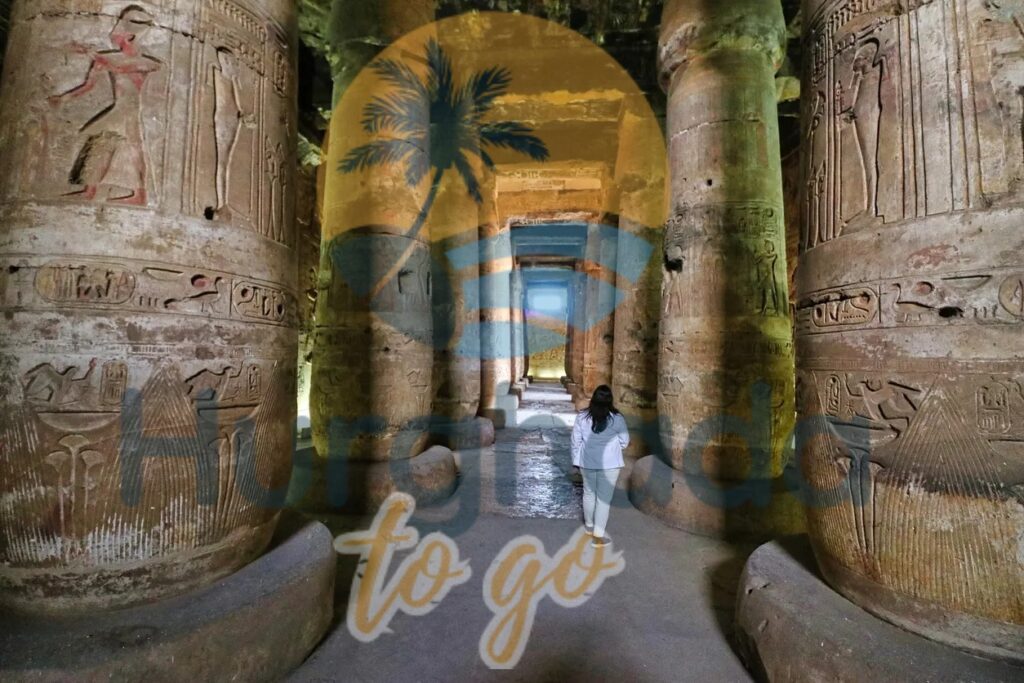
The Temple of Seti I is renowned for its L-shaped layout, an anomaly compared to the linear axial design of most Egyptian temples. Built primarily of fine white limestone with sandstone elements (e.g., doorways), it spans roughly 56 meters in length and covers ~6,000 square meters. Its design integrates ritual spaces, symbolic elements, and practical areas for temple operations.
Key Architectural Features
- First Courtyard and Pylon:
- The outer courtyard, added by Ramesses II, was fronted by a massive pylon (now largely destroyed). Reliefs here depict Ramesses’s military campaigns, such as the Battle of Kadesh (1274 BCE).
- A portico with square pillars leads to the First Hypostyle Hall.
- Hypostyle Halls:
- First Hypostyle Hall: Features 12 papyrus-shaped columns in two rows, supporting a partially preserved roof. Reliefs show Ramesses II offering to gods, reflecting his contributions.
- Second Hypostyle Hall: Larger, with 24 columns arranged in three rows of eight. Its ceiling, decorated with astronomical motifs (stars, deities), is a highlight of New Kingdom artistry. This hall leads to the inner sanctuaries.
- Barque Chapels:
- Seven parallel chapels housed the sacred barques (ceremonial boats) used in processions for Osiris, Isis, Horus, Amun-Re, Re-Harakhti, Ptah, and Seti I. Each chapel is richly decorated with reliefs of the king interacting with the respective deity.
- The Osiris-Isis-Horus triad chapels emphasize Abydos’s mythological core, depicting Osiris’s resurrection narrative.
- Gallery of Ancestors (Abydos King List):
- A corridor off the Second Hypostyle Hall contains a famous relief listing 76 pharaohs from Menes (First Dynasty, c. 3100 BCE) to Seti I. Seti and young Ramesses II are shown making offerings to their predecessors.
- Notably excludes “heretic” rulers like Hatshepsut, Akhenaten, Smenkhkare, Tutankhamun, and Ay, reflecting political and religious biases. This list is a critical historical source for Egyptologists, complementing other records like the Turin King List.
- Southern Wing:
- Includes additional chapels for Ptah-Sokar (a composite underworld deity), Nefertem, and other gods, plus utility rooms like the “Hall of Barques” (for storing ceremonial boats) and an unfinished “Hall of Butchers” (for ritual slaughter).
- A staircase corridor with reliefs of Seti’s military campaigns connects to the Osireion.
- Osireion:
- A subterranean structure behind the temple, likely a symbolic tomb for Osiris, built by Seti I and possibly finished by his grandson Merneptah (r. 1213–1203 BCE). Made of sandstone and granite, it mimics Old Kingdom architecture (e.g., the Step Pyramid’s substructure).
- Features a central platform surrounded by a water-filled moat, evoking the primordial mound of creation and Osiris’s underworld. Its walls bear inscriptions from the Book of the Dead and astronomical texts.
- Access was restricted, likely reserved for priests performing secret rituals. Its purpose remains debated—cenotaph, ritual space, or symbolic underworld?

Artistic Highlights
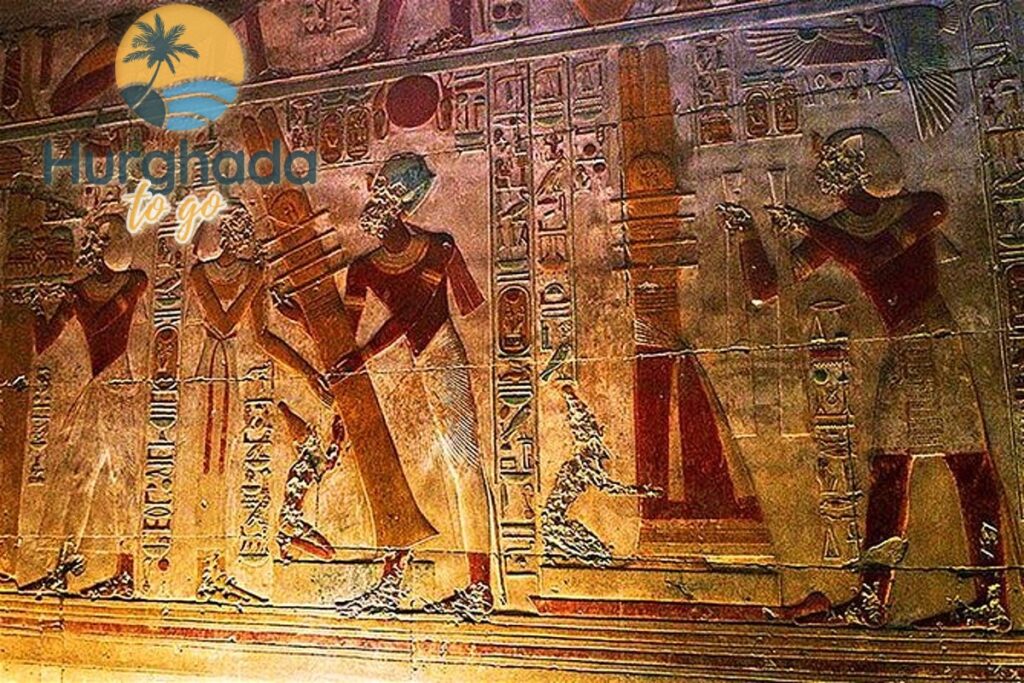
- Reliefs: Seti I’s artisans crafted some of the finest raised reliefs in Egyptian history, with vivid colors (partially preserved) depicting rituals, divine encounters, and offerings. Scenes of Seti with Osiris, Isis, and Horus are especially detailed, showcasing the king’s piety.
- Astronomical Ceiling: The Second Hypostyle Hall’s ceiling features stars and deities, symbolizing the cosmic order (partially restored in modern times).
- Ramesses II’s Additions: His sunk-relief carvings, while less refined, add dynamic battle scenes and inscriptions, particularly in the outer areas.
Cultural and Religious Significance
- Osiris Mythology: The temple’s core function was to honor Osiris, whose myth (murder by Seth, resurrection by Isis, and succession by Horus) underpinned Egyptian concepts of death and rebirth. The Osiris Chapel and Osireion were focal points for rituals reenacting this cycle.
- Royal Legitimacy: The Abydos King List reinforced the divine right of pharaohs by linking Seti to Egypt’s earliest rulers, bypassing controversial figures to present a curated history.
- Pilgrimage and Festivals: Abydos hosted the annual Osiris Mysteries, a festival involving processions, mock battles, and offerings. Pilgrims left stelae and statues to ensure their afterlife connection to Osiris.
- Mystical Reputation: Abydos was believed to be a portal to the underworld, attracting burials and cenotaphs even for those not physically interred there. Nobles and officials built “memorial chapels” nearby.
Intriguing and Controversial Aspects
- “Abydos Helicopter” and Pseudo-Archaeology:
- A famous panel in the temple’s First Hypostyle Hall shows eroded hieroglyphs that, due to palimpsest (overlapping carvings from Seti I and Ramesses II), resemble modern machines like a helicopter, tank, and submarine. Popularized in the 1990s by fringe theorists, these are definitively explained as eroded cartouches (royal names), not evidence of advanced technology or time travel.
- Egyptologists dismiss such claims, noting the carvings align with standard hieroglyphic forms (e.g., reed leaf, mouth, and arm signs) distorted by reuse and weathering.
- Dorothy Eady (Omm Sety):
- Dorothy Eady (1904–1981), a British woman who claimed to be the reincarnation of a Seti I-era priestess named Bentreshyt, worked at Abydos in the 1950s–1970s. Her detailed “memories” led to discoveries, like locating a garden near the temple. While respected by some Egyptologists (e.g., Kenneth Kitchen) for her knowledge, her claims remain unverified and controversial.
- Her book Omm Sety’s Abydos (1981) blends archaeological insight with mystical anecdotes, making her a cult figure in New Age circles.
- Osireion’s Mysteries:
- The Osireion’s purpose is still debated. Its archaic design suggests a deliberate nod to Old Kingdom tombs, possibly to link Seti to Egypt’s ancient past. Some hypothesize it was a ritual space for Osiris’s “rebirth” or a symbolic Nile flood.
- Its water-filled moat and island evoke creation myths, but its inaccessibility suggests elite priestly use. Pseudo-archaeological theories (e.g., Atlantean origins) are unsupported by evidence.
- Ancient Graffiti:
- The temple walls bear inscriptions from later visitors, including Phoenician and Aramaic graffiti from the 6th–4th centuries BCE, indicating Abydos’s role as a cultural crossroads. These are studied for insights into ancient trade and literacy.
Archaeological and Modern Context
- Excavations and Preservation:
- Excavated in the 19th–20th centuries by pioneers like Auguste Mariette and Flinders Petrie, the temple was documented in detail by the Chicago Oriental Institute (1933, four-volume report). Ongoing conservation by the American Research Center in Egypt (ARCE) addresses weathering and tourism impact.
- The Osireion, partially flooded until modern drainage, remains fragile due to groundwater.
- Current State: The temple is remarkably intact, with vibrant reliefs and accessible chambers. The Osireion is often closed to visitors due to structural concerns but can sometimes be viewed with permission.
- Visiting Details (2025):
- Location: ~50 km south of Sohag, 190 km north of Luxor. Reached by taxi or tour from Luxor (3–4 hours) or Sohag.
- Access: Open daily 6 AM–5 PM; entry ~E£150/€8 (subject to change). Photography allowed (no flash); some areas may require special permits.
- Tips: Less crowded than Luxor or Karnak, offering a serene experience. Bring a flashlight for dim interiors, wear sturdy shoes, and expect police escorts for security. Combine with Ramesses II’s nearby temple or Umm el-Qaab (royal tombs, often restricted).
- Guided Tours: Recommended for context; local guides or Egyptologists provide insights into reliefs and mythology.
Why It Matters
The Temple of Seti I is a pinnacle of New Kingdom architecture and art, blending spiritual, political, and historical functions. Its reliefs are among Egypt’s finest, rivaling those at Karnak or Luxor. The Abydos King List offers a rare glimpse into how Egyptians curated their past, while the Osireion’s enigmatic design fuels scholarly and popular fascination. For visitors, its relative quietude and mystical aura—enhanced by its Osiris connection—make it a profound experience, often described as “otherworldly” or “a journey to eternity.”
For further exploration, consult:
- Scholarly Resources: ARCE’s conservation reports, the Chicago House publications, or Abydos: Holy City of Ancient Egypt by O’Connor and Adams.
- Travel Resources: Tour operators like Memphis Tours or local guides via Luxor agencies.
- Cultural Insights: Dorothy Eady’s writings (with skepticism) or documentaries like the BBC’s Egypt’s Golden Empire.
Ritual Significance of the Osireion at Abydos
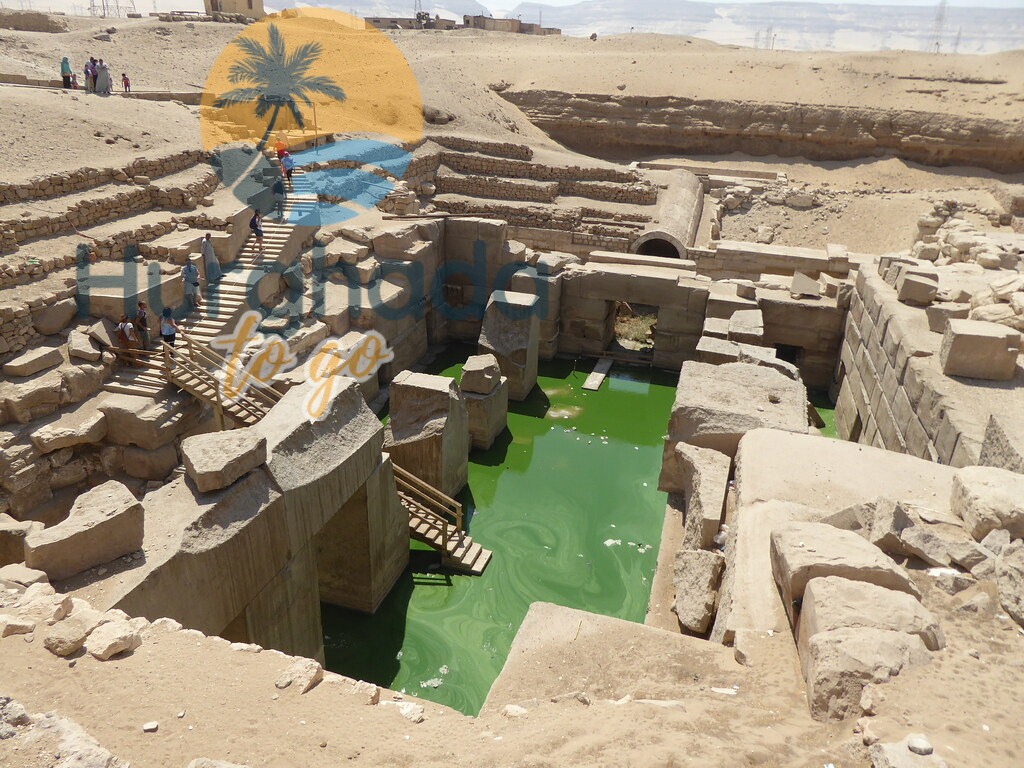
The Osireion, a subterranean structure located behind the Great Temple of Seti I at Abydos, Egypt, is one of the most enigmatic monuments of ancient Egypt. Constructed primarily during Seti I’s reign (c. 1290–1279 BCE, 19th Dynasty, New Kingdom) and possibly completed under Merneptah (r. 1213–1203 BCE), it is widely interpreted as a symbolic cenotaph for Osiris, the god of the underworld, death, and resurrection. Its ritual significance is deeply tied to Abydos’s role as the primary cult center of Osiris and its unique architectural features, which evoke mythological and cosmological themes. Below is a detailed exploration of its ritual purpose, supported by archaeological evidence and scholarly interpretations.
Context and Design
The Osireion is a rectangular, underground structure built of massive sandstone and granite blocks, located northwest of the Seti I Temple. Its design mimics Old Kingdom architecture (e.g., the Step Pyramid’s substructure, c. 2650 BCE), suggesting a deliberate evocation of Egypt’s ancient past. Key features include:
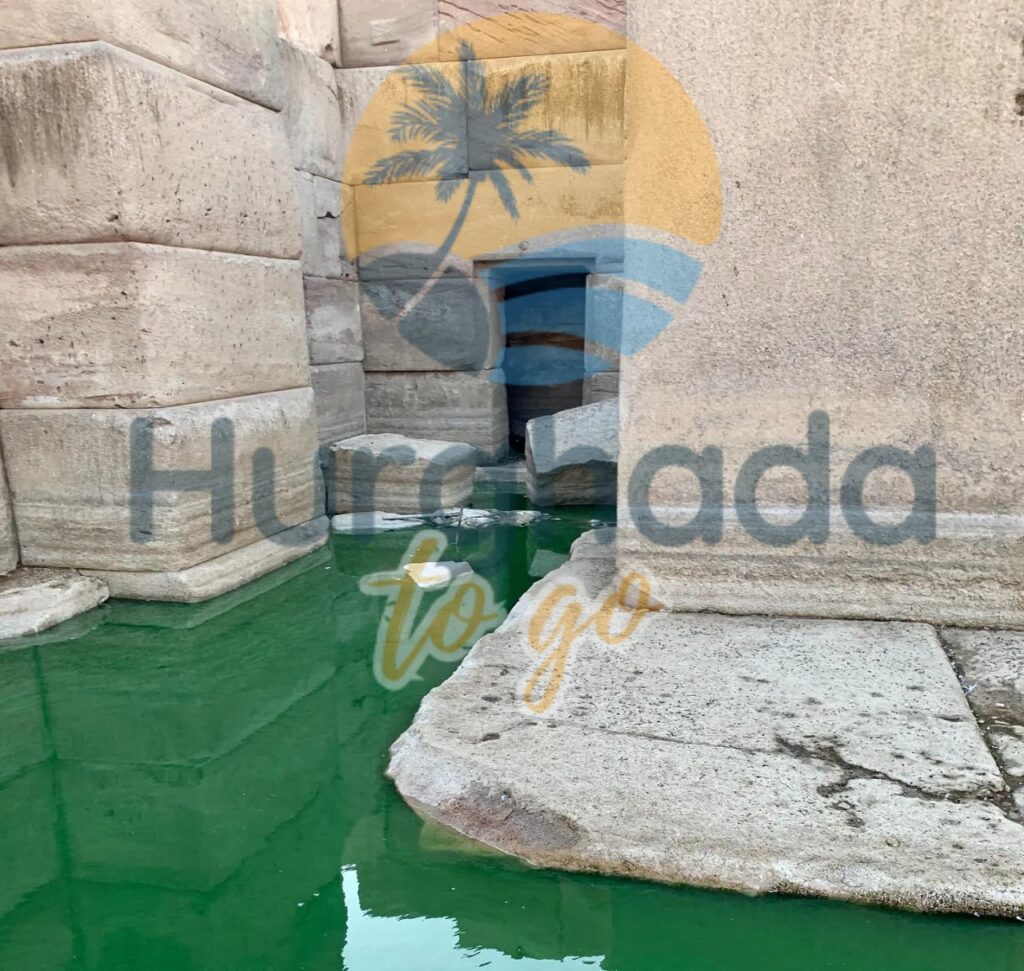
- Central Platform: A raised platform (often called an “island”) surrounded by a water-filled moat, accessed by a long, sloping passage from the temple.
- Pillared Hall: A hypostyle chamber with 10 massive granite pillars, originally roofed with monolithic slabs, creating a cavernous, tomb-like space.
- Transverse Chamber: A secondary hall with reliefs and inscriptions, including texts from the Book of the Dead, Book of Gates, and astronomical motifs.
- Water Features: The moat, fed by groundwater (possibly linked to a canal or the Nile), created a symbolic “primordial mound” or underworld setting.
This layout—unlike the open, accessible spaces of the main temple—suggests a restricted, esoteric ritual function, likely reserved for elite priests.
Ritual Significance
The Osireion’s design and location tie it directly to the Osiris cult, which dominated Abydos’s religious landscape. Its ritual significance can be understood through several lenses:
- Symbolic Tomb of Osiris:
- Mythological Role: In Egyptian mythology, Osiris was murdered by his brother Seth, dismembered, and resurrected by Isis. Abydos was believed to house Osiris’s head (or entire body in some traditions), making it the epicenter of his cult. The Osireion is widely interpreted as a cenotaph (symbolic tomb) for Osiris, representing his underworld domain.
- Primordial Mound: The central platform, surrounded by water, mirrors the Egyptian creation myth where life emerged from a mound rising from the primordial waters (Nun). This evokes Osiris’s resurrection, as he “rises” from death, paralleling the annual Nile flood’s life-giving cycle.
- Ritual Evidence: The Book of the Dead and Book of Gates texts on the walls include spells and imagery for navigating the afterlife, reinforcing the Osireion as a stage for Osiris’s mythological journey. These texts, used in royal tombs, suggest the structure facilitated rituals ensuring divine and royal rebirth.
- Osiris Mysteries and Festivals:
- Annual Rituals: Abydos hosted the Osiris Mysteries, a major festival reenacting Osiris’s death, dismemberment, and resurrection. The Osireion likely served as a sacred space for key rites, possibly involving priests carrying Osiris’s statue or barque (ceremonial boat) to symbolize his journey through the underworld.
- Restricted Access: The Osireion’s subterranean nature and narrow access suggest it was used by high priests for secret or nocturnal rituals, distinct from the public processions in the main temple. These may have included offerings, incantations, or reenactments of Isis’s reconstruction of Osiris’s body.
- Water Symbolism: The moat’s water, possibly linked to the Nile or groundwater, symbolized the underworld’s chaotic waters and the regenerative power of the flood. Rituals likely incorporated water, such as libations or symbolic “flooding” to mimic Osiris’s rebirth.
- Royal and Divine Connection:
- Seti I’s Legitimacy: By building the Osireion, Seti I aligned himself with Osiris, reinforcing his divine kingship. As pharaohs were seen as living Horuses (Osiris’s son) and becoming Osiris in death, the Osireion may have served as a ritual space to affirm Seti’s transition to the afterlife.
- Deification of the Pharaoh: The main temple includes a chapel deifying Seti I, and the Osireion’s proximity suggests it extended this apotheosis, linking the king’s eternal fate to Osiris’s. Rituals here may have involved offerings to ensure Seti’s immortality alongside the gods.
- Cosmological and Astronomical Significance:
- Astronomical Ceiling: The transverse chamber’s ceiling features star maps and deities, symbolizing the cosmic order (ma’at) and the soul’s journey through the stars. This aligns with Osiris’s identification with Orion and the afterlife’s celestial realm.
- Ritual Timing: Some scholars suggest rituals were timed to astronomical events, such as the heliacal rising of Sirius (linked to Isis and the Nile flood), enhancing the Osireion’s role as a cosmic stage.
Archaeological and Textual Evidence
- Inscriptions: The Osireion’s reliefs, primarily from Merneptah’s reign, include Book of the Dead spells (e.g., Spell 125, the Weighing of the Heart) and Book of Gates scenes depicting the sun god’s journey through the underworld. These texts, typically found in royal tombs, indicate a funerary and regenerative purpose.
- Construction Details: The use of massive granite blocks and Old Kingdom-style masonry suggests a deliberate archaism, possibly to evoke the eternal, unchanging nature of Osiris’s myth. The structure’s alignment with the temple and its subterranean placement reinforce its underworld symbolism.
- Comparative Sites: The Osireion resembles cenotaphs like those at Saqqara (e.g., Djoser’s Step Pyramid complex) and may parallel the Valley of the Kings’ tombs, where pharaohs were interred with Osirian rituals. However, its open moat and island are unique, suggesting a specialized ritual function.
Scholarly Interpretations
- Cenotaph Hypothesis: Most Egyptologists (e.g., David O’Connor, Dieter Arnold) view the Osireion as a symbolic tomb for Osiris, used for rituals reenacting his resurrection. Its design mimics royal tombs but adapts them for divine worship.
- Ritual Theater: Some (e.g., John Baines) propose it was a “ritual theater” for the Osiris Mysteries, with the moat and platform staging dramatic reenactments of Osiris’s myth, accessible only to initiated priests.
- Flood Symbolism: The water-filled moat, studied by hydrologists and archaeologists, may have been deliberately maintained to mirror the Nile’s inundation, tying rituals to agricultural cycles (as argued by scholars like Barry Kemp).
- Alternative Theories: Fringe theories (e.g., Atlantean origins or pre-dynastic construction) lack evidence and are dismissed by mainstream Egyptology. The Osireion’s dating to Seti I’s reign is confirmed by inscriptions and construction techniques.
Cultural and Comparative Context
- Abydos’s Role: As Egypt’s holiest site, Abydos attracted pilgrims seeking Osiris’s blessing for the afterlife. The Osireion, as a “hidden” space, likely amplified its mystique, reserved for high priests performing rituals on behalf of the community or king.
- Comparative Rituals: Similar subterranean structures, like the Serapeum at Saqqara or the cenotaphs at Deir el-Bahri, suggest a broader Egyptian tradition of underworld-focused ritual spaces. The Osireion’s water feature, however, is unique, emphasizing Abydos’s Osirian focus.
- Dorothy Eady’s Claims: Omm Sety, the 20th-century mystic, claimed the Osireion was used for secret rites involving Osiris’s statue and water-based ceremonies. While unverified, her insights align with scholarly views on its restricted, sacred function.
Modern Considerations
- Preservation Challenges: The Osireion’s groundwater issues (historically flooding the structure) complicate access and conservation. Modern drainage systems have helped, but it’s often closed to tourists to protect its fragile state.
- Visiting: When accessible (with special permission), the Osireion offers a haunting glimpse into Egypt’s underworld theology. Visitors report its “eerie” atmosphere, enhanced by its dark, submerged setting.
- Research Gaps: The Osireion’s exact ritual practices remain speculative due to limited textual evidence. Ongoing studies by groups like the American Research Center in Egypt (ARCE) aim to clarify its hydraulic system and ceremonial use.
Conclusion Abydos Temple
The Osireion’s ritual significance lies in its role as a sacred space for Osiris’s cult, embodying the god’s death and resurrection through its symbolic architecture and restricted access. It likely served as a cenotaph and ritual theater for the Osiris Mysteries, with its water-filled moat and primordial mound evoking creation and rebirth. Aligned with Seti I’s divine kingship and Abydos’s pilgrimage tradition, it facilitated esoteric rites linking the pharaoh, the gods, and the cosmos. While mysteries persist, its design and inscriptions confirm its centrality to Egypt’s afterlife beliefs, making it a profound testament to the Osirian theology that defined Abydos.
Easy & Secure Booking
Reserve your unforgettable Abydos Templ from Hurghada:
🌐 Official Website: hurghadatogo.com
📧 Email: [email protected]
📱 WhatsApp: +201009255585