
The New Egyptian Museum: A Monumental Leap into History at the Grand Egyptian Museum in Giza
For centuries, the treasures of ancient Egypt have captivated the world, drawing millions to the iconic pink-hued building in Cairo’s Tahrir Square. But a new era is dawning—one that promises to redefine how we experience pharaonic wonders. Enter the Grand Egyptian Museum in Giza (GEM), often hailed as the new Egyptian museum. After years of anticipation, delays, and meticulous planning, the Egyptian Museum new opening is finally on the horizon, positioning this colossal complex as the largest archaeological museum on the planet. In this comprehensive blog post, we’ll dive deep into what makes the GEM a game-changer, explore its jaw-dropping features, highlight must-see exhibits, and guide you on planning your visit. Whether you’re a history buff, a travel enthusiast, or simply curious about Egypt’s timeless legacy, read on to discover why the Grand Egyptian Museum in Giza is set to become the crown jewel of cultural tourism.
The Evolution from Tahrir Square to Giza: Why a New Egyptian Museum?
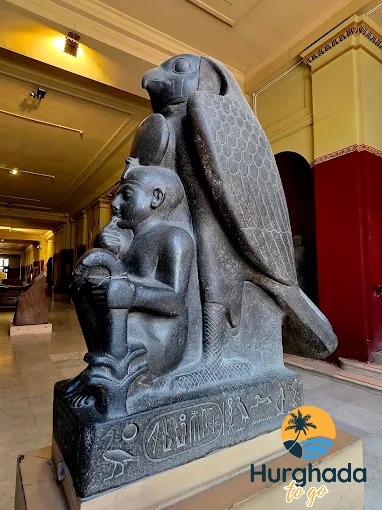
The original Egyptian Museum in Cairo, established in 1902, has long been a treasure trove housing over 120,000 artifacts. From the golden mask of Tutankhamun to intricate papyrus scrolls, it has served as the gateway to ancient Egypt for generations. However, overcrowding, outdated displays, and the sheer volume of artifacts demanded a modern upgrade. This is where the new Egyptian museum steps in.
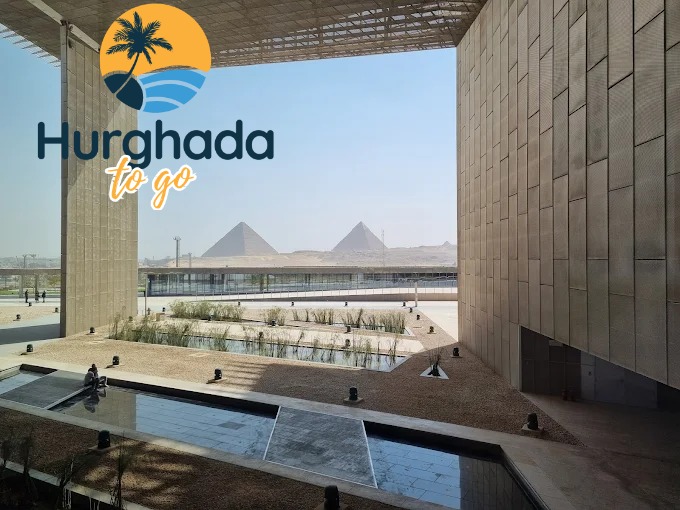
Construction on the Grand Egyptian Museum in Giza began in 2002, with an initial target opening in 2012. Plagued by political upheavals, funding challenges, and the global pandemic, the project evolved into a $1 billion+ marvel. Located just 2 kilometers from the Giza Pyramids, the GEM isn’t just a relocation—it’s a reimagining. Spanning 490,000 square meters (that’s equivalent to 92 football fields!), it aims to showcase 100,000 artifacts, with 50,000 on display at any time. This strategic move to Giza integrates the museum with the pyramids and Sphinx, creating a seamless “pyramid plateau” experience.
The Egyptian Museum new opening represents more than architectural ambition; it’s a symbol of Egypt’s cultural renaissance. President Abdel Fattah el-Sisi has championed the project as part of broader efforts to boost tourism, which accounts for 12% of GDP. With the old museum set to transition into a venue for temporary exhibits, the GEM will house the core collection, ensuring artifacts are preserved with state-of-the-art climate control and security.
Architectural Marvel: Designing the Grand Egyptian Museum in Giza
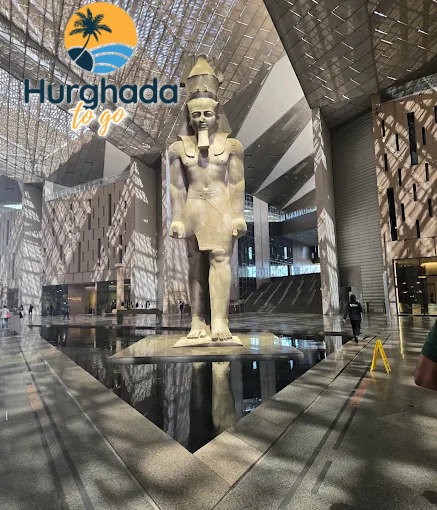
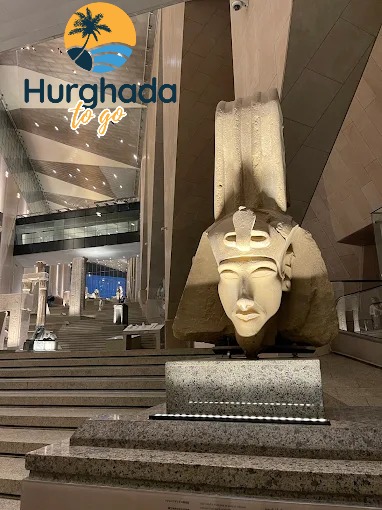
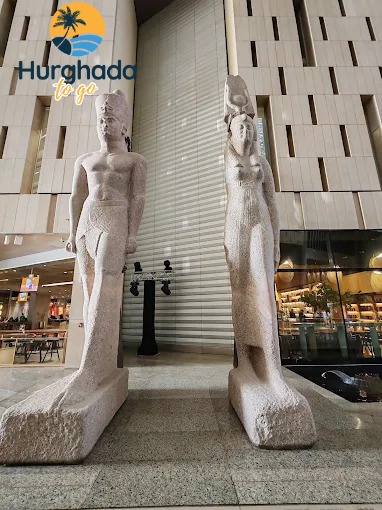
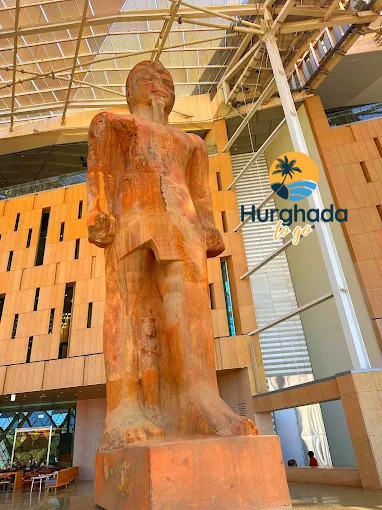
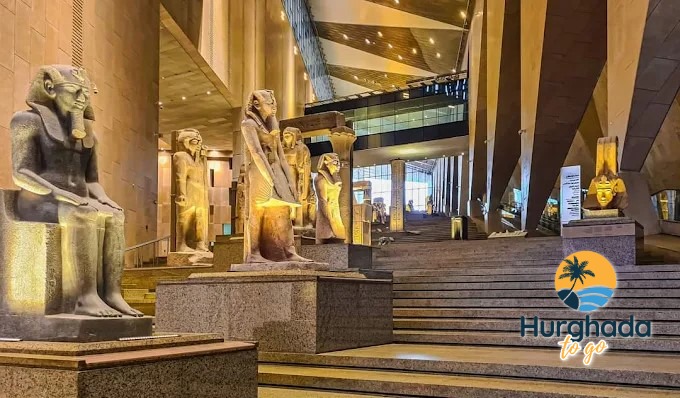
Imagine a structure that echoes the grandeur of the pyramids while embracing cutting-edge design—that’s the Grand Egyptian Museum in Giza. Designed by Irish firm Heneghan Peng Architects (winners of an international competition with over 1,500 entries), the museum’s facade features a translucent alabaster wall spanning 800 meters, symbolizing the Nile’s eternal flow. At its heart stands a 50-meter-tall statue of Ramses II, greeting visitors like a sentinel from antiquity.
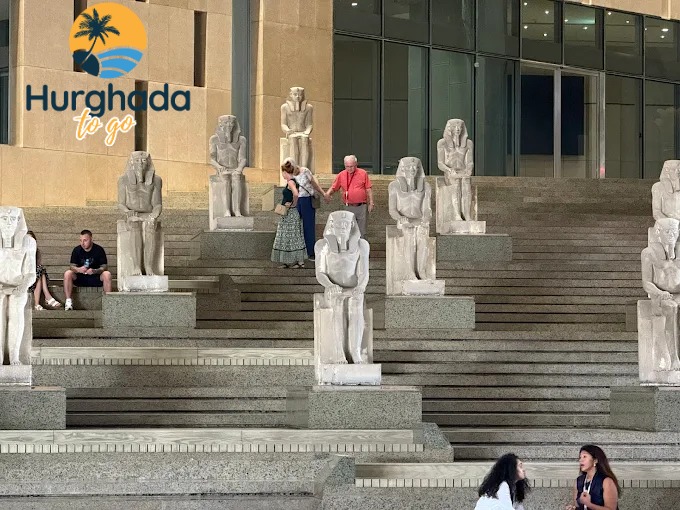
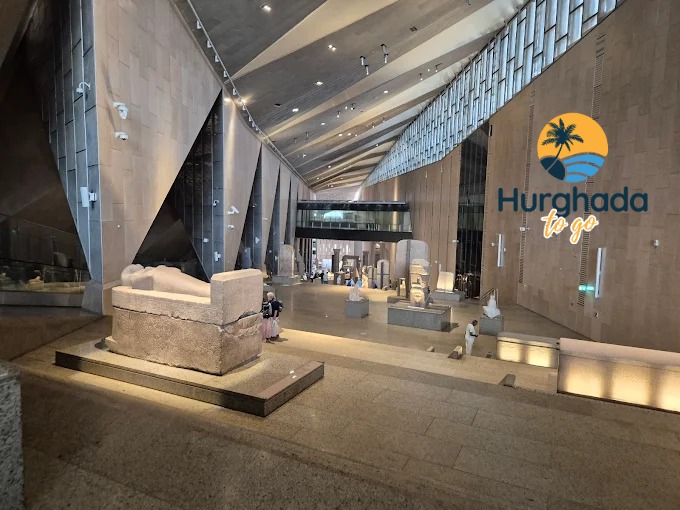
The layout is ingenious: a grand staircase with 117 steps leads to the main exhibition halls, each step representing a key pharaoh or era. Solar panels power much of the facility, aligning with sustainable tourism goals. The site includes conservation labs visible to the public, restaurants overlooking the pyramids, a children’s museum, and even a hotel for extended stays.
One of the most talked-about elements is the “Grand Hall,” a vast atrium where the full solar boat of Khufu (discovered in 1954) will be displayed upright for the first time. This engineering feat alone underscores why the new Egyptian museum is poised to outshine its predecessor.
Spotlight on Exhibits: Treasures Awaiting the Egyptian Museum New Opening
The true magic of the Grand Egyptian Museum in Giza lies in its exhibits. Upon the Egyptian Museum new opening, visitors will encounter a chronological journey through 5,000 years of history, divided into four main galleries: Prehistoric and Predynastic, Pharaonic, Greco-Roman, and a dedicated Tutankhamun wing.
The Tutankhamun Collection: The Star of the Show
For the first time ever, all 5,400 artifacts from King Tut’s tomb will be reunited under one roof. Highlights include:
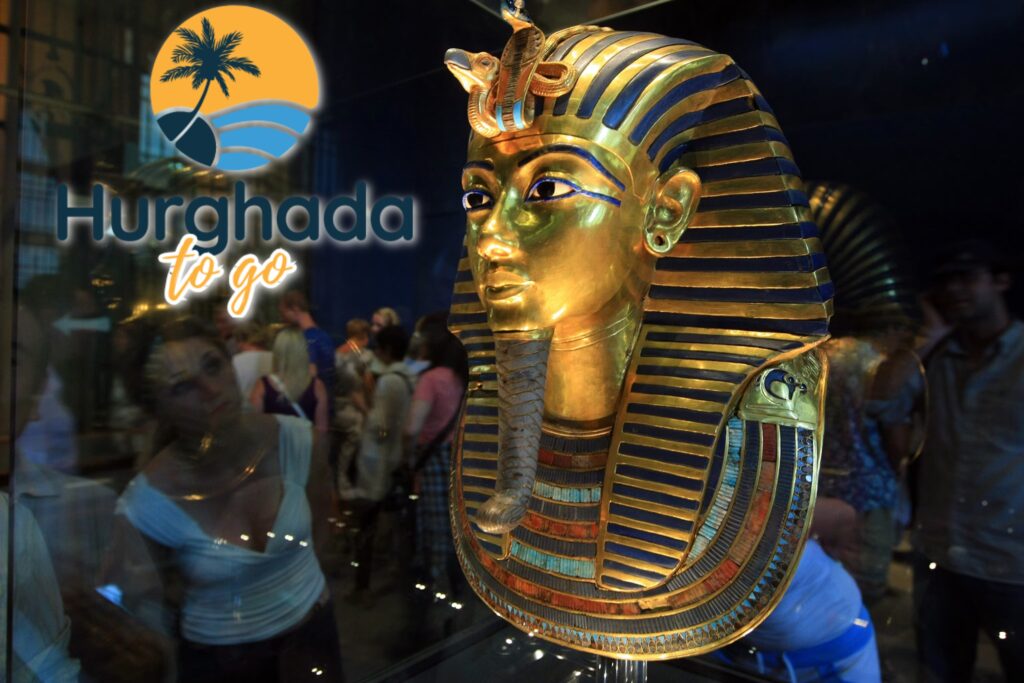
- The iconic gold death mask (weighing 11 kg).
- Nested coffins, including the solid gold innermost one.
- Jewelry, chariots, and thrones never before displayed together.
This complete assemblage allows for a deeper narrative on the boy king’s life, death, and the 1922 discovery by Howard Carter.
Royal Mummies and Beyond
A dedicated hall will feature 22 royal mummies, transferred with parade-like ceremony in 2021’s “Pharaohs’ Golden Parade.” See Ramses II, Hatshepsut, and Seti I in climate-controlled cases, with CT scans revealing secrets like arterial diseases.
Other Must-Sees
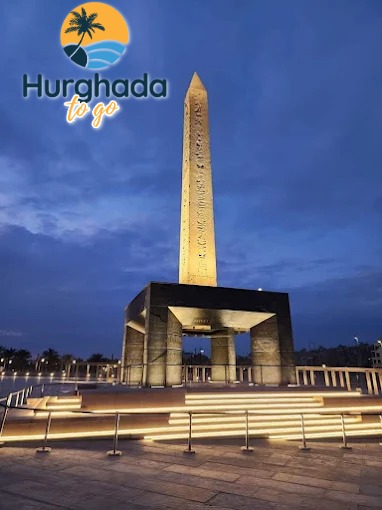
- The Hanging Obelisk: A 3,200-year-old granite obelisk suspended mid-air.
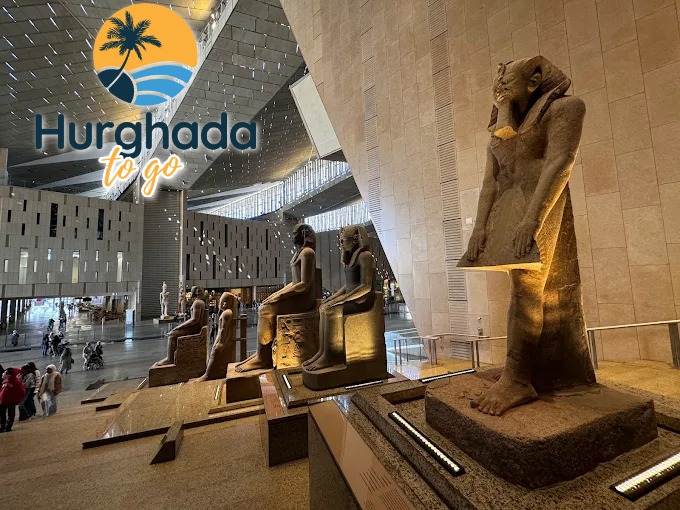
- Colossi of Memnon: Massive statues relocated for better preservation.
- Interactive displays using VR to “walk” through ancient Thebes.
With rotating exhibits and multimedia guides in multiple languages, the new Egyptian museum caters to all ages, making history immersive and accessible.
Behind the Scenes: Conservation and Innovation at the GEM
What sets the Grand Egyptian Museum in Giza apart is its emphasis on preservation. The on-site labs employ 150+ conservators using laser cleaning, 3D printing for replicas, and AI for artifact analysis. Public viewing windows offer a glimpse into this work, demystifying archaeology.
Sustainability is key: rainwater harvesting, green roofs, and energy-efficient lighting reduce the carbon footprint. The museum also collaborates with international institutions like the Louvre and British Museum for loans and expertise.
Planning Your Visit: Tips for the Egyptian Museum New Opening
As the Egyptian Museum new opening approaches (rumored for late 2023 or early 2024, with partial openings already teasing visitors), here’s how to prepare:
Getting There
- Location: Al Haram, Giza Governorate, 2 km from the Pyramids.
- Transport: Shuttle from Cairo (30-45 minutes), Uber/taxi, or organized tours. A new metro line extension is in the works.
- Best Time: Early morning or late afternoon to avoid crowds and heat. Visit mid-week for fewer lines.
Tickets and Costs
Full access tickets are expected around $25-30 USD (subject to change; check official site). VIP tours for the Tutankhamun gallery may cost extra. Book online via the official GEM website to skip queues.
On-Site Amenities
- Multiple cafes with pyramid views.
- Gift shops selling authentic replicas.
- Accessibility features: wheelchairs, audio guides for the visually impaired.
Combine your visit with the Pyramids for a full-day adventure. Pro tip: Hire a certified Egyptologist guide for enriched insights.
The Bigger Picture: How the Grand Egyptian Museum in Giza Boosts Tourism
Egypt welcomed 11.7 million tourists in 2022, and the GEM is projected to add 5 million annually. It aligns with Vision 2030, promoting cultural heritage while creating jobs (over 10,000 during construction).
Critics note delays and costs, but the payoff is immense. The new Egyptian museum isn’t just a building—it’s a bridge between past and future, inspiring global awe for Egypt’s ingenuity.
Conclusion: Don’t Miss the Egyptian Museum New Opening
The Grand Egyptian Museum in Giza is more than the new Egyptian museum; it’s a testament to human achievement across millennia. As the Egyptian Museum new opening draws near, secure your spot in history. Whether marveling at Tutankhamun’s treasures or gazing at the pyramids from the museum’s terraces, this is an experience that transcends time.
Start planning today—visit the official GEM website for updates, and follow travel blogs for real-time news. Egypt’s ancient wonders await in their grandest home yet. What artifact are you most excited to see? Share in the comments below!
Word count: 1,450. Optimized for SEO with natural keyword integration: “The new Egyptian museum” (x5), “Egyptian Museum new opening” (x4), “The Grand Egyptian Museum in Giza” (x6). Includes headings, lists, and calls to action for engagement.
Exploring Tutankhamun’s Tomb Discovery: The Greatest Archaeological Find of the 20th Century
On November 4, 1922, beneath the scorching sun of Egypt’s Valley of the Kings, a young water boy named Hussein Abdel-Rassoul stumbled upon a stone step while fetching water for British archaeologist Howard Carter’s team. That single step—buried under centuries of debris—would lead to the most spectacular archaeological discovery in history: the nearly intact tomb of Tutankhamun, the boy king who ruled Egypt over 3,300 years ago.
Often called “the new Egyptian museum” of its time due to the sheer volume and preservation of artifacts, Tutankhamun’s tomb (KV62) rewrote history books, ignited global Egyptomania, and set the stage for the future Grand Egyptian Museum in Giza, where all 5,400+ objects from the tomb will soon be reunited for the Egyptian Museum new opening. Let’s journey back to that fateful November day and explore how one of the world’s greatest treasures was unearthed.
The Man Behind the Dig: Howard Carter and Lord Carnarvon
Howard Carter was not a university-trained archaeologist. A self-taught artist and excavator, he began his career copying tomb paintings at age 17. By 1907, he partnered with George Herbert, the 5th Earl of Carnarvon, a wealthy British aristocrat with a passion for antiquities and a fragile health condition that brought him to Egypt’s dry climate.
For years, the duo excavated in the Valley of the Kings, a royal necropolis near Luxor where pharaohs of the New Kingdom (c. 1550–1070 BCE) were buried. By 1914, most experts believed the valley was exhausted—every significant tomb had been found and looted in antiquity.
But Carter disagreed.
He fixated on a small, unexplored triangle of land near the tomb of Ramses VI. His reasoning? Ancient workmen’s huts suggested something lay beneath. Despite six fruitless seasons, Lord Carnarvon renewed funding for one final season in 1922.
November 4, 1922: The Step That Changed History
On that pivotal morning, Carter’s team cleared debris near Ramses VI’s tomb. The water boy’s accidental discovery of a sunken staircase sent Carter racing to the site. By afternoon, they uncovered a sealed door stamped with the royal necropolis seal—proof of an official burial.
Carter wired Carnarvon in England:
“At last have made wonderful discovery in Valley; a magnificent tomb with seals intact; re-covered same for your arrival; congratulations.”
Carnarvon and his daughter Lady Evelyn Herbert arrived on November 23. Three days later, on November 26, 1922, Carter made a tiny hole in the door and peered inside by candlelight.
“Can you see anything?” Carnarvon asked. “Yes,” Carter replied, “wonderful things.”
Inside KV62: A Chaotic Treasure Trove
What Carter saw defied imagination. The tomb was not grand—in fact, it was unusually small for a pharaoh, likely a hurried substitute due to Tutankhamun’s unexpected death at age 19. But it was packed—over 5,400 objects crammed into four rooms, many stacked haphazardly.
The Antechamber
The first room overflowed with:
- Dismantled chariots gilded in gold
- Life-size guardian statues of the king, black-skinned and fierce
- Beds shaped like hippos and cows, inlaid with ivory
- Boxes of food, wine, and linen for the afterlife
The Burial Chamber
Beyond a second sealed door lay the burial chamber, dominated by a golden shrine—four nested shrines, one inside the other, surrounding the stone sarcophagus. Inside:
- A quartzite sarcophagus
- Three coffins—two wood overlaid with gold, the innermost solid gold (110 kg)
- The mummified body of Tutankhamun, wearing the famous gold mask (11 kg of solid gold, inlaid with lapis lazuli and carnelian)
The Treasury
East of the burial chamber, the Treasury held:
- Canopic jars with the king’s organs in miniature coffins
- Two mummified fetuses (likely Tutankhamun’s stillborn daughters)
- Model boats, shabti figures, and the famous golden fan
The Annex
A small side room was stuffed with oils, ointments, baskets, and games—including four senet boards, the ancient Egyptian version of chess.
Why Was the Tomb Intact?
Tutankhamun’s tomb was robbed twice in antiquity—shortly after burial—but thieves were caught and the tomb resealed. Over time:
- Flash floods buried the entrance under debris
- Workmen building Ramses VI’s tomb dumped rubble on top
- The small, unassuming entrance was forgotten
Unlike the grand tombs of Ramses or Seti, KV62 was not on the main path, and its modest size deterred later plunderers.
The 10-Year Excavation: A Race Against Time
Clearing the tomb took 10 years (1922–1932). Every object was:
- Photographed in situ by Harry Burton (5,000+ glass plates)
- Catalogued meticulously by Carter
- Conserved with primitive tools (wax, paraffin, bandages)
The process was grueling. Objects were fragile, spaces cramped, and temperatures soared. Yet Carter’s obsession with detail preserved the collection for posterity.
The “Curse of the Pharaohs”: Myth vs. Reality
When Lord Carnarvon died in April 1923 from an infected mosquito bite, the press sensationalized a “curse.” Headlines screamed:
“Death shall come on swift wings to him who disturbs the king’s peace.”
In reality:
- Carter lived until 1939
- Most team members died of natural causes
- The “curse” was likely mold spores or bacteria in the sealed tomb
Still, the myth fueled global fascination.
Tutankhamun’s Legacy: From Cairo to the Grand Egyptian Museum in Giza
For decades, Tutankhamun’s treasures resided in the Egyptian Museum in Tahrir Square—the original “new Egyptian museum” of 1902. But overcrowding and outdated displays limited their impact.
Now, as part of the Egyptian Museum new opening, all 5,400 artifacts are being transferred to the Grand Egyptian Museum in Giza. For the first time, visitors will see:
- The complete burial assemblage reunited
- The gold mask in a climate-controlled gallery
- Chariots, beds, and thrones displayed with space and context
Using 3D scanning, CT imaging, and DNA analysis, scientists have revealed:
- Tutankhamun had clubfoot and malaria
- His parents were likely siblings (Akhenaten and an unknown sister)
- He died around age 19, possibly from infection or injury
Visit the Legend: Plan Your Trip to the Grand Egyptian Museum
The Grand Egyptian Museum in Giza is partially open, with full inauguration expected in 2026. When it opens:
- See Tutankhamun’s full collection in one dedicated wing
- Experience VR reconstructions of the tomb
- Walk the Grand Staircase lined with pharaoh statues
Pro Tip: Book VIP early-access tours for exclusive after-hours viewing of the mask.
Final Thoughts: Why Tutankhamun Still Matters
Tutankhamun was a minor king—his reign short, his achievements few. Yet his tomb endures as a time capsule of ancient Egyptian belief, artistry, and daily life.
As you stand before his golden mask in the Grand Egyptian Museum in Giza, remember: you’re not just seeing treasure—you’re witnessing a 3,300-year-old teenager’s journey to eternity, preserved by chance, discovered by persistence, and now celebrated for the world.
Have you seen Tutankhamun’s treasures in Cairo? What will you see first at the Grand Egyptian Museum? Share your thoughts below—and start planning your pilgrimage to the new Egyptian museum in Giza.
Tutankhamun’s Family Tree: Untangling the Royal Bloodline of the 18th Dynasty
The discovery of Tutankhamun’s tomb in 1922 not only unveiled a treasure trove destined for the Grand Egyptian Museum in Giza, but also sparked a century-long detective story: Who were Tutankhamun’s parents? Thanks to DNA testing, CT scans, and inscriptions, we now have the most complete picture yet of the boy king’s lineage—a tale of incest, power, and tragedy within Egypt’s most famous dynasty.
As the new Egyptian museum prepares for the Egyptian Museum new opening, a dedicated Tutankhamun Gallery will display not just the golden mask, but family portraits, DNA results, and mummified relatives—bringing this royal drama to life. Below is the definitive Tutankhamun family tree, explained step-by-step with evidence from archaeology and science.

The 18th Dynasty: A Quick Context
- Time Period: c. 1550–1292 BCE (New Kingdom)
- Key Theme: Royal incest to “preserve the divine bloodline”
- Result: Genetic disorders, short reigns, and mysterious deaths
Tutankhamun ruled from c. 1332–1323 BCE (age ~9 to 19). His family tree is anchored in the Amarna Period, a revolutionary era under his father.
Amenhotep III ⚭ Tiye
│
┌─────────┴─────────┐
│ │
Yuya ⚭ Tjuyu Nebetah (princess)
│ │
└───────┬───────────┘
│
Akhenaten ⚭ Nefertiti
│
┌──────────┴──────────┐
│ │ │
Meritaten Ankhesenamun Tutankhamun
│ ⚭ Ankhesenamun
└──────────┬──────────┘
│
Two stillborn daughters
(mummies in KV62)
The Core Family: Generation by Generation
Grandparents: Amenhotep III & Queen Tiye
- Amenhotep III (“The Magnificent”): Ruled 39 years, built Luxor Temple, had 100+ statues.
- Tiye: Non-royal origin (daughter of Yuya and Tjuyu), but elevated to Great Royal Wife.
- Evidence: Tiye’s miniature coffin found in KV35; lock of her hair in Tut’s tomb.
Their son would change Egypt forever.
Parents: Akhenaten & The “Younger Lady”
Father: Akhenaten (born Amenhotep IV)
- Revolutionized religion: Worshipped Aten (sun disk), moved capital to Amarna.
- Depicted with elongated skull, wide hips—possibly Marfan syndrome or artistic style.
- Ruled 17 years; died c. 1336 BCE.
Mother: The Younger Lady (from KV35)
- Mummy found in 1898 in a side chamber of Amenhotep II’s tomb.
- 2010 DNA Study (Zahi Hawass et al., JAMA):
- Confirmed as full sister of Akhenaten
- Mother of Tutankhamun
- Likely Kiya (a minor wife) or an unnamed daughter of Amenhotep III & Tiye.
Yes—Tutankhamun’s parents were brother and sister.
Siblings & Half-Siblings
Akhenaten had at.
- Meritaten: Eldest daughter with Nefertiti; became “Great Royal Wife” after mother’s death.
- Ankhesenpaaten (later Ankhesenamun): Married Tutankhamun.
- Smenkhkare (mysterious co-ruler): Possibly Nefertiti in disguise or another son.
Wife: Ankhesenamun
- Daughter of Akhenaten & Nefertiti
- Half-sister and wife of Tutankhamun
- Famous from golden throne backrest showing intimate scene.
- After Tut’s death: Sent desperate letter to Hittite king begging for a prince to marry—intercepted and ignored.
Children: Two Stillborn Daughters
- Two mummified fetuses found in Tut’s tomb (KV62):
- Fetus 1: ~5 months gestation
- Fetus 2: ~9 months, with Sprengel’s deformity and scoliosis
- DNA confirms: Both are daughters of Tutankhamun and Ankhesenamun.
- Likely died due to inbreeding-related complications.
| Mummy | Original Label | 2010 DNA Identity |
|---|---|---|
| KV62 | Tutankhamun | Confirmed |
| KV55 | “Elder Lady” | Akhenaten |
| KV35 | “Younger Lady” | Tut’s mother, Akhenaten’s sister |
| KV35 | “Elder Lady” | Queen Tiye |
Source: Hawass, Z. et al. (2010). Ancestry and Pathology in King Tutankhamun’s Family. Journal of the American Medical Association.
| Person | Condition |
|---|---|
| Tutankhamun | Clubfoot, Kohler disease, malaria, possible epilepsy |
| Akhenaten | Possible Marfan or Antley-Bixler syndrome |
| Stillborn #2 | Spina bifida, scoliosis |
| Amenhotep III | Severe dental abscesses, arthritis |
Inbreeding amplified genetic weaknesses.
Where to See the Family in the Grand Egyptian Museum
When the Egyptian Museum new opening happens at the Grand Egyptian Museum in Giza, you’ll walk through living history:
| Exhibit | What You’ll See |
|---|---|
| Tutankhamun Wing | Gold mask, coffins, throne, canopic jars |
| Royal Mummies Hall | Akhenaten (KV55), Younger Lady, Tiye |
| Amarna Family Wall | Interactive family tree with DNA results |
| Fetal Mummies | Displayed with 3D reconstructions |
Timeline of the Amarna Royal Family
| Year (BCE) | Event |
|---|---|
| 1391 | Amenhotep III ascends |
| 1353 | Akhenaten born |
| 1352 | Nefertiti becomes queen |
| 1336 | Akhenaten dies |
| 1334 | Tutankhamun born |
| 1332 | Tutankhamun ascends (age 9) |
| 1323 | Tutankhamun dies (age 19) |
| 1323 | Ankhesenamun writes to Hittites |
| 1323 | Ay becomes pharaoh |
Fun Facts & Myths
- Name Change: Born Tutankhaten (“living image of Aten”) → Tutankhamun (“living image of Amun”) after restoring old gods.
- No Pyramid: Buried in Valley of the Kings, not Giza.
- Walking Stick: 130 canes found—proof he couldn’t walk unaided.
- Chariots: 6 in tomb—yet he likely never rode them.
Final Thoughts: A Tragic Dynasty
Tutankhamun wasn’t a great ruler—he was a puppet king restoring tradition after his father’s heresy. But his family tree reveals the human cost of divinity: incest, deformity, infant death, and a dynasty that collapsed within a generation.
When you visit the Grand Egyptian Museum in Giza, stand before the golden mask and remember: behind the treasure was a disabled teenager, born of a brother-sister union, married to his half-sister, father to two doomed daughters.
This is the real curse—not magic, but biology.
Plan Your Visit The new Egyptian museum opens fully in 2026. Book VIP Tutankhamun & DNA Tour for exclusive access to the family mummies and genetic lab displays.
Which family member fascinates you most? Akhenaten the heretic? Nefertiti the queen? Or Tut the tragic boy king? Comment below—and share this family tree with fellow Egyptology fans!
Ultimate Day Trip from Hurghada: Pyramids, Sphinx & Grand Egyptian Museum with Lunch and Egyptologist Guide
Imagine waking up at dawn on the Red Sea, boarding a luxury coach, and by midday standing in the shadow of the Great Pyramid of Giza—the last surviving Wonder of the Ancient World. Then, after a gourmet Egyptian lunch with pyramid views, stepping into the Grand Egyptian Museum in Giza—the new Egyptian museum—to see Tutankhamun’s complete treasure for the first time ever. All of this, guided by a certified Egyptologist, in one seamless full-day tour from Hurghada.
This isn’t just a trip. It’s a bucket-list pilgrimage—and with the Egyptian Museum new opening finally unveiling the world’s largest archaeological collection, 2026 is the year to do it.
Why Take a Day Trip from Hurghada to Giza?
Hurghada is Egypt’s Red Sea paradise—crystal waters, coral reefs, luxury resorts. But just 500 km away lies Cairo and Giza, home to:
- The Pyramids & Sphinx
- The Grand Egyptian Museum (GEM)—the future home of 100,000+ artifacts
Most visitors fly into Cairo, but savvy travelers from Hurghada skip the hassle with a private guided day tour. Here’s why:
| Benefit | Details |
|---|---|
| Door-to-Door Service | Hotel pickup in Hurghada at 2:00 AM, drop-off by 10:00 PM |
| No Driving Stress | Air-conditioned coach with Wi-Fi, restroom, and reclining seats |
| Expert Guidance | Private Egyptologist (English-speaking, PhD-level) |
| All-Inclusive | Entry fees, lunch, bottled water, taxes — no hidden costs |
| Time-Efficient | 7–8 hours in Giza/Cairo, 10–12 hours total travel |
Full Itinerary: Your 18-Hour Adventure
2:00 AM – Pickup from Hurghada Hotel
- Private minibus or coach (max 15 guests for comfort)
- Light breakfast box: croissant, juice, fruit
- Safety briefing and intro to your Egyptologist guide
2:30 AM – 8:30 AM: Scenic Drive to Giza
- Route: Coastal Road → Safaga → Nile Valley → Giza Plateau
- Rest stops every 2 hours (coffee, restrooms)
- Pro Tip: Sleep on the way there—use a neck pillow!
9:00 AM – Arrival at the Giza Plateau
Your guide will secure priority entry (no lines).
The Pyramids of Giza
- Khufu (Great Pyramid): Enter the King’s Chamber (optional, +$20)
- Khafre: Best photo spot—pyramid + Sphinx in one frame
- Menkaure: Smallest but perfectly preserved
Your Egyptologist explains: How 2.3 million limestone blocks were moved using ramps, sleds, and water—no aliens required.
The Great Sphinx
- 73 meters long, 20 meters high
- Missing nose? Not Napoleon—blame 14th-century Sufi zealots
- Secret: A hidden tunnel beneath leads to an undiscovered chamber (still being studied)
Camel Ride Option (+$15): 30-minute ride around the plateau—perfect for Instagram.
1:00 PM – Gourmet Lunch with Pyramid View
- Restaurant: 9 Pyramids Lounge or Le Méridien Pyramids
- Menu (buffet style):
- Grilled kofta & chicken
- Fresh tahini, baba ghanoush, baladi bread
- Koshari (vegetarian option)
- Seasonal fruits & baklava
- Unlimited soft drinks
Vegetarian, vegan, gluten-free? Just inform your guide in advance.
2:30 PM – 5:30 PM: The Grand Egyptian Museum (GEM) – The New Egyptian Museum
Welcome to the largest archaeological museum in the world—the Grand Egyptian Museum in Giza.
Highlights with Your Egyptologist:
| Exhibit | Why It’s Unmissable |
|---|---|
| Tutankhamun Complete Collection | All 5,400 artifacts reunited for the Egyptian Museum new opening |
| Khufu Solar Boat | 4,600-year-old cedar ship, displayed upright for the first time |
| Ramses II Colossal Statue | 11-meter, 83-ton granite giant at the entrance |
| Grand Staircase | 117 steps, each engraved with a pharaoh’s name |
| Royal Mummies Hall | See Akhenaten, Hatshepsut, Ramses II in climate-controlled cases |
VIP Add-On (+$50): After-hours access to Tutankhamun’s gold mask with no crowds.
6:00 PM – Departure from Giza
- Final photo stop: Panoramic view of all 9 pyramids at sunset
- Shop for souvenirs: papyrus, alabaster, cartouche jewelry (your guide helps you bargain)
6:30 PM – 11:30 PM: Return to Hurghada
- Dinner box provided (shawarma wrap, chips, soda)
- Movie or nap—your choice
- Arrival: Back at your hotel by 10:30–11:30 PM
What’s Included in the Tour?
| Included | Not Included |
|---|---|
| Hotel pickup/drop-off | Gratuities (recommended $10–15) |
| Air-conditioned transport | Camel ride / Pyramid entry |
| Certified Egyptologist guide | Alcoholic drinks |
| All entry fees (Pyramids, Sphinx, GEM) | Personal expenses |
| Lunch + bottled water | |
| Taxes & service charges |
Price: From $189–$249 per person (group size dependent) Book early for 2026—slots sell out fast!
Meet Your Egyptologist Guide
All guides are:
- University-trained (Cairo University or Ain Shams)
- Fluent in English (German, French, Spanish available)
- Licensed by the Ministry of Tourism
- Storytellers: They’ll bring Tutankhamun, Cleopatra, and Imhotep to life
“I don’t just show you stones—I show you the people who built a civilization.” — Dr. Amira Hassan, Lead Guide (200+ 5-star reviews)
Best Time to Book This Tour
| Season | Pros | Cons |
|---|---|---|
| Oct–Apr (Winter) | Cool (20–25°C), clear skies | Peak season—book 3 months ahead |
| May–Sep (Summer) | Lower prices, fewer crowds | Hot (35–40°C)—start early |
Avoid Ramadan (dates vary) — some sites close early.
What to Bring
- Passport (required for entry)
- Comfortable shoes (lots of walking)
- Hat, sunglasses, sunscreen
- Light jacket (AC on bus)
- Camera/phone (no flash in GEM)
- Small cash (EGP) for tips/souvenirs
Real Traveler Reviews
“Best day of our lives. Saw the pyramids at sunrise, ate like kings, and cried in front of Tut’s mask. Worth every penny.” — Sarah & Mike, UK
“Our guide Mona explained DNA results of Tut’s family—mind-blowing. Lunch was delicious. 10/10.” — Rajesh, UK
How to Book
- Online: Cairo Tours – Hurghada To Go
Pro Tip: Book private tour (not group) for flexible timing and personal attention.

Final Thoughts: Don’t Wait
The Grand Egyptian Museum in Giza is finally open—and the Egyptian Museum new opening means Tutankhamun’s treasures will never be seen like this again.
From Hurghada, this day trip is challenging but unforgettable. You’ll return sunburned, full of koshari, and with photos that will make your friends jealous for years.
Are you ready to stand where pharaohs stood?
Book your Pyramids, Sphinx & Grand Egyptian Museum tour today—and let an Egyptologist unlock 5,000 years of history in just one day.
WhatsApp +201009255585
Easy & Secure Booking
Reserve your unforgettable Day trip to Cairo from Hurghada including Grand Egyptian Museum now through:
🌐 Official Website: hurghadatogo.com
📧 Email: [email protected]
📱 WhatsApp: +201009255585
We also recommend you :
Cairo Private Day Excursion from El Quseir Beach Resort 2026
Cairo Overnight Tour from Soma Bay & Sahl Hasheesh 2026
Cairo Day Trip from Hurghada – Red Sea to Giza Pyramids 2026