
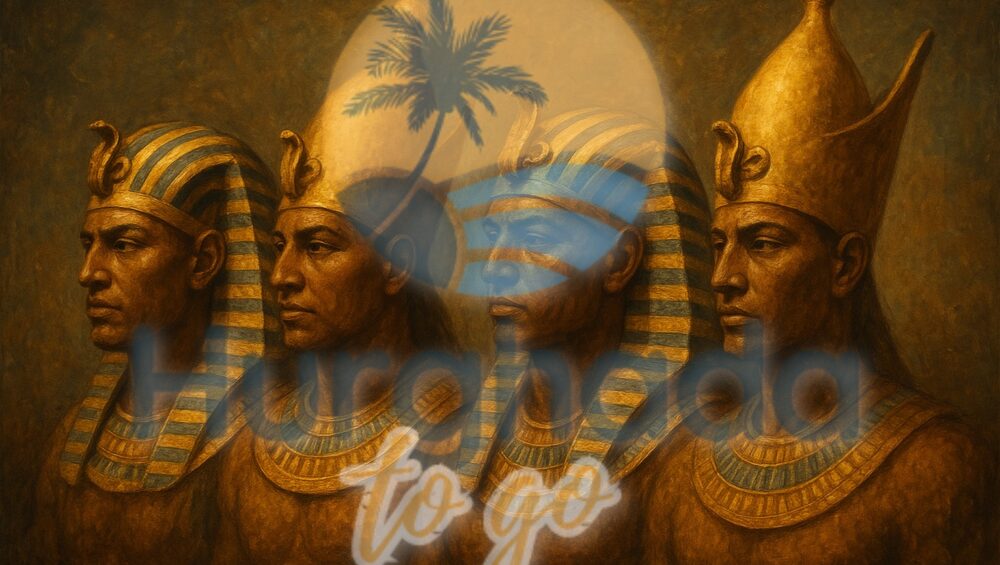
Kings of nile with crowns of gold
The phrase “kings of Nile with crowns of gold” likely refers to the pharaohs of ancient Egypt, who ruled along the Nile River and were often depicted wearing elaborate crowns symbolizing their divine authority and wealth. The “crowns of gold” could allude to iconic royal headgear like the Pschent (double crown) or Nemes headdress, sometimes adorned with gold, representing power over Upper and Lower Egypt. Gold was abundant in ancient Egypt, especially from Nubian mines, and was associated with divinity and eternity.
If you’re asking about specific pharaohs, notable examples include:
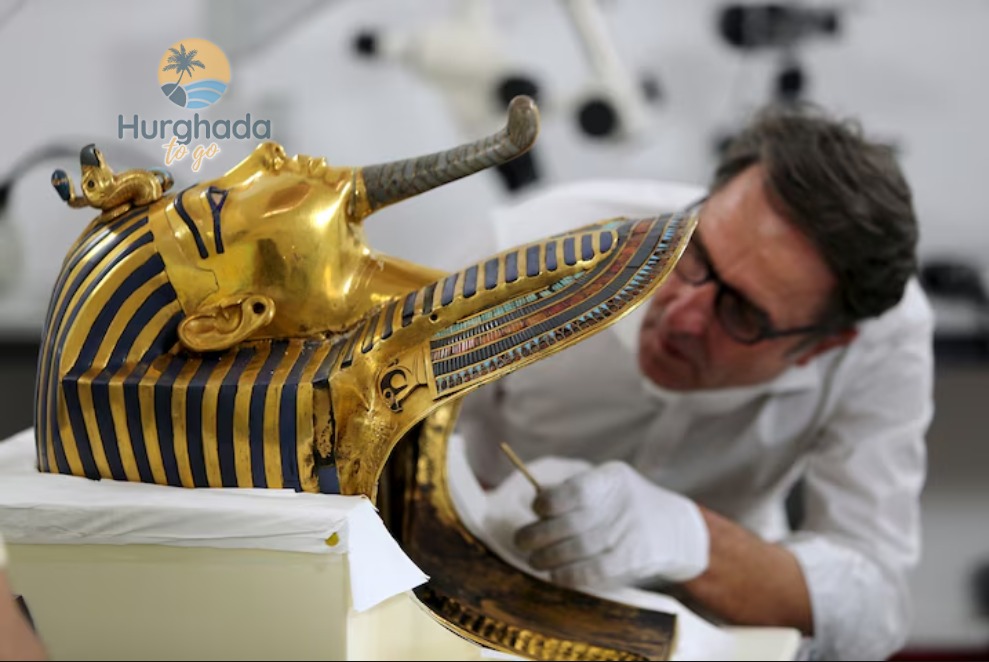
- Tutankhamun (r. ~1332–1323 BCE): Famous for his intact tomb and golden death mask, symbolizing the “crowns of gold.”
- Ramesses II (r. ~1279–1213 BCE): Known as Ramesses the Great, a powerful ruler who built grand monuments like Abu Simbel.
- Akhenaten (r. ~1353–1336 BCE): The “heretic king” who briefly shifted Egypt to monotheism.
- Cleopatra VII (r. ~51–30 BCE): The last pharaoh, though more associated with Greek influence, still tied to Nile royalty.
Tutankhamun’s golden death mask is one of the most iconic artifacts from ancient Egypt, discovered in 1922 by Howard Carter in the pharaoh’s tomb (KV62) in the Valley of the Kings. Crafted around 1323 BCE, during the 18th Dynasty, it was placed over the mummified face of Tutankhamun to ensure his spirit could recognize his body in the afterlife, reflecting Egyptian beliefs in immortality and divine kingship.
Tutankhamun Key Details:
- Material Composition: The mask is primarily made of solid gold, weighing about 10.23 kg (22.5 lbs). It’s inlaid with precious stones and colored glass, including:
- Lapis lazuli: Deep blue stone for the broad collar necklace and facial stripes.
- Quartz: Used for the whites of the eyes.
- Obsidian: For the pupils, creating a lifelike gaze.
- Faience and carnelian: For additional decorative elements.
- Turquoise and other semi-precious stones: Enhancing the intricate details.
- Design and Symbolism:
- The mask depicts Tutankhamun with a serene, youthful face, wearing the Nemes headcloth, a striped blue-and-gold headdress with a broad collar necklace.
- A vulture (Nekhbet) and cobra (Wadjet) on the forehead symbolize protection and dominion over Upper and Lower Egypt, respectively.
- The false beard signifies the pharaoh’s divine status, linking him to Osiris, god of the afterlife.
- The craftsmanship reflects the high skill of New Kingdom artisans, with detailed inlays and gold hammering.
- Dimensions: Approximately 54 cm tall, 39.3 cm wide, and 49 cm deep.
- Purpose: The mask served a spiritual function, protecting the pharaoh’s face and aiding his soul’s journey in the afterlife. Gold, associated with eternity and the gods, underscored his divine status.
- Condition and Discovery: Found in near-pristine condition, the mask was nestled within Tutankhamun’s innermost coffin (one of three nested coffins). Its discovery captivated the world, fueling global interest in Egyptology.
Historical Context:
- Tutankhamun, who ruled c. 1332–1323 BCE, was a minor pharaoh who ascended the throne at age 9 and died around 18. His reign followed the controversial religious reforms of Akhenaten, and he restored traditional Egyptian polytheism.
- The mask’s opulence reflects Egypt’s wealth during the New Kingdom, particularly from gold sourced from Nubia.
- Its discovery by Carter, funded by Lord Carnarvon, revealed the tomb’s extraordinary treasures, largely untouched by robbers.
Current Location:
- The mask is housed in the Egyptian Museum in Cairo (inventory number JE 60672). It was temporarily moved to the Grand Egyptian Museum for display in 2023 but remains a centerpiece of Egypt’s cultural heritage.
- Due to its fragility, it’s no longer permitted to leave Egypt for exhibitions.
Cultural Significance:
- The mask is a global symbol of ancient Egypt, featured in countless books, films, and media.
- Its lifelike quality and golden splendor have made it an enduring icon, representing the mystique of pharaohs and their divine connection to the Nile’s legacy.
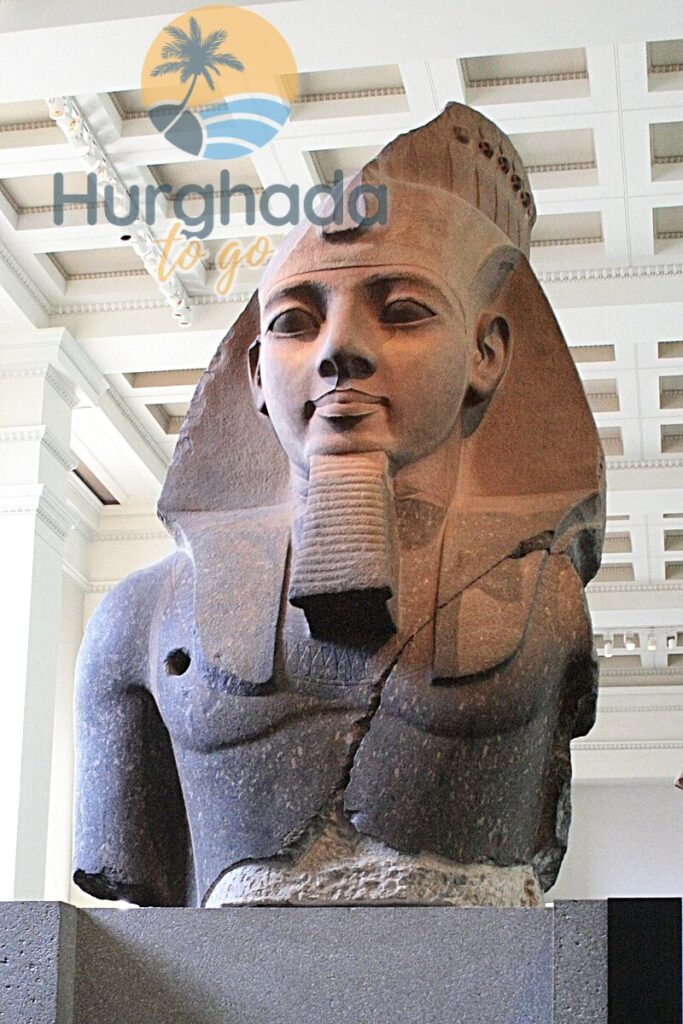
Ramesses II Ramesses the Great
Ramesses II, also known as Ramesses the Great, was one of ancient Egypt’s most celebrated pharaohs, reigning for approximately 66 years (c. 1279–1213 BCE) during the 19th Dynasty of the New Kingdom. His long rule, military prowess, monumental constructions, and diplomatic achievements made him a legendary figure in Egyptian history. Below are detailed aspects of his life, reign, and legacy, focusing on his role as a powerful ruler and builder of grand monuments.
Key Details of Ramesses II’s Life and Reign
Background and Early Life
- Birth and Family: Born around 1303 BCE, Ramesses was the son of Pharaoh Seti I and Queen Tuya. He was groomed for leadership from a young age, named co-regent by his father around age 14.
- Dynasty: 19th Dynasty, a period of Egypt’s peak power and wealth in the New Kingdom (c. 1550–1070 BCE).
- Name and Titles: His throne name was Usermaatre Setepenre (“The justice of Ra is powerful, chosen of Ra”). “Ramesses” means “Ra has fashioned him.”
Military Achievements
- Battle of Kadesh (c. 1274 BCE):
- Fought against the Hittite Empire under Muwatalli II in modern-day Syria, near the city of Kadesh.
- One of the largest chariot battles in history, involving thousands of chariots and troops.
- Ramesses claimed victory in Egyptian records (e.g., at Ramesseum and Abu Simbel), but the battle was likely a stalemate.
- Resulted in the Treaty of Kadesh (c. 1259 BCE), the earliest recorded peace treaty in history, establishing a non-aggression pact with the Hittites. A replica of the treaty is displayed at the United Nations.
- Other Campaigns:
- Campaigned in Nubia (modern Sudan) to secure Egypt’s southern borders and access to gold mines.
- Conducted expeditions in Canaan and Syria to maintain Egyptian influence against rival powers.
- Strengthened Egypt’s defenses with fortresses along the Libyan frontier.
Monumental Constructions
Ramesses II’s building projects were unprecedented in scale and grandeur, earning him the title of Egypt’s greatest monument builder. His constructions were designed to glorify his reign, legitimize his divine status, and ensure his legacy.
- Abu Simbel Temples (Nubia, c. 1264–1244 BCE):
- Two rock-cut temples near the modern Egypt-Sudan border.
- The Great Temple is dedicated to Ramesses II and the gods Amun, Ra-Horakhty, and Ptah. Its facade features four colossal 20-meter statues of Ramesses seated.
- The Smaller Temple honors his chief wife, Nefertari, and the goddess Hathor.
- Aligned so that twice a year (around February 22 and October 22), sunlight illuminates the inner sanctuary, highlighting Ramesses’ divine connection.
- Relocated in the 1960s by UNESCO to save it from flooding by Lake Nasser during the Aswan High Dam construction.
- Ramesseum (Thebes, modern Luxor):
- His mortuary temple, designed for his funerary cult and worship after death.
- Features a massive fallen colossus of Ramesses, inspiring Percy Bysshe Shelley’s poem Ozymandias (“Look on my works, ye Mighty, and despair!”).
- Decorated with reliefs of the Battle of Kadesh and other triumphs.
- Pi-Ramesses (Qantir, Nile Delta):
- Ramesses built a new capital city in the eastern Delta, near his family’s ancestral home.
- A grand administrative and military hub with palaces, temples, and a zoo, described as a glittering metropolis.
- Its strategic location facilitated campaigns into the Levant.
- Additions to Existing Sites:
- Expanded the temples at Karnak and Luxor, adding statues, obelisks, and inscriptions.
- Contributed to the Temple of Amun at Karnak, including a colossal statue of himself.
- Usurped or completed monuments of earlier pharaohs, often inscribing his own name to claim credit.
Diplomacy and Family
- Treaty of Kadesh: Beyond its military significance, the treaty fostered peace with the Hittites, sealed by Ramesses’ marriage to a Hittite princess, Maathorneferure, around 1245 BCE.
- Family Life:
- Had over 100 children with multiple wives, including chief queen Nefertari and secondary wife Isetnofret.
- Nefertari was highly honored, depicted in statues and the smaller Abu Simbel temple. Her tomb (QV66) in the Valley of the Queens is one of Egypt’s finest.
- Key sons included Khaemwaset, a priest and early archaeologist who restored older monuments, and Merenptah, who succeeded Ramesses as pharaoh.
- Diplomacy: Exchanged letters with Hittite kings and maintained trade with Mediterranean powers, showcasing Egypt’s wealth and influence.
Physical Appearance and Health
- Mummy Analysis: Ramesses’ mummy, discovered in 1881 in the Deir el-Bahri cache (DB320), reveals he was about 5’7” tall with red hair, a rare trait possibly linked to his family’s Delta origins.
- Health: Suffered from arthritis, dental issues, and possibly ankylosing spondylitis in old age. He died around age 90, unusually long for the time.
- Posthumous Journey: His mummy was moved multiple times by priests to protect it from tomb robbers. In 1974, it was sent to Paris for preservation treatment, where he was issued an Egyptian passport listing his occupation as “King (deceased).”
Legacy and Cultural Impact
- Historical Significance:
- Ruled during Egypt’s New Kingdom zenith, consolidating power and wealth.
- His long reign (66 years) stabilized Egypt, making him a symbol of enduring kingship.
- His monuments and inscriptions exaggerated his achievements, a hallmark of Egyptian propaganda, ensuring his fame endured.
- Modern Recognition:
- Known as “Ramesses the Great” for his military, diplomatic, and architectural feats.
- Featured in popular culture, including films like The Ten Commandments (1956) and video games.
- His mummy is displayed in the National Museum of Egyptian Civilization in Cairo (as of 2021).
- Archaeological Impact:
- His monuments, like Abu Simbel and the Ramesseum, remain major tourist attractions and UNESCO World Heritage Sites.
- Excavations at Pi-Ramesses continue to reveal details of his capital’s grandeur.
Connection to “Kings of Nile with Crowns of Gold”
- Nile Context: Ramesses’ power was tied to the Nile, which sustained Egypt’s agriculture and economy. His capital, Pi-Ramesses, was strategically located in the fertile Delta.
- Crowns of Gold: While Ramesses is often depicted with the blue Khepresh war crown or the double crown (Pschent) symbolizing unified Egypt, gold was central to his imagery. His statues, coffins, and temple decorations often featured gold, reflecting his divine status and Egypt’s wealth from Nubian mines.
- Comparison to Tutankhamun’s Mask: Unlike Tutankhamun’s solid gold death mask, Ramesses’ surviving artifacts include gold jewelry, inlaid statues, and gilded elements in his temples, emphasizing his wealth but in a broader monumental context.
Additional Notes
- Challenges: Some scholars note that Ramesses’ inscriptions exaggerated victories (e.g., Kadesh), a common practice to bolster his divine image. His later reign faced economic strains and labor strikes, as recorded in the Turin Strike Papyrus.
- Archaeological Evidence: Reliefs, stelae, and papyri (e.g., the Poem of Pentaur) provide detailed accounts of his reign, though biased toward glorification.
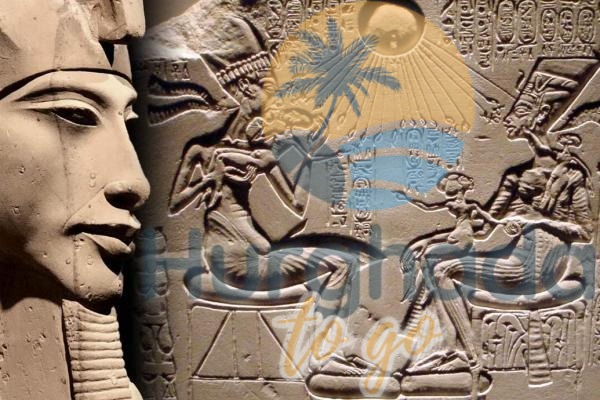
Akhenaten the heretic king
Akhenaten, often called the “heretic king,” was a pharaoh of Egypt’s 18th Dynasty (r. c. 1353–1336 BCE) during the New Kingdom. He is best known for his radical religious reforms, introducing a form of monotheism centered on the worship of the sun disk, Aten, which disrupted Egypt’s traditional polytheistic religion. His reign marked a dramatic departure from convention, influencing art, culture, and politics, though his changes were largely reversed after his death. Below are detailed aspects of Akhenaten’s life, reign, and legacy, focusing on his role as the “heretic king” and his religious revolution.
Key Details of Akhenaten’s Life and Reign
Background and Identity
- Birth Name: Born Amenhotep IV (“Amun is satisfied”), son of Pharaoh Amenhotep III and Queen Tiye.
- Throne Name: Initially Neferkheperure Amenhotep, changed to Neferkheperure Akhenaten (“Effective for the Aten”) around Year 5 of his reign, reflecting his religious shift.
- Family:
- Married Nefertiti, his Great Royal Wife, famous for her iconic bust (found in Amarna, now in Berlin’s Neues Museum). She played a prominent role in his religious and political life.
- Likely fathered Tutankhamun (originally Tutankhaten) with a secondary wife or sister, possibly Kiya or an unnamed sister.
- Had six daughters with Nefertiti, including Meritaten and Ankhesenpaaten (later Ankhesenamun, Tutankhamun’s wife).
- Dynasty: 18th Dynasty, a golden age of Egyptian power and wealth under rulers like Thutmose III and Amenhotep III.
Religious Revolution: Shift to Monotheism
- Worship of the Aten:
- Akhenaten elevated the Aten, the sun disk, above all other gods, promoting a form of monotheism unprecedented in Egyptian history.
- Unlike traditional worship of Amun-Ra and other deities, the Aten was depicted as a solar disk with rays ending in hands, offering life (ankh symbols) to the royal family.
- By Year 5, he banned worship of other gods, closed temples (especially those of Amun in Thebes), and redirected resources to Aten worship, alienating the powerful Amun priesthood.
- Theological Impact:
- His monotheism was exclusive, focusing on the Aten as the sole creator and sustainer of life, with Akhenaten and Nefertiti as divine intermediaries.
- The “Great Hymn to the Aten,” found in Amarna tombs, praises the Aten’s universal power, drawing parallels to later monotheistic traditions like Judaism or Christianity (though direct influence is debated).
- Motivations:
- Scholars debate whether Akhenaten’s reforms were driven by genuine spiritual conviction, a political move to weaken the Amun priesthood’s influence, or a mix of both.
- His father, Amenhotep III, had already elevated solar worship, suggesting Akhenaten’s reforms were an extreme continuation of existing trends.
Founding of Amarna (Akhetaten)
- New Capital: Around Year 5, Akhenaten abandoned Thebes, Egypt’s religious and political center, and founded a new capital called Akhetaten (“Horizon of the Aten”), modern-day Amarna, in Middle Egypt.
- Built on virgin land, Akhetaten was dedicated to the Aten, with open-air temples, palaces, and administrative buildings.
- The city’s layout emphasized solar worship, with temples designed to capture sunlight.
- Purpose: The move isolated Akhenaten from Thebes’ traditional power structures, allowing him to enforce his religious vision.
- Archaeological Significance: Amarna’s ruins, including tombs, stelae, and workshops, provide key evidence of Akhenaten’s reign. The “Amarna Letters,” a cache of diplomatic correspondence, reveal Egypt’s foreign relations during this period.
Artistic Revolution: Amarna Art
- Break from Tradition:
- Akhenaten’s reign introduced a distinctive art style, departing from Egypt’s idealized, rigid forms.
- Early depictions show him with exaggerated features: elongated face, thick lips, narrow eyes, protruding chin, and a slender neck, possibly symbolic or reflecting a medical condition (e.g., Marfan’s syndrome, though unproven).
- Later art softened these features but retained naturalism, showing intimate family scenes (e.g., Akhenaten and Nefertiti with their daughters under the Aten’s rays).
- Significance:
- Amarna art emphasized movement, emotion, and realism, contrasting with the static, eternal imagery of traditional Egyptian art.
- Reliefs and statues often depict the royal family in domestic settings, reinforcing their divine connection to the Aten.
- Examples:
- The Nefertiti Bust (c. 1345 BCE), crafted by sculptor Thutmose, is a masterpiece of Amarna art, showcasing lifelike detail.
- Boundary stelae at Amarna depict Akhenaten, Nefertiti, and their daughters worshipping the Aten.
Political and Foreign Policy
- Domestic Impact:
- The closure of Amun temples and shift to Aten worship caused economic and social disruption, as temple estates were major economic hubs.
- The Amun priesthood, stripped of power, likely resisted Akhenaten’s reforms, contributing to post-reign backlash.
- Foreign Policy:
- The Amarna Letters (clay tablets written in Akkadian) show Egypt’s correspondence with vassal states (e.g., Canaan, Mitanni) and great powers (e.g., Hittites, Babylon).
- Akhenaten’s focus on religious reform may have weakened Egypt’s control over its empire, as some vassals sought Hittite or Assyrian support.
- However, Egypt’s wealth and military prestige, inherited from Amenhotep III, largely maintained its influence during his reign.
Death and Succession
- Death: Akhenaten died around 1336 BCE, after a 17-year reign. The cause is unknown, but his mummy has not been definitively identified (a contested mummy, KV55, may be his).
- Succession:
- His death led to a murky succession. Possible successors included Smenkhkare (a mysterious figure, possibly a brother or co-regent) and Neferneferuaten (potentially Nefertiti or a daughter ruling as pharaoh).
- Tutankhaten (later Tutankhamun), likely his son, became pharaoh around age 9, guided by advisors like Ay and Horemheb.
- Restoration of Polytheism:
- Under Tutankhamun, Egypt reverted to traditional polytheism. Temples of Amun were restored, and Akhetaten was abandoned.
- Akhenaten’s monuments were defaced, and his name was erased from king lists, earning him the “heretic king” label.
Physical Appearance and Health
- Depictions: Akhenaten’s unusual portrayals (elongated skull, feminine hips, thin limbs) led to speculation about medical conditions like Marfan’s syndrome or Froehlich’s syndrome, though these are unconfirmed.
- Mummy Debate: The KV55 mummy, found in the Valley of the Kings, shows a young male (aged 20–25) with dental similarities to Tutankhamun. DNA tests suggest it could be Akhenaten or Smenkhkare, but its poor condition and age at death raise questions.
- Artistic Symbolism: Exaggerated features may have been stylistic, symbolizing the Aten’s transformative power or androgyny, rather than literal portraits.
Legacy and Cultural Impact
- Historical Significance:
- Akhenaten’s monotheism was a bold but short-lived experiment, lasting less than two decades. His reforms were erased, but they highlight the tension between tradition and innovation in ancient Egypt.
- His reign weakened Egypt’s religious and political stability, contributing to the 18th Dynasty’s eventual decline.
- Modern Fascination:
- Known as the “heretic king” for challenging Egypt’s polytheistic norms, Akhenaten is a polarizing figure, seen as a visionary or a reckless reformer.
- His religious ideas intrigue scholars, with some speculating (without firm evidence) that they influenced later monotheistic religions.
- The discovery of Amarna and artifacts like the Nefertiti bust fueled global interest in Egyptology.
- Cultural Depictions:
- Featured in literature (e.g., Mika Waltari’s The Egyptian), opera (Philip Glass’s Akhnaten), and film.
- The Nefertiti bust remains an enduring symbol of ancient Egypt’s beauty and mystery.
- Archaeological Evidence:
- Amarna’s ruins, including palaces, tombs, and workshops, provide a snapshot of his reign.
- The Amarna Letters offer insights into Egypt’s international relations and Akhenaten’s diplomatic neglect.
Connection to “Kings of Nile with Crowns of Gold”
- Nile Context: Akhenaten’s capital, Akhetaten, was built along the Nile, central to Egypt’s economy and culture. His focus on the Aten tied his rule to the sun’s life-giving power, mirrored by the Nile’s role in sustaining Egypt.
- Crowns of Gold: Akhenaten is often depicted wearing the blue Khepresh crown or a simple fillet with Atenist symbols, sometimes adorned with gold. Gold, abundant in Egypt, was used in Amarna’s art and artifacts, reflecting his divine status. Unlike Tutankhamun’s solid gold mask, Akhenaten’s surviving artifacts (e.g., gold-inlaid statues) emphasize his wealth in a more abstract, solar-focused style.
- Comparison to Tutankhamun and Ramesses II:
- Tutankhamun: Akhenaten’s likely son reversed his reforms, restoring traditional religion. Tutankhamun’s golden mask symbolizes continuity, contrasting Akhenaten’s radicalism.
- Ramesses II: Unlike Akhenaten’s focus on religious reform, Ramesses emphasized military and monumental achievements, using gold in grand statues and temples to reinforce traditional divine kingship.
Additional Notes
- Controversies:
- Akhenaten’s erasure from records (damnatio memoriae) complicates our understanding, as much evidence was destroyed or buried.
- The role of Nefertiti is debated; some suggest she ruled as co-regent or successor (Neferneferuaten).
- Archaeological Challenges: Amarna’s rapid abandonment preserved its artifacts but left gaps in understanding Akhenaten’s later years and death.
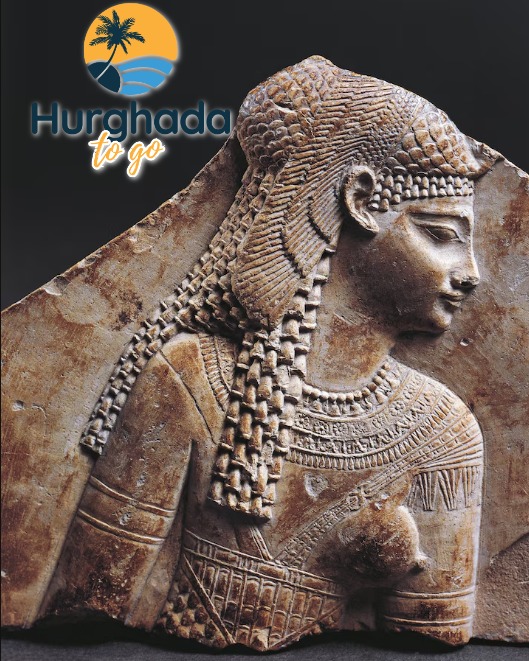
Cleopatra VII Philopator (r. c. 51–30 BCE) was the last active pharaoh of Egypt’s Ptolemaic Dynasty, renowned for her intelligence, political acumen, and legendary alliances with Roman leaders Julius Caesar and Mark Antony. As a “king of the Nile,” she ruled from Alexandria, leveraging Egypt’s wealth and strategic position to maintain independence amid Rome’s growing dominance. While not known for literal “crowns of gold,” her regal imagery, often adorned with gold and divine symbols, reflected her status as a living goddess. Below are detailed aspects of her life, reign, and legacy, focusing on her role as a powerful ruler tied to the Nile’s legacy.
Key Details of Cleopatra VII’s Life and Reign
Background and Identity
- Birth and Lineage: Born in 69 or 70 BCE, Cleopatra was a member of the Ptolemaic Dynasty, a Greek-Macedonian family founded by Ptolemy I Soter, a general of Alexander the Great. Despite her Greek heritage, she was born in Egypt and embraced its culture.
- Family:
- Daughter of Ptolemy XII Auletes and likely an Egyptian mother (possibly Cleopatra V or VI Tryphaena).
- Siblings included Ptolemy XIII, Ptolemy XIV, and Arsinoe IV, with whom she had rivalries due to Ptolemaic traditions of sibling co-rule and marriage.
- Married her younger brothers Ptolemy XIII and XIV (customary for Ptolemies) but held primary power.
- Children:
- Caesarion (Ptolemy XV Philopator Philometor Caesar), son with Julius Caesar (c. 47 BCE).
- With Mark Antony: twins Alexander Helios and Cleopatra Selene II (b. 40 BCE), and Ptolemy Philadelphus (b. 36 BCE).
- Education and Skills:
- Fluent in nine languages, including Egyptian (unique among Ptolemies, who spoke Greek), allowing her to connect with Egypt’s native population.
- Well-versed in literature, science, philosophy, and rhetoric, educated in Alexandria’s intellectual hub, the Library and Mouseion.
Reign and Political Achievements
- Accession (51 BCE):
- Became co-ruler with her father, Ptolemy XII, then with her brother Ptolemy XIII at age 18.
- Ptolemaic Egypt was a wealthy but unstable kingdom, reliant on Nile-based agriculture (especially grain exports to Rome) and vulnerable to Roman influence.
- Conflict with Ptolemy XIII:
- Tensions with Ptolemy XIII and his advisors (e.g., Pothinus, Achillas) led to her exile in 49 BCE.
- She raised an army in Syria and returned to challenge her brother.
- Alliance with Julius Caesar:
- In 48 BCE, Cleopatra famously smuggled herself into Alexandria (possibly rolled in a carpet) to meet Caesar during his campaign against Pompey.
- She became Caesar’s ally and lover, securing his support against Ptolemy XIII.
- After Caesar’s victory at the Battle of the Nile (47 BCE), Ptolemy XIII drowned, and Cleopatra was restored as co-ruler with her younger brother Ptolemy XIV (whom she likely had killed later).
- Gave birth to Caesarion, claiming him as Caesar’s heir, strengthening her position.
- Alliance with Mark Antony:
- After Caesar’s assassination (44 BCE), Cleopatra aligned with Mark Antony, a member of Rome’s Second Triumvirate.
- Their relationship began in 41 BCE in Tarsus, blending romance and political strategy.
- Antony granted her territories (e.g., parts of Cyprus, Crete, and the Levant), expanding Egypt’s influence.
- The Donations of Alexandria (34 BCE) declared Caesarion Caesar’s heir and assigned eastern territories to her children, angering Rome and Octavian (later Augustus).
- Conflict with Octavian:
- Tensions with Octavian culminated in the Battle of Actium (31 BCE), where Antony and Cleopatra’s fleet was defeated by Octavian’s forces under Agrippa.
- Fleeing to Alexandria, Cleopatra faced Egypt’s annexation by Rome.
- Death (30 BCE):
- After Antony’s suicide following defeat, Cleopatra died by suicide, traditionally believed to be by asp bite (though poison is also plausible).
- She was 39, ending Ptolemaic rule. Caesarion was executed by Octavian, but her children with Antony were spared and raised in Rome (Cleopatra Selene II later became queen of Mauretania).
Cultural and Religious Role
- Divine Imagery:
- Cleopatra presented herself as the living embodiment of Isis, the Egyptian goddess of motherhood and magic, aligning with native Egyptian traditions.
- She wore elaborate regalia, likely including gold jewelry, diadems, and Hellenistic-Egyptian robes, symbolizing her divine and royal status.
- Coins depict her with a Greek-style diadem or as Isis, blending Greek and Egyptian iconography.
- Nile Connection:
- Egypt’s wealth depended on the Nile’s annual floods, which Cleopatra managed carefully to ensure grain production for Rome, securing her political leverage.
- Alexandria, her capital, was a cosmopolitan port on the Nile Delta, thriving on trade and culture.
- Patronage:
- Supported the arts, sciences, and religion, maintaining Alexandria’s status as a cultural center.
- Promoted both Egyptian and Greek traditions, bridging cultures to strengthen her rule.
Physical Appearance and Depictions
- Contemporary Evidence:
- No confirmed statues or mummies survive, but coins show a strong profile with a prominent nose, hooked chin, and diadem, emphasizing regal authority over idealized beauty.
- Ancient sources (e.g., Plutarch) praise her charisma, voice, and intellect over physical beauty.
- Modern Myths:
- Romanticized in Western art and media (e.g., Elizabeth Taylor’s 1963 Cleopatra), often exaggerating her allure and downplaying her political skill.
- Ethnicity Debate:
- As a Ptolemy, she was primarily Greek, but her mother’s possible Egyptian or Nubian heritage is debated, suggesting mixed ancestry.
- Her embrace of Egyptian culture (e.g., speaking the language, adopting Isis imagery) set her apart from her Greek predecessors.
Legacy and Cultural Impact
- Historical Significance:
- Cleopatra was the last independent ruler of Egypt before its annexation as a Roman province under Augustus.
- Her alliances with Caesar and Antony shaped the Mediterranean world’s power dynamics, delaying Rome’s conquest of Egypt.
- Her reign marked the end of Hellenistic kingdoms, transitioning to Roman dominance.
- Modern Fascination:
- Celebrated as a symbol of female power, intelligence, and seduction, though ancient Roman propaganda (e.g., Octavian’s smear campaign) cast her as a manipulative temptress.
- Featured in literature (e.g., Shakespeare’s Antony and Cleopatra), art, and films, cementing her as a cultural icon.
- Archaeological Evidence:
- Few artifacts directly tied to Cleopatra survive, but Alexandria’s submerged ruins (e.g., her palace complex) and coins provide glimpses of her era.
- Ongoing searches for her tomb (possibly near Taposiris Magna) fuel archaeological interest.
- Legacy of Her Children:
- Cleopatra Selene II ruled Mauretania, blending Egyptian, Greek, and Roman cultures.
- Caesarion’s execution ended the Ptolemaic line’s claim to Egypt.
Connection to “Kings of Nile with Crowns of Gold”
- Nile Context: Cleopatra’s power was rooted in the Nile’s fertility, which sustained Egypt’s grain exports, making her indispensable to Rome. Alexandria’s position on the Nile Delta amplified her economic and cultural influence.
- Crowns of Gold: While not known for a literal golden crown like Tutankhamun’s mask, Cleopatra’s regalia included gold jewelry, diadems, and divine adornments (e.g., Isis headdresses), symbolizing her wealth and god-like status. Gold was central to Ptolemaic displays of power, seen in coins and palace decor.
- Comparison to Other Pharaohs:
- Tutankhamun: His golden mask and tomb treasures contrast with Cleopatra’s more diplomatic and cultural legacy, but both leveraged Egypt’s wealth.
- Ramesses II: Like Ramesses, Cleopatra used propaganda and imagery to project power, but her reign focused on diplomacy over monumental construction.
- Akhenaten: Unlike Akhenaten’s religious radicalism, Cleopatra blended Egyptian and Greek traditions to unify her diverse subjects.
Additional Notes
- Challenges:
- Roman sources (e.g., Cassius Dio, Suetonius) are biased against her, as Octavian’s propaganda vilified her to justify war. Egyptian and neutral perspectives are scarce.
- Her reliance on Rome limited her autonomy, but her diplomacy delayed Egypt’s fall.
- Controversies:
- Debates persist about her appearance, ethnicity, and the exact cause of her death.
- Her portrayal as a seductress overshadows her political and intellectual achievements.
Easy & Secure Booking
Reserve your unforgettable 10 Best trips in Egypt now through:
🌐 Official Website: hurghadatogo.com
📧 Email: [email protected]
📱 WhatsApp: +201009255585
We also recommend you :
Luxor day trip from Hurghada by Bus
Private Luxor day tour Hurghada
Hurghada to Luxor day tour by flight