

The Serapeum of Saqqara: Secrets, History, and Mysteries of Egypt’s Sacred Bull Necropolis
The Serapeum of Saqqara
The Serapeum of Saqqara is a vast underground necropolis in the Saqqara plateau, near ancient Memphis in Egypt (about 20 km south of modern Cairo). It served as the primary burial site for the sacred Apis bulls, revered as living incarnations of the god Ptah. After death, these bulls were mummified and interred as Osiris-Apis (later syncretized into the Greco-Egyptian god Serapis during the Ptolemaic period).
The site developed over more than 1,400 years, from the New Kingdom (c. 1400 BC under Amenhotep III) through the Ptolemaic era (until c. 30 BC). Early burials were in individual tombs, but Prince Khaemweset (son of Ramesses II) initiated systematic underground interments in the 19th Dynasty. The main “Greater Vaults” began under the 26th Dynasty (c. 664–525 BC) and expanded significantly in Ptolemaic times, reaching over 350 meters in length with side niches for burials. An avenue lined with hundreds of sphinxes (likely added under Nectanebo I) once led to the entrance.

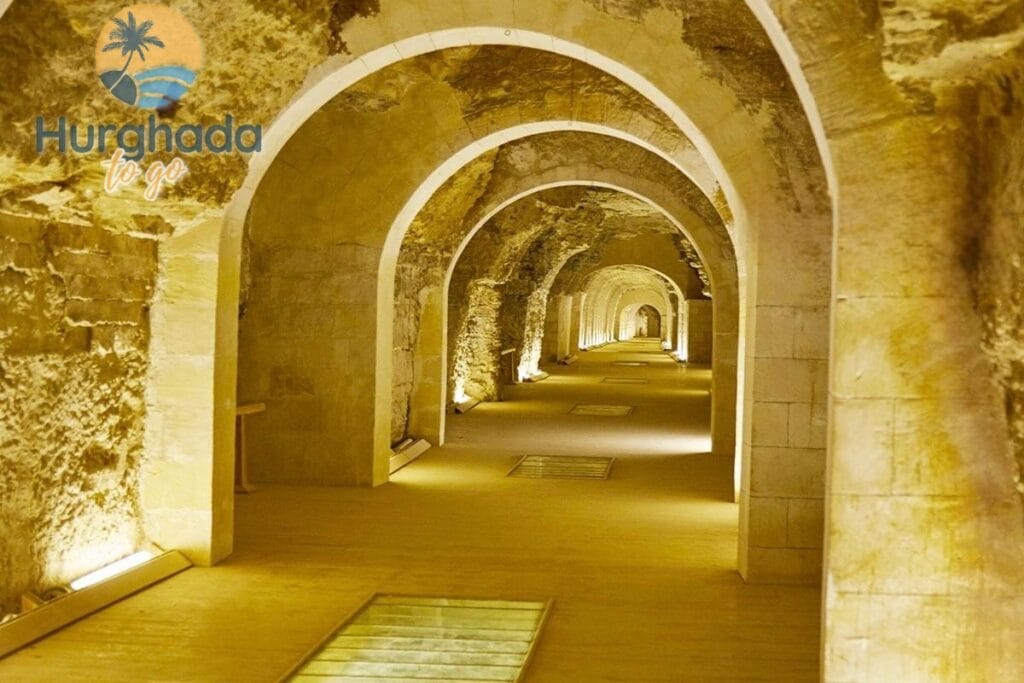
French archaeologist Auguste Mariette rediscovered the Serapeum in 1850 after following clues from ancient texts and a partially exposed sphinx. His excavations (1850–1853, with ongoing work in recent decades) revealed long, arched underground galleries hewn into the rock.
The most striking features are the enormous stone sarcophagi in the Greater Vaults—24 surviving examples, each carved from hard stones like granite, basalt, or diorite quarried from Aswan hundreds of kilometers away. These monolithic boxes typically measure about 4 meters long, 2.3 meters wide and high externally, with walls up to 50 cm thick and lids adding another meter in height. They weigh 60–80 tons total (lids alone ~30 tons). Precisely hollowed interiors could accommodate a mummified bull wrapped in linens and adorned with treasures.
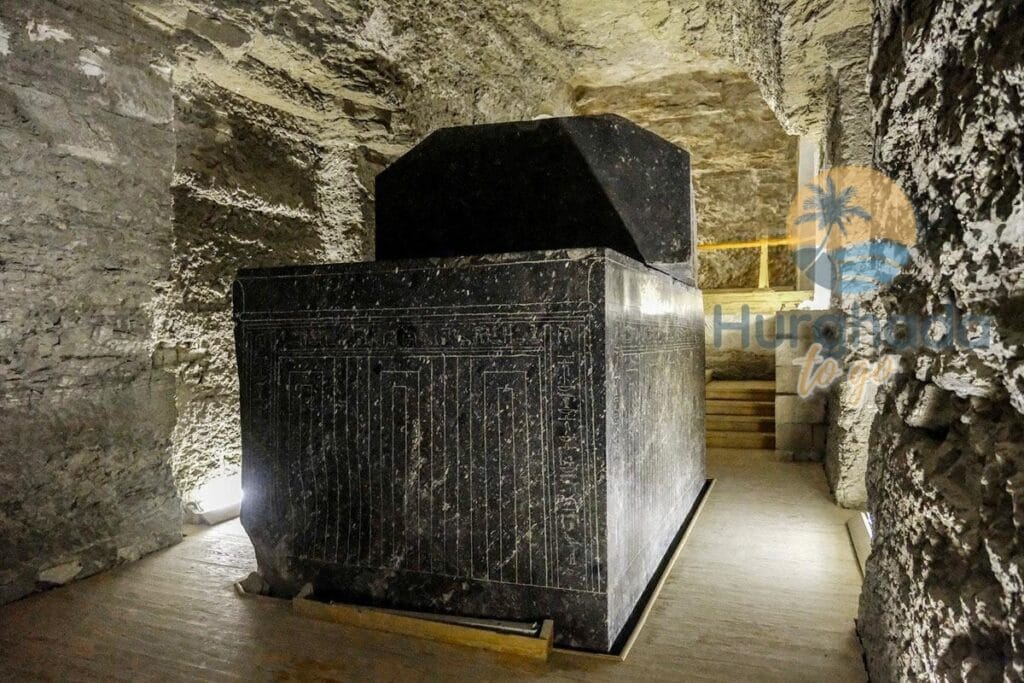
Despite their grandeur, nearly all sarcophagi were found empty or looted in antiquity—mummies destroyed, valuables removed, and even bull remains sometimes burned or scattered. Only a few undisturbed burials yielded artifacts like stelae, jewelry, and embalmed remains. Inscribed examples are rare (e.g., those of Amasis II and Cambyses II).
The Apis cult was central to Memphite religion: a special bull (identified by distinctive markings) was selected, lived in luxury at the Ptah temple, and upon death underwent elaborate 70-day mummification and funeral rites before burial here. The site reflects Egypt’s enduring reverence for these animals as divine intermediaries.
Today, the Greater Vaults are open to visitors as part of the Saqqara archaeological area (a UNESCO World Heritage site). Modern lighting and walkways allow safe exploration of the eerie, atmospheric tunnels. No major new discoveries have been reported in recent years (as of 2026), though conservation and minor excavations continue. The Serapeum remains one of Egypt’s most impressive and mysterious ancient engineering feats.
Introduction
Hidden beneath the golden sands of Saqqara lies one of the most mysterious and awe‑inspiring underground monuments of ancient Egypt — The Serapeum of Saqqara. While the pyramids of Giza attract global fame, the Serapeum remains a lesser‑known yet profoundly significant archaeological wonder. This vast subterranean complex served as the sacred burial place of the Apis Bulls, revered as living incarnations of divine power.
For historians, archaeologists, spiritual researchers, and curious travelers alike, the Serapeum represents a fusion of religion, engineering mastery, funerary ritual, and enduring mystery. In this in‑depth SEO blog article, we will explore:
- The origins of the Apis cult
- Construction and expansion of the Serapeum
- The gigantic sarcophagi and how they were moved
- Burial rituals and religious symbolism
- Greek and Roman influence
- Rediscovery by Auguste Mariette
- Modern tourism and restoration
- The secrets and unexplained mysteries of the Serapeum
1. What Is the Serapeum of Saqqara?
The Serapeum of Saqqara is an underground necropolis dedicated to the burial of the sacred Apis bulls, located within the vast Saqqara burial field near ancient Memphis, Egypt’s first capital.
The Apis bull was believed to be the earthly manifestation of Ptah, the creator god of Memphis. Upon death, the bull became Osiris‑Apis, symbolizing rebirth and the afterlife. During the Hellenistic era, this fusion deity evolved into Serapis, combining Egyptian and Greek religious elements.
This transformation gave the burial complex its modern name — Serapeum.
2. The Origins of the Apis Bull Cult
The worship of the Apis bull dates back to Egypt’s earliest dynasties, possibly founded around 3000 BC under Pharaoh Menes.
Sacred Identification Marks
Priests identified the divine bull through specific markings, including:
- A black coat
- White triangle on the forehead
- Eagle shape on the back
- Double tail hairs
- Sacred knot under the tongue
These features symbolized cosmic and celestial elements such as the moon, stars, and fertility.
Once identified, the calf was transported ceremonially to Memphis, where it lived in luxury within the Temple of Ptah.
3. Life and Ritual Role of the Apis Bull
The Apis bull was treated not as an animal but as a living god.
Ritual Milestones
Four sacred events defined its life:
- Birth
- Installation
- Death
- Burial
When an Apis died, Egypt entered national mourning. Priests immediately began searching for the next divine incarnation.
4. Construction History of the Serapeum
Early Isolated Tombs (18th Dynasty)
The earliest burials date to the reign of Amenhotep III (14th century BC). Bulls were interred in individual tombs with chapels above ground.
The Lesser Vaults — Ramesside Expansion
Prince Khaemweset, son of Ramesses II, ordered the excavation of underground tunnels to connect burial chambers — creating the first true catacombs.
The Greater Vaults — Late Period Engineering
Under Psamtik I (26th Dynasty), the Serapeum expanded dramatically:
- Long central tunnel
- Massive burial chambers
- Parallel service corridors
- Extended further during the Ptolemaic era
At full length, galleries stretched hundreds of meters beneath the desert.
5. The Giant Sarcophagi: Engineering Marvels
One of the Serapeum’s greatest wonders is its enormous stone coffins.
Dimensions & Weight
- Average weight: 40 tonnes
- Lid weight: 20–25 tonnes
- Length: ~4 meters
- Materials: Granite, basalt, diorite
These are among the largest sarcophagi ever created in ancient Egypt.
Transport Methods
Archaeological evidence shows Egyptians used:
- Wooden rollers
- Winches with lever arms
- Rail systems carved into floors
- Sand‑lowering techniques
Chambers were filled with sand, coffins moved in place, then sand removed to lower them precisely.
This demonstrates extraordinary logistical planning and mechanical knowledge.
6. Burial Ceremonies of the Sacred Bulls
Apis burials rivaled royal funerals in splendor.
Embalming Process
- Lasted 68 days
- Wrapped in fine linen
- Anointed with oils and resins
- Decorated with amulets
Funeral Duration
Total ceremonies lasted 70 days, ending in a grand procession to the Serapeum.
Ancient records describe immense wealth spent on each burial — including silver, gold, and precious stones.
7. The Avenue of Sphinxes
A grand ceremonial road led to the Serapeum entrance.
- Lined with 370–380 sphinxes
- Built under Pharaoh Nectanebo I
- Served as a sacred processional path
This avenue reinforced the divine status of the Apis cult.
8. Greek Influence and the Birth of Serapis
During the Ptolemaic Period, Greek rulers merged Egyptian and Hellenistic beliefs.
The fusion of:
- Osiris
- Apis
- Zeus
- Hades
Created Serapis, a universal god meant to unite Greek and Egyptian populations.
Greek statues of philosophers like Plato and Homer were even placed near the Serapeum — symbolizing cultural integration.
9. Decline and Abandonment
After Egypt fell to Rome (30 BC), the Serapeum declined.
Causes
- Religious shifts
- Roman disinterest
- Economic decline
Eventually the site was abandoned and buried by sand.
Looters later:
- Broke sarcophagi
- Destroyed mummies
- Stole treasures
- Defaced inscriptions
10. Rediscovery by Auguste Mariette
In 1850, French Egyptologist Auguste Mariette rediscovered the Serapeum.
How He Found It
- Noticed a sphinx head in the الرمال
- Cleared sand
- Followed the avenue
- Discovered underground tunnels
Major Discoveries
- Intact bull burials
- Thousands of stelae
- Statues and amulets
- Chronological records
These finds revolutionized Egyptology.
11. Modern Restoration & Tourism
The Serapeum opened to visitors in the 19th century.
Historical Visits
- Prince of Wales (later Edward VII)
- European explorers
Modern Conservation
- Damaged in 1992 earthquake
- Closed for safety
- Restored 2001–2012
Today, visitors can explore the Greater Vaults.
The Secrets of the Serapeum of Saqqara
Beyond history lies mystery. The Serapeum has become a focal point for alternative archaeology, engineering debates, and spiritual speculation.
12. Precision Stone Cutting
Many sarcophagi feature:
- Mirror‑polished granite
- Perfect right angles
- Smooth interiors
Some researchers question how such precision was achieved with ancient tools.
13. Transportation Mystery
Moving 60‑ton stones through narrow tunnels remains controversial.
Theories include:
- Advanced mechanical systems
- Lost engineering techniques
- Massive labor forces
14. Acoustic Properties
Visitors report unusual acoustics:
- Deep resonance
- Vibrational echoes
- Sound amplification
Some believe chambers were designed for ritual sound ceremonies.
15. Energy & Spiritual Theories
Alternative researchers suggest:
- Earth energy alignment
- Healing frequencies
- Initiation chambers
Though unproven, these ideas fuel modern fascination.
16. The Missing Bull Mummies
Most bull remains were destroyed or stolen.
Questions remain:
- Were some relocated?
- Hidden chambers undiscovered?
- Looted in antiquity or later eras?
17. Unexplored Tunnels
Collapsed areas — especially the Lesser Vaults — remain partially unexcavated.
Modern missions continue stabilization work, raising hopes of new discoveries.
Archaeological Importance
The Serapeum provides crucial insight into:
- Animal cult worship
- Funerary industries
- Stone engineering
- Religious evolution
- Greek‑Egyptian syncretism
Stelae records helped establish Egyptian historical chronology.
Visiting the Serapeum Today
Located in Saqqara near the Step Pyramid of Djoser, the site is accessible via guided tours.
Visitor Experience
- Descend into underground tunnels
- View massive sarcophagi
- Explore ancient burial chambers
- Experience unique acoustics
It is considered one of Egypt’s most atmospheric archaeological sites.
Conclusion
The Serapeum of Saqqara stands as a monumental testament to ancient Egypt’s religious devotion, engineering brilliance, and cultural complexity.
From sacred bull worship to Hellenistic god creation… From colossal sarcophagi to underground labyrinths… From rediscovery to modern mystery…
The Serapeum bridges myth and history in one of the most enigmatic sites ever built.
Whether viewed through archaeology, spirituality, or engineering — its secrets continue to captivate the world.
Easy & Secure Booking
Reserve your unforgettable Egypt Holiday Package
🌐 Official Website: hurghadatogo.com
📧 Email: [email protected]
📱 WhatsApp: +201009255585
We also recommend you :
Cairo, Luxor & Aswan Tour Package – Explore Ancient Egypt
Best Egypt Tour Package: Discover Cairo, Luxor & Aswan 2026
Cairo Day Trip by Flight from Sharm El Sheikh 2026
Private Tour to the Grand Egyptian Museum from Cairo 2026
Luxor Overnight Tour from Hurghada – 2 Days 1 Night with Hot Air Balloon