
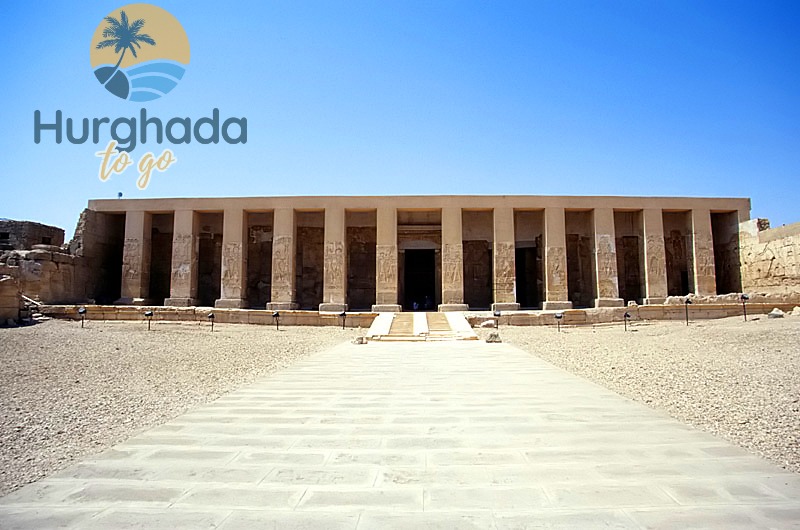
Abydos: The Sacred Ancient City of Egypt
The Temple of Seti I is now known as the Great Temple of Abydos. In antiquity, the temple was known as “Menmaatre Happy in Abydos,” and is a significant historical site in Abydos. Abydos is a significant location with its connection to kingship due to being the burial site of the proto-kings from the Pre-Dynastic period, First Dynasty kings, and the location of the Cult of Osiris.
1. Introduction – The Eternal City of Abydos
Deep in the desert west of the Nile River, not far from the modern town of Al-Balyanā, lies one of the most sacred places of ancient Egypt: Abydos. For more than three millennia, this city was revered as a gateway to eternity. It was not only the royal burial ground of Egypt’s earliest kings but also the most important pilgrimage destination for Egyptians who sought to be united with the god Osiris, lord of the afterlife.
To the ancient Egyptians, Abydos was more than a city. It was a symbol of death, resurrection, and eternal life. Pharaohs built magnificent temples here, ordinary people set up humble stelae in hopes of eternal remembrance, and pilgrims traveled long distances to take part in religious festivals that celebrated the mysteries of Osiris.
Today, Abydos stands as one of Egypt’s most important archaeological sites, preserving not only stunning temples and tombs but also stories that trace the very origins of Egyptian civilization. While Luxor and Cairo often attract the largest crowds, Abydos remains a hidden jewel—a place of mystery, spirituality, and history that rewards those who make the journey.
For modern travelers, especially those staying in Hurghada on the Red Sea, Abydos offers a unique opportunity: the chance to step away from the beaches and into the heart of ancient Egyptian spirituality. Visiting Abydos is like walking into a living memory of Egypt’s past, where every stone whispers tales of kings, gods, and pilgrims.
Location and Historical Importance of Abydos
When we speak of the ancient city of Abydos, we are referring to a place that held a unique position in the cultural and spiritual map of Egypt. Unlike many other ancient cities that flourished as political or economic capitals, Abydos became renowned primarily for its sacred and funerary significance. Its landscape, temples, and cemeteries made it not only a burial ground for kings but also the spiritual heartbeat of Egypt for thousands of years.
Geographic Setting
Abydos is located in the low desert west of the Nile River, close to the modern town of Al-Balyanā, in the Sohag Governorate of Upper Egypt. Its position is strategically interesting. While it lies somewhat distant from Egypt’s major capitals such as Memphis and Thebes, it occupied an essential role in connecting the living with the dead, and the mortal world with the divine.
To the east of Abydos stretched the fertile fields watered by the Nile, sustaining life and daily activity. To the west, the desert rose into sacred ground where tombs, temples, and shrines were built. This juxtaposition of life-giving Nile and death-symbolizing desert made Abydos an ideal place for religious symbolism and funerary traditions.
A Necropolis of Kings
From its earliest days, Abydos was chosen as the burial place of Egypt’s first rulers. The desert site known as Umm al-Qaʿāb, which translates as the “Mother of Pots” because of the countless fragments left behind by ancient offerings, became the necropolis where pharaohs of the 1st and 2nd dynasties (c. 2925–2650 BCE) were laid to rest.
The choice of Abydos as the royal cemetery was not random. It was here that the kings of early Egypt could establish a permanent connection to the divine realm. Tombs were not simply places for interment—they were elaborate monuments symbolizing authority, eternity, and the union of earthly rule with heavenly power.
Archaeological excavations beginning in the late 19th century and continuing into the modern day revealed not only these dynastic tombs but also even older burials belonging to predynastic kings, rulers who lived before the formal unification of Egypt. These discoveries pushed back the history of Abydos to the very dawn of Egyptian civilization, making it a key site for understanding how Egyptian kingship and writing first emerged.
The Birthplace of Hieroglyphs
Among the treasures found in these early tombs were ivory labels and inscribed artifacts bearing the names and titles of predynastic rulers. These inscriptions are of immense importance because they reveal that hieroglyphic writing had developed much earlier than previously believed. The sophistication of these inscriptions demonstrates that, by the time Egypt was unified under a single king, a system of writing was already well established.
This makes Abydos not just a royal cemetery, but also a birthplace of Egyptian literacy and administration, which later allowed the civilization to thrive for over three millennia.
Religious Transformation
The significance of Abydos did not remain static. Over time, the city’s spiritual role expanded far beyond being merely a royal burial ground. During the Old Kingdom (c. 2575–2130 BCE), Abydos was closely associated with the jackal god Khenti-Imentiu, “Foremost of the Westerners,” who presided over the necropolis. But by the 5th dynasty (c. 2465–2325 BCE), the cult of Khenti-Imentiu was absorbed into that of Osiris, the god of the dead and of resurrection.
This transformation changed Abydos forever. No longer was it just the burial site of kings; it became the mythical burial place of Osiris himself. This belief turned Abydos into a universal pilgrimage center for Egyptians from every corner of the Nile Valley. Whether rich or poor, noble or commoner, Egyptians longed for a spiritual connection to Abydos, since to be associated with Osiris meant a promise of eternal life.
A City of Eternal Importance
Over centuries, Abydos retained its role as a focal point of religious devotion. Pharaohs built temples here, pilgrims set up stelae inscribed with prayers, and religious festivals reenacting the death and resurrection of Osiris drew crowds of worshippers. Even when Egypt’s political capitals shifted from Memphis to Thebes to Alexandria, Abydos remained unchallenged as a spiritual capital.
For modern historians and travelers alike, Abydos represents a city that never lost its sacredness. It is both a repository of Egypt’s earliest dynastic history and a symbol of the deepest religious beliefs of one of the greatest civilizations in human history.
The Religious Significance of Abydos in Ancient Egypt
Abydos was not just a royal cemetery; it was also a spiritual heart of ancient Egypt, revered for thousands of years as the sacred city of Osiris, the god of the afterlife, rebirth, and eternal justice. To understand Abydos is to glimpse how ancient Egyptians viewed life, death, and the journey beyond the tomb.
3.1 From Jackal-God Khenti-Imentiu to Osiris
In the Old Kingdom, the earliest deity worshipped at Abydos was Khenti-Imentiu, the jackal god, whose name translates as “Foremost of the Westerners”—a reference to the spirits of the dead, who were believed to reside in the west. Over time, especially by the 5th Dynasty (c. 2465–2325 BCE), the cult of Khenti-Imentiu merged with that of Osiris, transforming Abydos into the most important pilgrimage site in all of Egypt.
This shift was not just a local change but a national one. Osiris represented hope for eternal life, and Abydos became the symbolic burial ground of the god himself. For Egyptians, to be buried near Osiris—or at least have their name inscribed there—was to guarantee a place in the afterlife.
3.2 The Pilgrimage to Abydos
Much like modern religious pilgrimages to Mecca, Lourdes, or Santiago de Compostela, ancient Egyptians traveled across the Nile Valley to visit Abydos. Pilgrims came from Thebes, Memphis, and even the Delta, often carrying small statues, offerings, and stelae inscribed with prayers.
-
Elite Egyptians built tombs, cenotaphs, or chapels near Abydos.
-
Ordinary Egyptians who could not afford to be buried there placed small stelae carved with their names and prayers, hoping their spirit would be accepted by Osiris.
Archaeologists have uncovered thousands of these stelae, each one telling a story about devotion, hope, and the promise of eternal life.
3.3 The Festival of Osiris
The highlight of Abydos’ religious calendar was the annual Festival of Osiris, a grand celebration reenacting the death and resurrection of the god. This festival included:
-
Sacred dramas performed by priests and actors, where the death of Osiris at the hands of his brother Set, and his resurrection by Isis, were retold.
-
Processions through the desert, symbolizing Osiris’ journey into the underworld.
-
Mass gatherings of pilgrims, chanting prayers and offering gifts.
For Egyptians, taking part in this festival was a spiritual experience that connected them directly with Osiris’ eternal triumph over death.
3.4 The Tomb of Osiris at Abydos
At the heart of the pilgrimage was what Egyptians believed to be the tomb of Osiris, identified with the tomb of King Djer of the 1st Dynasty at Umm el-Qaʿab. Over time, this tomb was reinterpreted as Osiris’ resting place, becoming the symbolic center of his cult.
Even today, when you stand at Abydos and imagine the processions, incense, and chants of pilgrims, you can almost feel the spiritual weight that made this desert city one of the holiest places in the ancient world.
The Monuments and Archaeological Wonders of Abydos
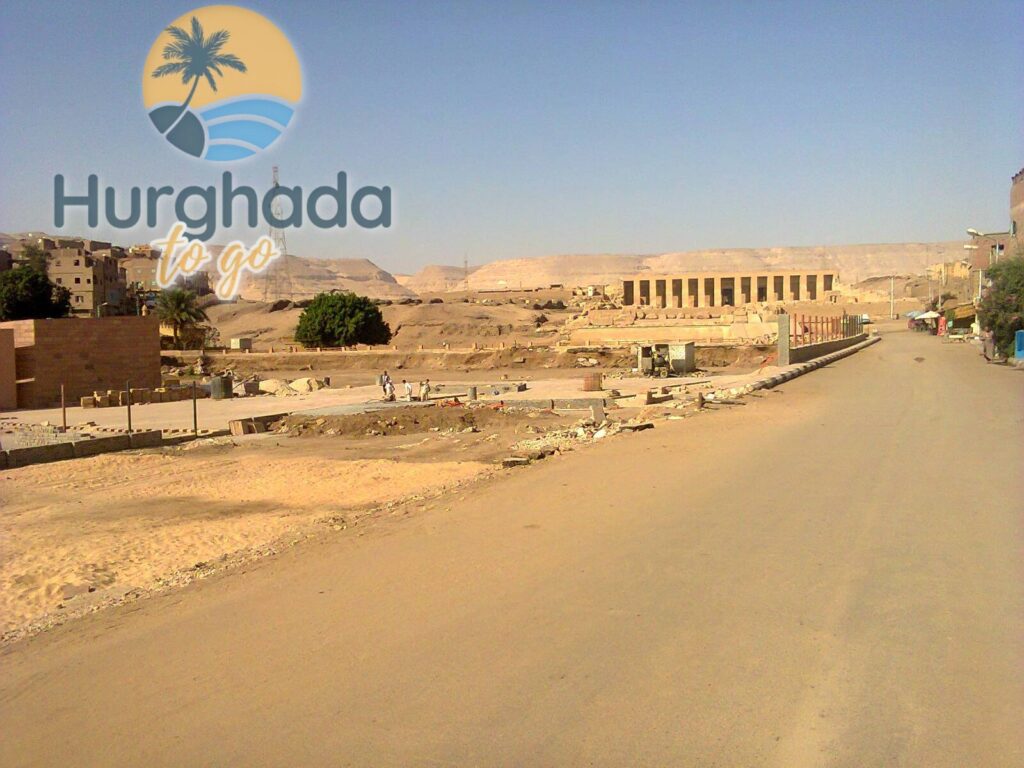
When travelers arrive at Abydos today, they encounter not just a ruin in the desert but one of the most impressive open-air museums of ancient Egypt. Its temples, tombs, and sacred structures reveal thousands of years of religious devotion and royal ambition. Abydos holds a unique charm: unlike Luxor or Giza, where crowds are constant, Abydos still retains a sense of mystery and quiet reverence.
Below are the most important monuments that define Abydos’ extraordinary archaeological landscape.
4.1 The Temple of Seti I – A Masterpiece of Ancient Art
The Temple of Seti I, built during the New Kingdom (c. 1290–1279 BCE), is Abydos’ crown jewel. Dedicated to Osiris, as well as other major deities, it is considered one of the most beautifully decorated temples in all of Egypt.
-
Unique L-shaped plan: Unlike other temples, Seti I’s temple has a distinctive design with seven sanctuaries aligned side by side, each dedicated to a different deity.
-
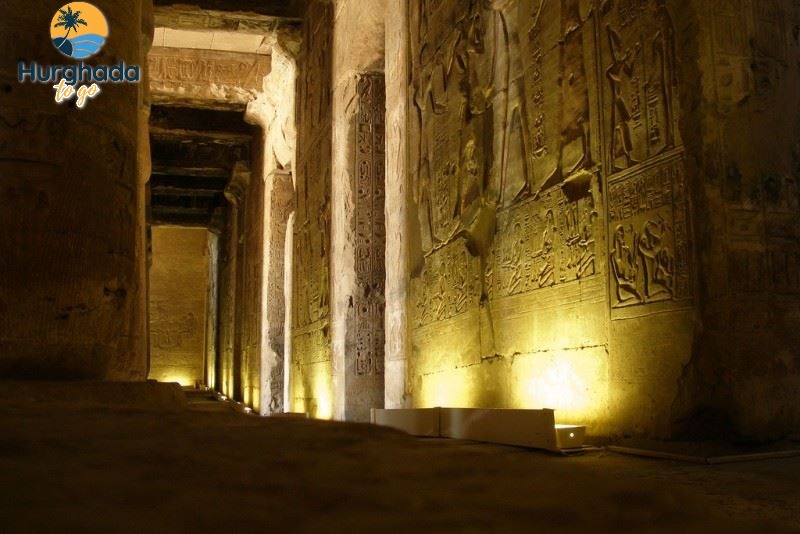
Extraordinary reliefs: The temple walls are covered with exquisite carvings, many of which preserve their original detail and even traces of paint. These reliefs show not only religious rituals but also intimate moments of Seti I with the gods.
-
The Abydos King List: One of the most valuable finds in Egyptian archaeology, this long wall inscription records the names of 76 pharaohs, from the earliest kings to Seti himself. It remains one of the most important sources for reconstructing Egypt’s royal chronology.
Visiting Seti I’s temple is often compared to walking into a time capsule of Egyptian spirituality and artistry.
4.2 The Osireion – A Symbol of the Underworld
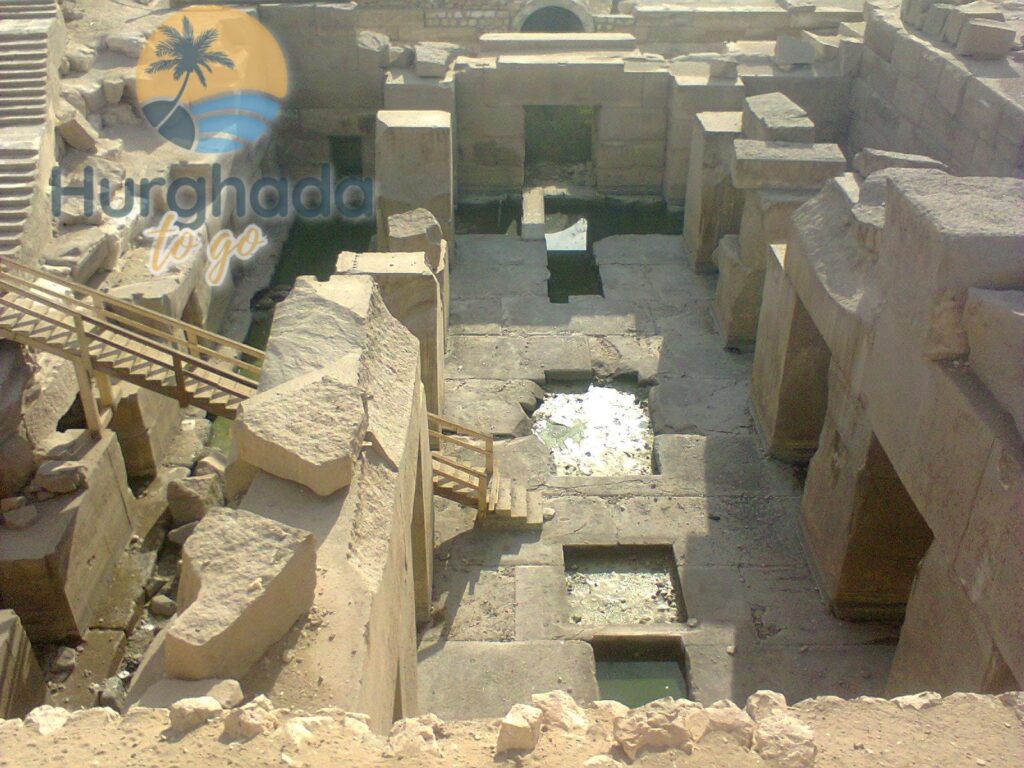
Behind Seti I’s temple lies the mysterious Osireion, a massive underground structure built of gigantic stone blocks. Its design differs dramatically from traditional Egyptian temples, leading many to believe it symbolized the tomb of Osiris himself.
-
Massive stone pillars: Some of the blocks weigh over 100 tons, reminiscent of megalithic architecture elsewhere in the world.
-
Sacred water chamber: The central hall was designed to be filled with water, representing the primeval waters of creation and the eternal underworld.
-
Spiritual symbolism: The Osireion is believed to have been used in rituals connecting Seti I and later pharaohs with Osiris’ eternal power.
Standing inside the Osireion gives visitors an almost mystical sense of connection to Egypt’s vision of life after death.
4.3 The Royal Necropolis of Umm el-Qaʿab
Just a short distance into the desert lies Umm el-Qaʿab, the ancient necropolis that first put Abydos on the map. This was the burial place of Egypt’s earliest rulers, including kings of the 1st and 2nd Dynasties (c. 3100–2650 BCE).
-
Tombs of early pharaohs: The necropolis includes the tombs of kings such as Narmer, Djer, and Den, who laid the foundations of Egypt’s unified kingdom.
-
Predynastic tombs: Excavations since the late 20th century uncovered even earlier rulers, predating the 1st Dynasty. These discoveries reshaped our understanding of Egypt’s formative years.
-
The Tomb of Osiris: Over time, one of these tombs was reinterpreted as Osiris’ resting place, transforming Abydos into a spiritual beacon.
For modern archaeologists and travelers alike, Umm el-Qaʿab is a place where myth and history collide.
4.4 The Temple of Ramses II – Pharaoh’s Lasting Legacy
Not far from Seti I’s temple is another stunning monument: the Temple of Ramses II, Seti’s son and one of Egypt’s most famous rulers. Although smaller and less preserved, it showcases Ramses II’s dedication to continuing his father’s religious devotion.
-
Reliefs of the Battle of Kadesh: Some wall carvings here commemorate Ramses II’s famous battle against the Hittites, blending military power with divine support.
-
Osiris and divine imagery: Like his father, Ramses II emphasized his connection to Osiris, ensuring that Abydos remained Egypt’s religious heart.
4.5 Other Sacred Enclosures and Finds
Beyond the main temples, Abydos holds numerous smaller sites:
-
Mud-brick funerary enclosures of early kings, believed to be precursors of pyramid complexes.
-
Boat burials: Archaeologists discovered wooden boats buried beside royal enclosures, perhaps symbolic vessels for the journey into the afterlife.
-
Thousands of pilgrim stelae: Each one a personal testament of faith, left by ordinary Egyptians over centuries.
4.6 Why These Monuments Matter Today
Together, Abydos’ monuments create a narrative that spans Egypt’s entire history: from the first kings who united the Nile Valley, to the height of the New Kingdom, to the enduring worship of Osiris. For modern travelers, these sites offer a rare chance to walk through layers of Egyptian civilization, each leaving its mark on the sacred desert.
Visiting Abydos from Hurghada Today
For travelers staying in Hurghada, the Red Sea is usually the main attraction: sun, sand, and watersports. Yet beyond the turquoise waters lies the chance to step into Egypt’s ancient heartland. One of the most rewarding cultural excursions you can take from Hurghada is a journey to Abydos, the sacred city of Osiris.
While Abydos may seem far away compared to local tours, it is increasingly accessible thanks to well-organized day trips and private tours. Here’s what you need to know if you are considering adding Abydos to your Hurghada holiday.
6.1 Distance and Travel Routes
-
By Road: Abydos lies about 530 km from Hurghada, inland toward the Nile Valley. The journey usually takes 6–7 hours by car or minibus, depending on traffic and checkpoints.
-
Via Luxor: Many travelers combine Abydos with Luxor or Dendera. From Luxor, the drive to Abydos is around 3–4 hours, making it a more manageable side trip.
-
Day Trips: Organized tours often run Hurghada → Dendera → Abydos → back to Hurghada in a single (but long) day. This allows travelers to see both temples without arranging separate logistics.
6.2 What to Expect on the Journey
The drive from Hurghada to Abydos is part of the experience. You will:
-
Travel across the Eastern Desert, where golden mountains rise from the sands.
-
Pass through small Nile Valley villages, where green fields contrast with the desert’s edge.
-
Cross checkpoints and rest stops, where guides ensure a safe and smooth journey.
Though long, the ride offers a fascinating glimpse of Egypt’s landscapes beyond the Red Sea resorts.
6.3 Organized Tours vs. Private Transfers
Travelers can reach Abydos in two main ways:
-
Organized Group Tours
-
Usually arranged by agencies like HurghadaToGo.
-
Include an Egyptologist guide, transportation, entry tickets, and often lunch.
-
More budget-friendly but with fixed schedules.
-
-
Private Tours or Transfers
-
Offer greater flexibility on departure time, stops, and pace.
-
Ideal for travelers who prefer comfort and a personalized experience.
-
Perfect for combining Abydos with Dendera or Luxor.
-
6.4 Duration of the Visit
A full-day excursion from Hurghada to Abydos typically lasts 14–16 hours from hotel pickup to drop-off. While it is a long day, most travelers agree it is absolutely worth it.
-
Time at Abydos Temple complex: around 2–3 hours.
-
Optional Dendera stop: adds another 2–3 hours.
-
Driving: around 10 hours total, depending on traffic.
6.5 Highlights of Visiting Abydos from Hurghada
When you finally step inside Abydos after the journey, here’s what makes it unforgettable:
-
Seti I’s Temple: Stunning reliefs that look almost alive.
-
The Osireion: A mystical underground chamber tied to Osiris.
-
Pilgrim stelae: Thousands of inscribed stones left by ancient Egyptians seeking eternal life.
-
The atmosphere: Unlike crowded tourist hotspots, Abydos feels calm and sacred.
Many travelers say the long journey from Hurghada makes the moment you arrive at Abydos feel even more special — a true pilgrimage in the footsteps of the ancients.
6.6 Practical Advice for Travelers from Hurghada
-
Start early: Most tours depart around 5:00 am to maximize sightseeing time.
-
Bring snacks and water: Stops are limited on the desert road.
-
Dress comfortably but respectfully: Lightweight clothing, hats, and sunscreen are essential, but shoulders and knees should be covered when entering temples.
-
Camera ready: Flash photography is not allowed, but lighting inside the temple is excellent for pictures.
-
Expect a long day: It is best suited for history lovers and adventurous travelers. Families with young children may prefer closer sites.
:
Easy & Secure Booking
Reserve your unforgettable Private Tour to Cairo from Hurghada 2026 now through:
🌐 Official Website: hurghadatogo.com
📧 Email: [email protected]
📱 WhatsApp: +201009255585
Don’t miss the chance to explore Cairo’s ancient wonders in comfort, style, and with expert guidance. Spaces are limited—reserve now and make your dream Egyptian adventure a reality!
We also recommend you :
Luxor day trip from Hurghada by bus 2026
Desert safari in Hurghada with quad biking and camel ride 2026