
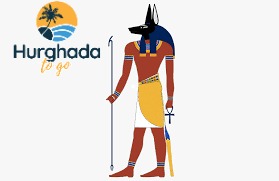
Anubis: The Jackal-Headed Guardian of the Egyptian Afterlife
Imagine standing at the edge of the Nile, the sun dipping below the horizon in a blaze of gold and crimson. The air hums with the whispers of eternity, and in the distance, the pyramids stand sentinel over secrets buried for millennia. In this ancient world, where life and death danced in eternal rhythm, one figure emerges from the shadows: Anubis, the jackal-headed god whose gaze pierces the veil between worlds. Often misunderstood in modern pop culture as a mere harbinger of doom, Anubis was far more—a protector, an innovator, a guide whose presence brought hope amid the unknown. Join me as we delve deep into the lore of this enigmatic deity, exploring his origins, myths, symbols, and enduring legacy. Prepare to be transported to the sands of Egypt, where the dead find their way home.
The Enigmatic Origins of Anubis: From Jackal to Divine Sentinel
Anubis didn’t spring fully formed from the ether like some Olympian gods; his story is woven into the very fabric of ancient Egyptian society, likely emerging during the Predynastic Period (c. 6000–3150 BCE). The Egyptians, ever observant of their environment, noticed jackals—sleek, nocturnal scavengers—prowling the desert fringes of cemeteries, drawn to the scent of decay. Rather than fear these creatures, the people deified them, transforming a natural predator into a supernatural protector. Anubis, known in ancient Egyptian as Inpu, Inpw, or Anpu (the Greek Anubis came later), was born from this symbiosis of fear and reverence.
His earliest depictions appear on royal tombs from the First Dynasty (c. 3150–2890 BCE), invoked to ward off grave-robbing beasts. Scholars believe his cult predates even these records, possibly as a response to wild canines unearthing shallow burials. In a land where the Nile’s fertile black silt symbolized rebirth, Anubis embodied that cycle: death as a gateway, not an end. By the Old Kingdom (c. 2686–2181 BCE), he had ascended to “Lord of the Dead,” presiding over mummification and the underworld before Osiris later claimed that throne.
What makes Anubis’s origins so compelling is their evolution. Early texts link him to Ra, the sun god, as the son of Ra and the cow goddess Hesat (or sometimes Bastet, the fierce feline protector). This solar connection hinted at Anubis’s dual nature: a celestial watcher tied to the underworld’s depths. Over time, as regional myths merged, he became Osiris’s illegitimate son with Nephthys—Osiris’s sister-in-law—conceived in a moment of divine infidelity. Hidden from Set (the chaos-bringer who murdered Osiris), baby Anubis was smuggled to Isis for safekeeping, forging unbreakable bonds in the pantheon.
Myths That Bind: Anubis in the Tapestry of Egyptian Lore
Unlike thunderous gods like Zeus or Odin, Anubis stars in few standalone epics—his power lies in quiet, pivotal roles that underscore the Egyptians’ obsession with cosmic balance (Ma’at). He’s the unsung hero of the Osiris myth, the cornerstone of funerary religion. When Set dismembered Osiris and scattered his pieces across Egypt, it was Anubis who led the grim search party. With Isis and Nephthys, he reassembled the corpse, inventing mummification in the process: wrapping the body in linen, anointing it with sacred oils, and uttering incantations to preserve the ka (life force) for eternity. This act not only resurrected Osiris as king of the underworld but elevated Anubis to “Lord of the Mummy Wrapping.”
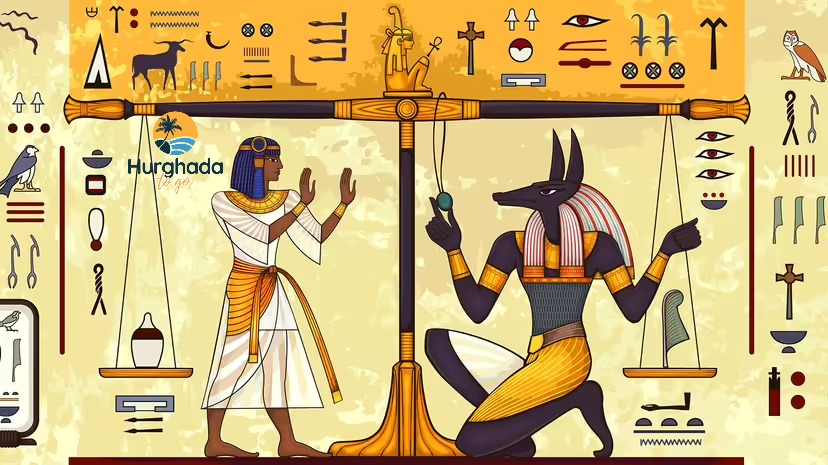
Another tale paints Anubis as a defender of order. Disguised as a leopard, Set sneaks toward Osiris’s body to defile it. Anubis seizes the intruder, branding him with a hot iron—eternally marking leopards with spots as a reminder of chaos’s defeat. This vignette highlights Anubis’s vigilance, a theme echoed in his role during the “Weighing of the Heart” ceremony from the Book of the Dead. In the Hall of Truth, he adjusts the scales as Thoth records the verdict: the deceased’s heart against Ma’at’s feather. A light heart grants paradise in the Field of Reeds; a heavy one meets Ammit’s jaws. Anubis doesn’t judge—he facilitates, ensuring fairness in the great beyond.
These stories reveal Anubis as neither wholly benevolent nor malevolent. He’s a neutral arbiter, embodying the Egyptians’ pragmatic view of death: a transformation requiring ritual precision. His family ties deepen the intrigue—wedded to Anput (a jackal-headed goddess mirroring his form), father to the serpent deity Kebechet (who purified the dead), and eternally loyal to Isis, whom some late texts call his mother. In Nubian lore, he’s even Nephthys’s husband, blurring lines in a pantheon where incest and adoption wove divine kinship.
Symbols and Depictions: The Iconography of Eternal Vigilance
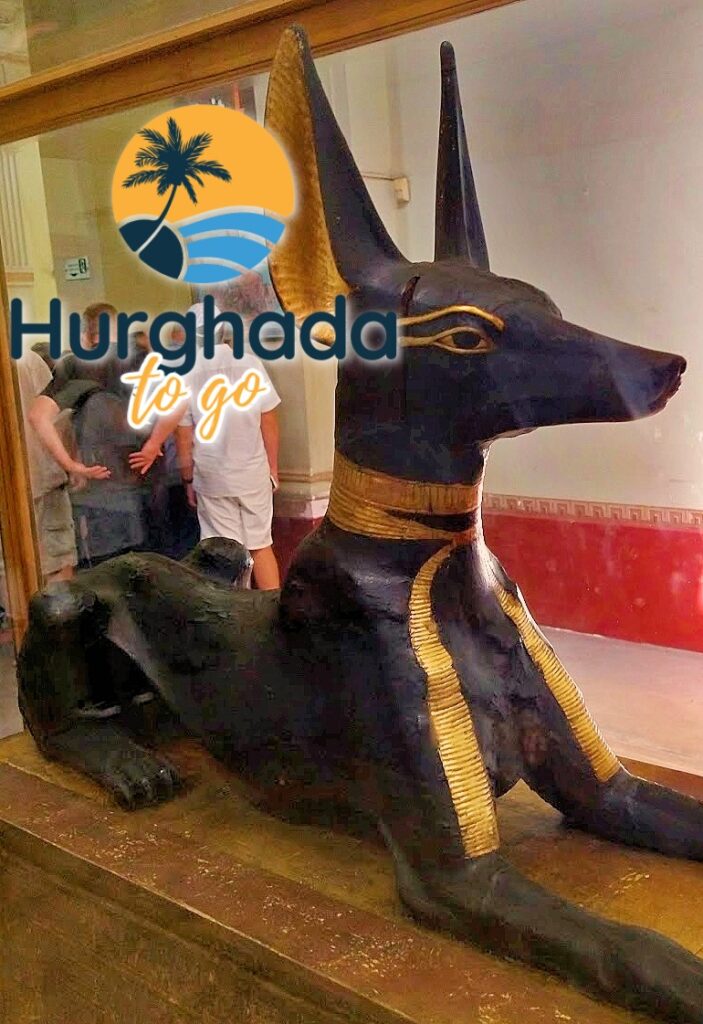
Anubis’s visage is as iconic as the pyramids themselves: a lithe man with the sleek head of a jackal, ears pricked in eternal alertness. Rendered in glossy black—evoking the Nile’s life-giving silt, the embalmed corpse’s hue, and fertile regeneration—he often reclines on royal tombs or stands erect in temple reliefs. In his hands, he clutches the was scepter (dominion over power) or the ankh (key to life), symbols of his authority over the threshold of existence. Sometimes, he’s fully jackal-formed, couched atop shrines like a watchful hound.
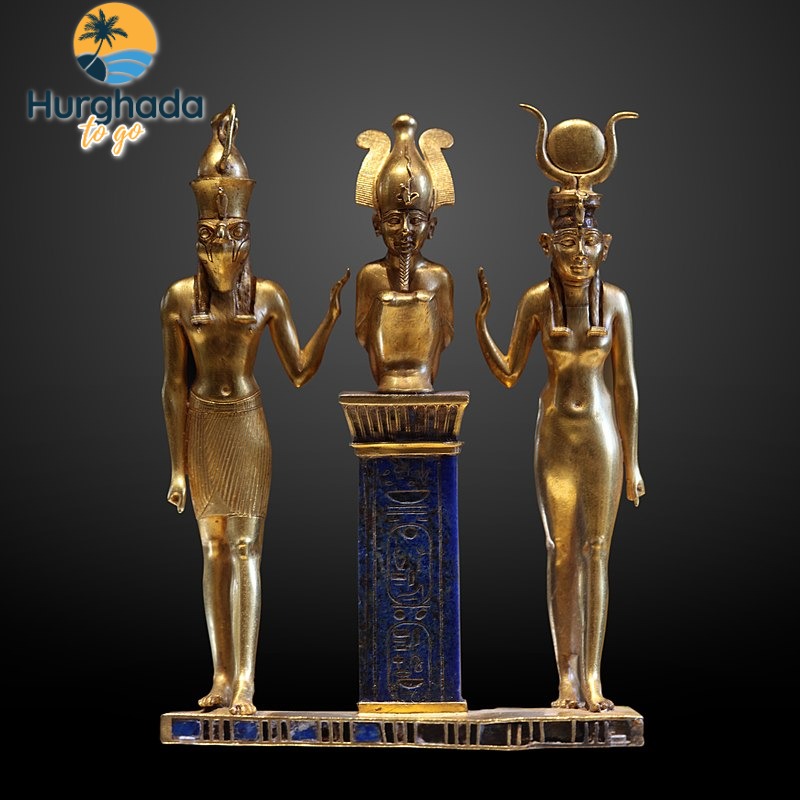
These icons weren’t mere art; they were talismans. Amulets of Anubis, carved from faience or gold, adorned mummies to shield against evil. His black fur contrasted with occasional golden accents, nodding to his solar roots and dual realm-spanning presence. Jackals themselves became sacred: millions mummified as votive offerings, fueling an economy of devotion in places like Cynopolis (“City of the Dog”). In art, he’s often paired with Osiris or Thoth, a triad ensuring the dead’s safe passage—a visual hymn to Ma’at‘s harmony.
Worship and Cult: Anubis’s Reach Across Empires
Anubis’s devotion spanned Egypt’s 3,000-year history, from predynastic shrines to Ptolemaic temples. His epicenter was Cynopolis in Upper Egypt’s 17th nome, where jackal processions and embalming rites drew pilgrims. Abydos, the sacred necropolis, honored him as a local deity, while Deir el-Bahri’s temple complex featured him prominently. Unlike grand Osiris cults, Anubis’s worship was intimate: household altars, tomb inscriptions, and Opening of the Mouth ceremonies where priests, masked as jackals, ritually revived statues.
Priests of Anubis, clad in leopard skins, monopolized mummification—a 70-day art of natron drying, organ removal, and resin sealing. Prayers invoked him for protection: “O Anubis, who stands at the gates of the sky, grant this soul safe harbor.” His cult extended beyond borders; in Greco-Roman times, he syncretized as Hermanubis, blending with Hermes to guide shades in Hades. Roman soldiers carried his effigies, and alchemical texts of the Middle Ages invoked him for transformation rituals. Even in Nubia, he wed his mother Nephthys, adapting to local lore.
Legacy: Anubis in the Modern World and Eternal Echoes
Though Egypt’s gods faded with Christianity’s rise, Anubis endures as a cultural colossus. From the Rosetta Stone’s decipherment to Hollywood’s The Mummy franchise, he’s the brooding anti-hero—fierce yet fair. Video games like Assassin’s Creed Origins cast him as a spectral ally, while fashion brands emblazon his silhouette on jewelry, tapping into his aura of mystery and power.
In esoteric circles, Anubis symbolizes shadow work: confronting mortality to embrace renewal. Tattoos of his form invoke protection, a modern echo of ancient amulets. His story reminds us that death, in its rawest form, is a teacher—of resilience, ritual, and the black soil from which life sprouts anew.
As the Nile still floods and jackals howl under desert moons, Anubis watches. Not as a reaper, but as a shepherd, ensuring no soul wanders lost. In a world grappling with its own endings, perhaps we could all use a jackal at our side.
What draws you to Anubis? Share in the comments—let’s unearth more myths together! If this sparked your wanderlust, check out our series on Osiris next.
Osiris: The Resurrected King – Egypt’s Eternal Lord of the Underworld
Picture the lush Nile Valley at dusk, where papyrus sways like whispers of forgotten kings. The air carries the scent of lotus blooms and incense, as the river’s annual flood recedes to reveal fertile black soil—a miracle of renewal. At the heart of this cycle stands Osiris, the green-skinned god of resurrection, whose death and rebirth mirror Egypt’s own rhythm of life, death, and rebirth. Far from a passive deity, Osiris is the ultimate symbol of regeneration, the murdered king who conquered mortality to rule the Duat (underworld). Revered as the first pharaoh and divine judge, his myth fueled Egypt’s obsession with the afterlife. Join us on this profound journey through Osiris’s origins, epic tales, symbols, worship, and timeless influence—unearthing the god who turned tragedy into triumph.
Origins of Osiris: From Primordial Chaos to Divine Royalty
Osiris, known anciently as Wsir or Asar (Greek: Osiris), emerged during Egypt’s Predynastic era (c. 6000–3150 BCE), embodying the Nile’s fertile duality: death in drought, life in flood. As one of the Ennead of Heliopolis—a nine-god pantheon born from Atum’s creative act—he was the eldest son of Geb (earth god) and Nut (sky goddess), making him brother-husband to Isis, the magic-wielding protector. His siblings included Set (chaos), Nephthys (mourner), and Horus the Elder, forming a divine family rife with harmony and strife.
Early texts, like the Pyramid Texts of the Old Kingdom (c. 2686–2181 BCE), portray Osiris as a civilizer: inventor of agriculture, laws, and the lute, teaching mortals to harness the Nile’s bounty. Pharaohs claimed descent from him, linking their rule to his eternal kingship. By the Fifth Dynasty, he absorbed local chthonic deities, evolving from a fertility figure to the undisputed lord of the dead. His green hue symbolized rebirth, akin to mummified bodies or sprouting crops, tying him to Ma’at—the cosmic order he upheld even in death.
The Myth of Osiris: Murder, Dismemberment, and Triumphant Resurrection
Osiris’s core legend, detailed in Plutarch’s Isis and Osiris (1st century CE) and echoed in Egyptian sources like the Shabaka Stone (c. 710 BCE), is a saga of betrayal and renewal. As benevolent ruler of Egypt, Osiris spread knowledge worldwide, but envy festered in Set, his jealous brother. Set crafted a ornate chest (or coffin) tailored to Osiris’s exact measure, luring him into a feast-trap. Sealed and cast into the Nile, Osiris drowned, his body washing ashore in Byblos.
Set discovered the corpse, dismembered it into 14 (or 42) pieces, and scattered them across Egypt to prevent resurrection—each fragment symbolizing nome (province) desecration. Isis, with Nephthys and Anubis, embarked on a heroic quest, reassembling the parts (save the phallus, eaten by a fish, later magicked by Isis). Using incantations and embalming rites pioneered by Anubis, Isis revived Osiris long enough to conceive Horus the Younger. He then descended to the Duat as its king, judging souls and ensuring the sun’s daily rebirth.
This myth wasn’t mere tragedy; it explained mummification, the Nile’s inundation, and kingship’s divine mandate. Variants abound: in some, Thoth aids resurrection; in others, Osiris battles Set in the afterlife. The Contendings of Horus and Set depicts posthumous strife, with Osiris intervening from the underworld to affirm Horus’s throne, reinforcing cycles of legitimate rule.
Symbols and Iconography: The Mummiform King and His Emblems
Osiris’s depictions are hauntingly regal: a mummified man with green or black skin, arms crossed over a torso wrapped in white linen, holding the crook (heka, shepherd’s crook for rule) and flail (nekhakha, for fertility). Atef crown—a white hedjet with ostrich feathers—adorns his head, flanked by horns or the solar disk. His erect phallus signifies posthumous potency, while the djed pillar—his spine—represents stability and resurrection, often raised in rituals like the Raising of the Djed.
These symbols permeated art: tomb walls show him enthroned amid lotuses, or as a corn-mummy (barley-seed effigy) sprouting greenery to evoke rebirth. The Eye of Horus (wadjet) complements him, healing his son’s wounds and symbolizing restored wholeness. In temples, his form merged with Ptah as Ptah-Sokar-Osiris, blending creation and death.
Worship and Cult: From Abydos to the Far Reaches of Empire
Osiris’s cult peaked in the Middle Kingdom (c. 2050–1710 BCE), with Abydos as his sacred heart—a pilgrimage site for Osiris Mysteries festivals reenacting his passion. The Haker festival involved mystery plays: Set’s murder, Isis’s lament, Anubis’s wrapping, and Horus’s vengeance, culminating in the god’s “awakening.” Millions visited to assure their own afterlife, leaving votive offerings and canopic jars.
Priests performed daily rites in vast complexes like Karnak and Philae, where Isis’s temple invoked Osiris’s fertility. Mummification guilds honored him as patron, while Opening of the Mouth ceremonies animated statues. His worship spread via trade: Nubians adopted him as a royal ancestor, Greeks syncretized him with Dionysus (wine and resurrection parallels), and Romans built Serapeums. Even in Late Antiquity, Osiris persisted in Coptic Christianity’s undertones of resurrection.
Legacy: Osiris’s Echoes in Eternity and Modern Culture
Osiris’s influence transcends Egypt, inspiring Orphic mysteries, Christian salvation narratives, and Masonic rites. In pop culture, he’s the archetype of the dying-and-rising god—from The Mummy films to Neil Gaiman’s American Gods. Modern neopagans invoke him for transformation rituals, while his djed inspires architecture and tattoos symbolizing resilience.
Today, as climate shifts echo Nile unpredictability, Osiris reminds us of renewal’s promise. From the fertile fields he tamed to the stars he judges, he embodies hope amid loss—a verdant king whose legacy ensures no death is final.
What aspect of Osiris captivates you most? Dive into the comments or explore our Anubis deep dive next!
Horus: The Sky Sovereign – Egypt’s Falcon-Eyed Avenger and Eternal King
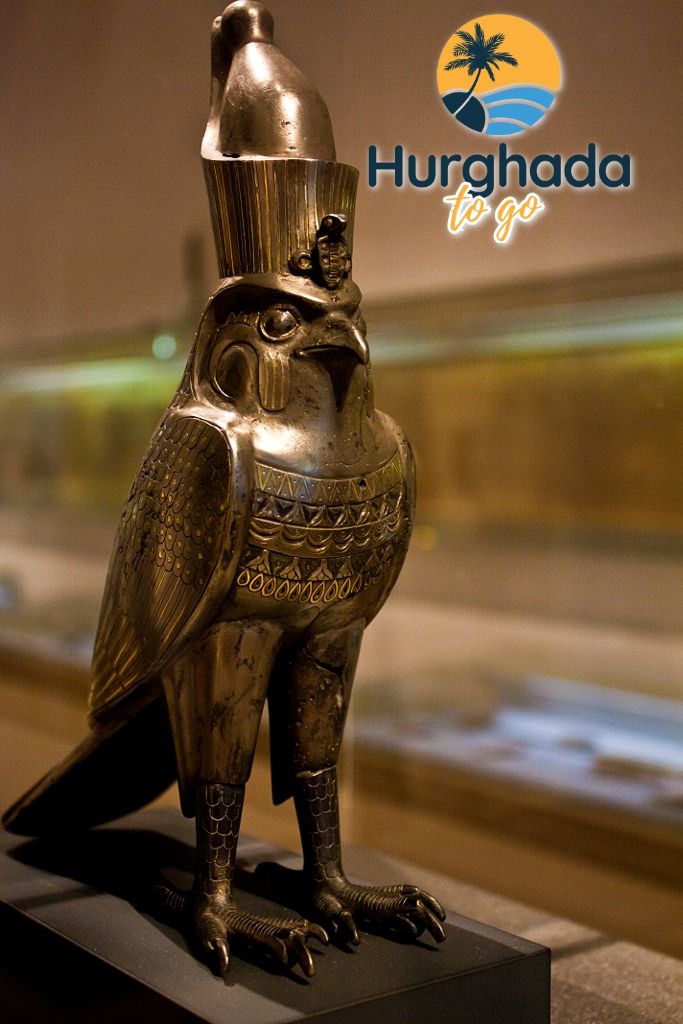
Soar above the timeless Nile on wings of gold, where the sun blazes like a falcon’s fierce gaze. Amid the obelisks and temples etched with hieroglyphs of divine battles, Horus reigns supreme—the celestial warrior whose eyes embody the sun and moon, protector of pharaohs, and embodiment of rightful kingship. Known as Heru or Haroeris in ancient tongues, Horus isn’t just a god; he’s the living bridge between heaven and earth, avenging his father’s murder and upholding Ma’at‘s fragile balance. From childlike vulnerability to triumphant ruler, his saga intertwines falcon ferocity with royal legitimacy. Embark with me on this epic exploration of Horus’s origins, myths, symbols, cults, and modern resonance—witness the god who turned personal tragedy into cosmic victory.
Origins of Horus: From Celestial Falcon to Divine Heir
Horus’s roots plunge into Egypt’s Predynastic haze (c. 6000–3150 BCE), where falcon cults in the Nile Delta and Edfu predated unified kingdoms. As a sky god, he personified the horizon (Horizon derives from his name), with his right eye as the sun (Ra) and left as the moon (Thoth or Djehuty). In the Heliopolitan Ennead, he’s the son of Osiris and Isis, but older iterations cast him as Horus the Elder—brother to Osiris and Set, born to Geb and Nut, and consort to Hathor.
By the Old Kingdom (c. 2686–2181 BCE), Pyramid Texts fused these: Horus the Child (Harpocrates, “Horus the Younger”) avenges Osiris, becoming the “living Horus” incarnate in every pharaoh. This duality—elder sky lord and infant avenger—reflected Egypt’s syncretic faith, absorbing local deities like the Behdety falcon of Edfu. His birth in the marshes, hidden from Set’s wrath, symbolized renewal, tying him to the Nile’s protective papyrus thickets.
The Epic of Horus: Battles, Trials, and the Contendings with Set
Horus’s myth crescendos in the Osirian cycle and the Contendings of Horus and Set (from the New Kingdom’s Chester Beatty Papyrus). Conceived postmortem via Isis’s magic on Osiris’s reassembled body, Horus emerges in Chemmis marshes, suckled by Isis amid threats from Set’s spies. As a youth, he loses his left eye in a brutal clash—Set gouges it out, but Thoth restores it as the Wedjat (Eye of Horus), symbol of healing and wholeness.
The Contendings unfolds as a divine courtroom drama before the Ennead: Set claims the throne, but Horus proves his legitimacy through trials. They battle as hippos (submerged chaos vs. order), with Horus spearing Set; in manly contests, Set’s illicit advances on Horus lead to semen-shedding judgments (Horus’s seed on lettuce discredits Set). Isis’s clever deceptions aid Horus, though punished, culminating in Ra’s verdict: Horus as king of the living, Set exiled to deserts. Osiris, from the Duat, affirms this, weaving filial piety into kingship’s fabric.
Variants abound: in Edfu texts, Horus slays chaos-serpent Apep; as Harakhte (“Horus of the Horizon”), he merges with Ra against darkness. These tales justified pharaonic succession, with coronation rites invoking Horus’s victory.
Symbols and Iconography: The Falcon’s Gaze and Royal Might
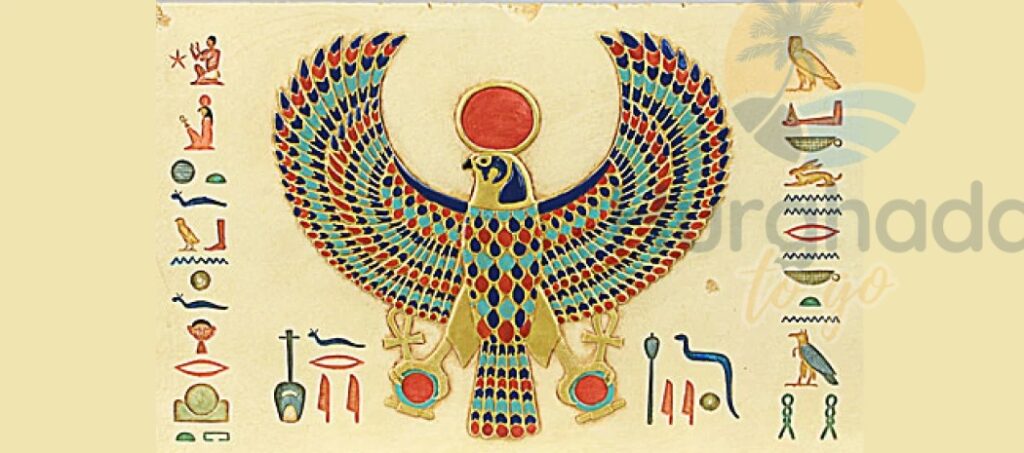
Horus manifests as a peregrine falcon—swift, predatory, sky-dominating—or a falcon-headed man in royal regalia. His nemes headdress and double crown (pschent) signify united Egypt, gripped by the crook and flail. The Wedjat eye, fractionally damaged (1/64 missing, symbolizing imperfection healed), adorns amulets for protection and royal power. Uraeus cobras flank his brow, spitting fire at foes.
In art, he’s spearing Set (as hippo), nursing from Hathor, or as four sons in canopic jars guarding organs. The serekh—palace facade topped by his falcon—marked early king lists. Colors of green and gold evoke fertility and divinity, while his spread wings shade pharaohs in temple reliefs, like Abu Simbel’s colossi.
Worship and Cult: Temples of Triumph and Pharaonic Devotion
Horus’s cult thrived in Upper Egypt’s Edfu, his grandest temple (Ptolemaic, c. 237–57 BCE) reenacting his birth and Set-slaying in boat processions. Hierakonpolis (Nekhen) hosted falcon mummies and victory festivals; Behdet (near Edfu) honored his solar form. Pharaohs, as “living Horus,” performed Sed jubilee rites for renewed vigor.
Daily temple rituals fed his statues honey and milk, with priests as falcon-masked warriors. His syncretism as Ra-Horakhty (sun-horizon fusion) dominated at Heliopolis and Karnak. Nubians and Hyksos invaders adopted him; Greeks equated him with Apollo. Votive falcons, buried in millions, fueled economies of piety.
Legacy: Horus’s Wingspan Across Time and Culture
Horus’s archetype—the avenging son, eye of providence—influences Christianity’s Evil Eye wards, Freemasonry’s all-seeing eye, and superhero tropes (e.g., Moon Knight‘s Khonshu ties). In Assassin’s Creed and God of War, he battles chaos; astrology claims his eyes as lunar phases. Modern revivals in Kemetic paganism invoke him for justice and vision.
As Egypt’s kings faded, Horus’s vigilance endures—reminding us that true power lies in restoring balance, one piercing gaze at a time.
Horus’s battles or symbols speak to you? Comment below or revisit Osiris’s resurrection saga!
.
Easy & Secure Booking
Unveiling Anubis 2026 now through:
🌐 Official Website: hurghadatogo.com
📧 Email: [email protected]
📱 WhatsApp: +201009255585
We also recommend you :
St Paul & St Anthony Monasteries Day Tour from Hurghada/Cairo 2026