
Major Global News Stories as of February 4, 2026
Here are the key worldwide headlines dominating international coverage today, drawn from major outlets like BBC, Reuters, Al Jazeera, and aggregators:

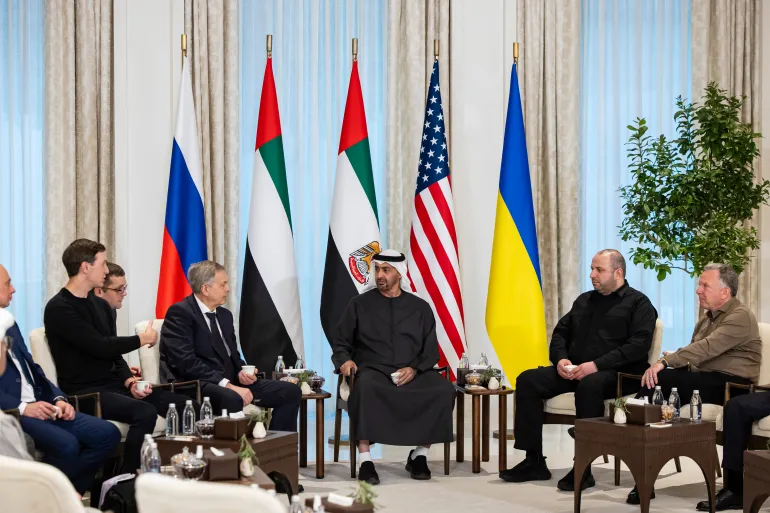
- Ukraine-Russia Conflict Developments A second round of US-brokered peace talks between Ukraine and Russia began in Abu Dhabi, aiming to end the ongoing war. Meanwhile, Russia intensified attacks on Ukrainian energy infrastructure, condemned as “particularly depraved” by UK Prime Minister Keir Starmer.
- Expiring US-Russia Nuclear Arms Treaty The last remaining nuclear arms control treaty between the US and Russia (New START) is set to expire imminently, raising fears of a new arms race potentially involving China.
- Middle East Tensions The US military shot down an Iranian drone approaching an aircraft carrier in the Arabian Sea. Reports also highlight a narrow window for potential US-Iran diplomacy, alongside ongoing Israeli military actions in Gaza killing dozens.
- Jeffrey Epstein Case Fallout Newly released Epstein documents continue to make waves: Bill Gates denied allegations, the Clintons agreed to testify in a congressional probe, thousands of documents were temporarily removed after victim concerns, and UK’s Prince Andrew left his Windsor home amid revelations.
- Death of Saif al-Islam Gaddafi Saif al-Islam Gaddafi, son of former Libyan leader Muammar Gaddafi and once a key figure in the regime, has reportedly been killed at age 53.
- Other Notable Stories
- Heavy snowfall in Japan has killed at least 30 people.
- Storm Leo brings torrential rains and disruptions to Spain and Portugal.
- Ongoing Gaza violence, with Israeli attacks and accusations of chemical spraying in Lebanon.
- Global efforts on critical minerals, with over 50 countries meeting under US leadership to reduce China dependence.
These stories reflect a mix of geopolitical tensions, security concerns, and high-profile scandals currently leading global discussions. Regional stories (e.g., India-US trade deals, domestic politics in various countries) are also prominent in specific outlets but less universally covered. News evolves quickly—check reliable sources for updates.
Ukraine-Russia Peace Talks: Latest Details (as of February 4, 2026)
The second round of US-brokered trilateral peace talks between Ukraine, Russia, and the United States began today in Abu Dhabi, United Arab Emirates. These closed-door negotiations, scheduled for two days (February 4-5), follow a first round held in January 2026 that both sides described as “constructive” but yielded no breakthrough.

Key Participants
- Ukraine — Led by Rustem Umerov (Secretary of the National Security and Defense Council) and including figures like Kyrylo Budanov.
- Russia — Represented by envoys such as Kirill Dmitriev.
- United States — Mediated by President Trump’s envoys, including Steve Witkoff (special envoy) and Jared Kushner.
The talks resumed amid heightened tensions after Russia launched its largest missile and drone attack of the winter on February 3, targeting Ukraine’s energy infrastructure. This ended a short-lived, informal “energy truce” (intended as a confidence-building measure) and drew accusations from Ukrainian President Volodymyr Zelenskyy that Moscow exploited the pause to stockpile weapons.
Main Issues Under Discussion
The negotiations focus on two primary sticking points:
- Territorial disputes — Particularly the fate of Ukrainian-controlled areas in the Donbas region, where Russia demands full withdrawal—a non-starter for Kyiv.
- Post-war security guarantees — For Ukraine, including potential arrangements to prevent future Russian aggression. Some limited progress has been reported on this, with Russia indicating openness to “some form” of guarantees, though details remain unresolved.
Current Positions and Challenges
- Ukraine — Seeks a “dignified and lasting peace” and clarity on Russia’s intentions. Kyiv views the recent strikes as undermining the process and rejects ceding territory.
- Russia — Maintains maximalist demands and has not softened its stance, while continuing military operations.
- United States — Pushing for compromise under the Trump administration, describing prior bilateral meetings (e.g., with Russian envoys) as productive.
No agreements have been announced, and expectations for an immediate breakthrough are low. Analysts and officials note wide gaps, with ongoing Russian advances on the ground (gaining ~1.5% of territory since early 2024) and public skepticism in both countries about concessions.
These talks represent the most direct engagement in months, but Russia’s resumption of intense strikes has raised doubts about Moscow’s commitment. The situation remains fluid—further updates may emerge as the Abu Dhabi meetings conclude.

Donald Trump’s Ukraine Policy (as of February 4, 2026)
In his second term, President Donald Trump’s approach to the Russia-Ukraine war centers on rapid diplomatic resolution through direct, US-mediated negotiations, marking a shift from the previous administration’s emphasis on sustained military aid. Trump has repeatedly stated his goal is to end the conflict “pretty soon,” framing it as a priority to stop the bloodshed and reduce U.S. involvement in what he has called a “forever war.”
Core Pillars of the Policy
- Negotiation Over Prolonged Aid: Trump aims to broker a comprehensive peace deal rather than indefinite U.S. funding. He has pressured Ukraine to compromise, at times publicly blaming President Volodymyr Zelenskyy for delays, while engaging directly with Russian President Vladimir Putin (e.g., personal requests for temporary attack pauses during harsh weather).
- US as Mediator: The administration has facilitated trilateral talks (US, Ukraine, Russia), including the ongoing second round in Abu Dhabi (February 4-5, 2026). Envoys like Steve Witkoff and Jared Kushner have been involved in shuttle diplomacy.
- Security Guarantees with Limits: Proposals include U.S.-backed guarantees (e.g., 15 years offered, though Ukraine seeks longer), potentially involving European allies taking a larger role. Trump has expressed openness to defending Ukraine post-deal but confidence that Russia won’t reinvade.
- Territorial and Ceasefire Focus: Deals under discussion involve ceasefires (sometimes temporary, e.g., brief “energy truces”), resolution of occupied areas like Donbas, and issues like the Zaporizhzhia nuclear plant. Russia insists on retaining gains; Ukraine resists cessions.
Current Status: Abu Dhabi Talks
The second round of trilateral talks began today amid Russian bombardment ending a short pause, highlighting tensions. Progress has been reported on security and reconstruction, but “thorny issues” like territory remain unresolved. Trump describes talks as advancing, with expectations for European involvement in any guarantees.
Criticisms and Challenges
- Some view the policy as overly accommodating to Russia, risking a “bad deal” that weakens Ukraine.
- Others praise Trump’s personal diplomacy for creating openings unavailable before.
- Analysts note a deadline pressure (e.g., mid-2026) due to U.S. politics, and risks if no breakthrough.
The policy reflects Trump’s unconventional style: deal-making pragmatism, direct leader-to-leader engagement, and a desire to pivot U.S. resources elsewhere. Developments remain fluid with talks ongoing.
Donald Trump’s Middle East Diplomacy (as of February 4, 2026)
In his second term, President Donald Trump’s Middle East diplomacy emphasizes deal-making pragmatism, building on first-term achievements like the Abraham Accords while prioritizing rapid conflict resolution, strong U.S.-Israel ties, and a mix of pressure and negotiation with adversaries like Iran. The approach seeks to reduce prolonged U.S. entanglements, expand normalization agreements, and address flashpoints like Gaza and Iran through personal leader-to-leader engagement and special envoys (e.g., Steve Witkoff).
Core Pillars
- Israel-Centric Alliances: Unwavering support for Israel, including pushing post-war Gaza plans and normalization with Arab states.
- Expansion of Abraham Accords: Renewed efforts to broaden 2020 deals, with optimism for Saudi Arabia and others, though progress has been uneven.
- Iran Policy: “Maximum pressure” combined with openness to a new nuclear deal; recent tensions (e.g., U.S. downing of an Iranian drone) coexist with diplomatic channels.
- Conflict De-escalation: Brokering ceasefires and truces, as seen in Yemen and Gaza.
Key Issues and Developments
- Gaza/Israel-Palestine: Trump has advanced a multi-phase “comprehensive plan” to end the war, including ceasefire, hostage releases, Hamas demilitarization, and technocratic governance (potentially involving the Palestinian Authority). Phase two launched in January 2026, focusing on reconstruction and a “Board of Peace” for oversight. The plan aims for lasting stability to enable broader regional deals.
- Iran: Amid escalating tensions and U.S. military deployments, Trump is pursuing direct talks for a “fair and equitable” nuclear agreement. Iran has signaled openness, creating a narrow diplomatic window despite incidents like the recent drone shootdown.
- Abraham Accords Expansion: Efforts to include Saudi Arabia continue, with Trump expressing optimism, though prioritization of bilateral U.S.-Saudi deals (e.g., security/investments) has delayed full normalization. New joiners include Kazakhstan; talks with Syria reported.
- Yemen/Houthis: After U.S. strikes in early 2025 and redesignation as a terrorist group, an Oman-brokered ceasefire in May 2025 ended bombings and Houthi attacks on shipping.
Critics argue the policy risks overextension or concessions to adversaries, while supporters praise Trump’s transactional style for creating openings (e.g., Gaza phases, Iran channels). Developments remain fluid amid regional volatility.
Donald Trump’s Ukraine Diplomacy (as of February 4, 2026)
President Donald Trump’s Ukraine diplomacy in his second term is defined by high-level personal engagement, shuttle diplomacy via special envoys, and direct U.S. mediation in trilateral talks aimed at a swift negotiated end to the Russia-Ukraine war. Trump has positioned the U.S. as the central broker, emphasizing leader-to-leader conversations and pragmatic compromises over prolonged military support, with the stated goal of achieving peace “very quickly” to halt casualties and redirect resources.
Key Features of Trump’s Diplomatic Approach
- Personal Leader-to-Leader Engagement: Trump has conducted multiple direct phone calls with both Russian President Vladimir Putin and Ukrainian President Volodymyr Zelenskyy. These include requests for temporary humanitarian pauses (e.g., during severe winter weather) and discussions on broader ceasefires. Trump has publicly credited his personal relationships for creating openings unavailable under prior administrations.
- Special Envoys and Shuttle Diplomacy: Key figures include Steve Witkoff (Special Envoy for Hostage Affairs and Middle East, expanded to Ukraine) and Jared Kushner, who have engaged in back-channel talks with Russian and Ukrainian counterparts. This “deal-maker” style mirrors Trump’s Middle East efforts.
- U.S.-Mediated Trilateral Negotiations: The cornerstone is direct U.S.-brokered talks involving Ukraine, Russia, and American mediators—no prior format like this existed. The first round in January 2026 was deemed constructive; the second round began today (February 4) in Abu Dhabi, focusing on ceasefires, security guarantees, and territorial issues.
- Confidence-Building Measures: Short-term truces (e.g., a brief “energy truce” to spare infrastructure) have been proposed and partially implemented as stepping stones, though Russia recently violated one with major strikes.
- Pressure and Incentives: Trump has used public statements to urge compromise (sometimes criticizing Zelenskyy for inflexibility) while offering post-war reconstruction aid and limited security guarantees, potentially shared with European allies.
Major Diplomatic Milestones (2025–2026)
| Date/Period | Event/Action | Outcome/Status |
|---|---|---|
| Late 2024–Early 2025 | Pre-inauguration calls with Putin/Zelenskyy | Set tone for quick resolution; Putin agreed to engage |
| January 2025 | Appointment of envoys (Witkoff, Kushner) | Enabled shuttle diplomacy |
| January 2026 | First trilateral talks (location classified) | Constructive; progress on security concepts |
| February 3–4, 2026 | Russian strikes end energy truce; second round talks begin in Abu Dhabi | Ongoing; gaps on territory persist |
| Ongoing | Proposals for security guarantees (e.g., 15–50 year options) | Limited Russian openness; Ukraine seeks stronger commitments |
The Abu Dhabi talks (February 4–5) represent the most advanced diplomatic channel to date, addressing core issues like Donbas control and post-war assurances. Progress has been made on secondary matters (e.g., reconstruction frameworks), but territorial disputes remain the primary obstacle. Trump has expressed optimism, stating the sides are “closer than people think,” while warning that failure risks escalation.
Critics argue the approach risks pressuring Ukraine into unfavorable concessions, potentially rewarding Russian aggression. Supporters highlight it as the first realistic path to negotiations in years, crediting Trump’s unconventional style for reopening dialogue. The diplomacy remains dynamic, with outcomes tied to the current Abu Dhabi round.
Storm Leo Hits Spain and Portugal Torrential rains lead to flooding and chaos across the Iberian Peninsula.

Deadly Heavy Snowfall in Japan Record snow blankets regions, causing fatalities and widespread disruption.

HurghadaToGo News