
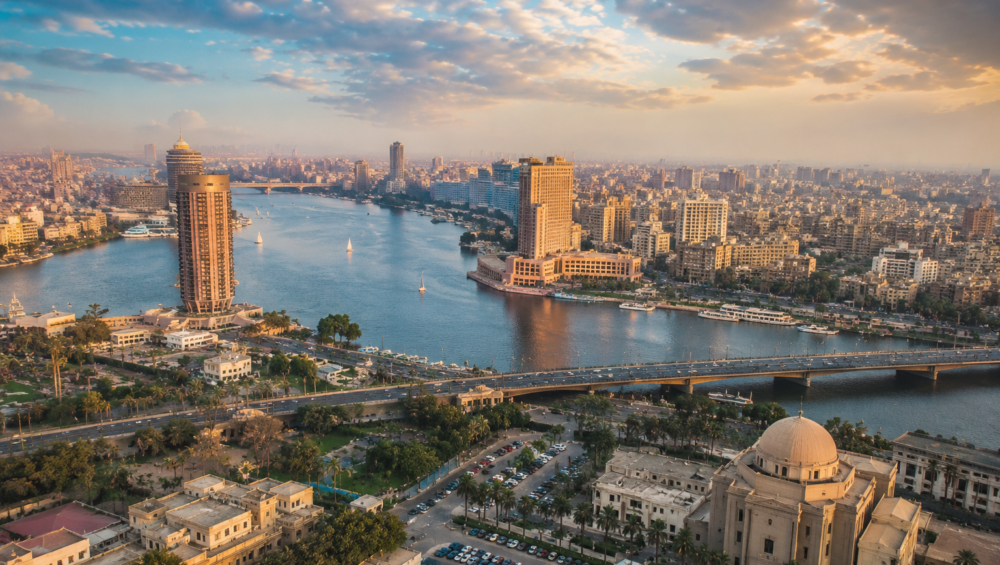
Cairo Capital of Egypt: The Ultimate Visitor Guide (2026)
~3,200 Words
8-Part Framework
Alt text: “Cairo capital of Egypt — aerial view of the Pyramids of Giza with the city skyline — hurghadatogo.com”
Cairo is the capital of Egypt — a city so ancient, so vast, and so layered with history that it has captivated explorers, conquerors, and travellers for more than a thousand years. Standing at the crossroads of Africa and the Middle East, on the eastern bank of the mighty Nile, Cairo is not merely a city. It is a civilisation compressed into a single metropolis.
With a Greater Cairo metropolitan population of over 23 million people (2025), it is the largest city in Africa, the Arab world, and the Middle East. It is home to the Pyramids of Giza — the only surviving Wonder of the Ancient World — the Grand Egyptian Museum, the medieval wonders of Islamic Cairo, and a street culture unlike anywhere else on earth.
Whether you are travelling from Hurghada on a day trip, arriving via Cairo International Airport from Europe, or planning a multi-day exploration of Egypt’s capital, this guide gives you everything you need to experience Cairo like an expert.
In this guide, you will discover:
- The full history of Cairo as Egypt’s capital — from Fatimid founding to modern metropolis
- The top attractions in Cairo that every visitor must see
- Practical visitor information: how to get there, best areas, tickets, and costs
- The best time to visit Cairo and insider tips to travel smarter
- How to travel from Hurghada to Cairo — by road, air, and guided tour
- A complete FAQ covering the most-searched questions about Cairo, Egypt
Let’s dive in.
⚡ TL;DR — Cairo at a Glance
- 🏛️ Status: Capital and largest city of Egypt since 969 AD
- 👥 Population: ~10.9 million city / 23+ million metro area (2025)
- 📍 Location: Northeast Egypt, on the eastern bank of the Nile River
- 🗣️ Arabic name: Al-Qāhirah (القاهرة) — “The Vanquisher” or “The Victorious”
- 🏆 Famous for: Pyramids of Giza, Egyptian Museum, Khan el-Khalili, Islamic architecture
- ⏰ Best time to visit: October to March (18–28°C, cooler and drier)
- ✈️ From Hurghada: ~5–6 hrs by road or under 1 hr by domestic flight
- 💱 Currency: Egyptian Pound (EGP) — approx. EGP 50 = USD 1 (2025)
Bottom Line: Cairo is Egypt’s beating heart — a city where the ancient and the modern collide on every street corner, and where the greatest monuments in human history are still standing after 4,500 years.
- What Is Cairo? Egypt’s Capital Explained
- History of Cairo: From Ancient Memphis to Modern Capital
- Why Visit Cairo, Egypt?
- Top Attractions in Cairo You Must See
- How to Get to Cairo from Hurghada & Other Cities
- Practical Visitor Information: Tickets, Transport & Tips
- Best Time to Visit Cairo, Egypt
- Cairo vs Hurghada: Which Should You Visit?
- Recommended Cairo Itinerary (1, 2 & 3 Days)
- Frequently Asked Questions
- Conclusion & Book Your Cairo Tour
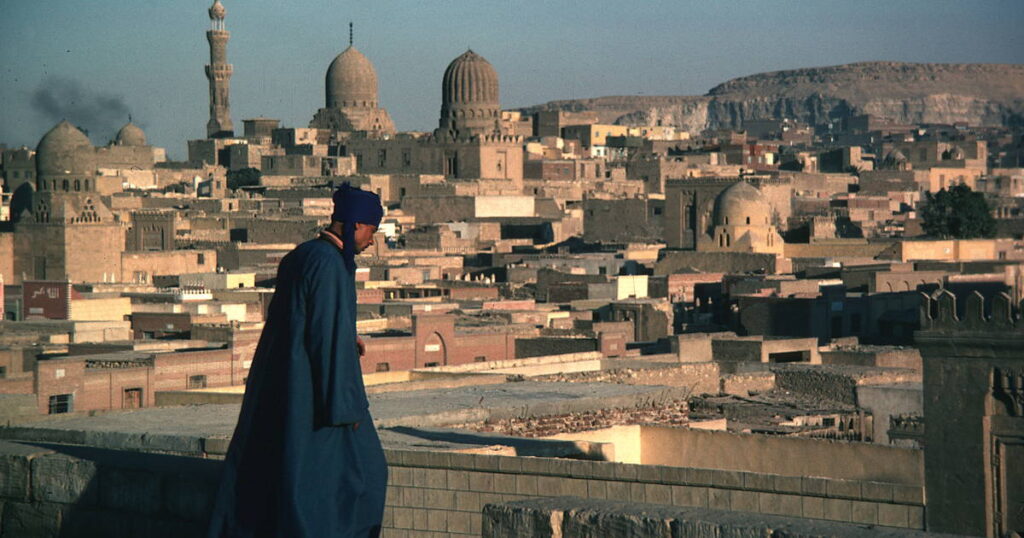
1. What Is Cairo? Egypt’s Capital Explained
Cairo is the capital of Egypt and the country’s largest city by a considerable margin. Located in the northeast of the country along the eastern bank of the Nile River, 165 kilometres south of the Mediterranean Sea, Cairo sits at the very heart of Egypt’s geography, politics, economy, and culture.
The city’s official Arabic name is Al-Qāhirah (القاهرة), meaning “The Vanquisher” or “The Victorious” — a name given by the Fatimid Caliph Al-Mu’izz when he established the city as his dynasty’s capital in 969 AD. Egyptians themselves often simply call their capital Maṣr — the Arabic name for Egypt itself — a testament to just how synonymous the city is with the nation.
Cairo serves as the seat of the Egyptian government, home to the presidency, the national parliament, and the majority of Egypt’s ministries. It is also the undisputed cultural, media, and economic capital of the Arab world, housing the Arab League headquarters, Al-Azhar University (founded 970 AD, one of the world’s oldest continuously operating universities), and Egypt’s major television networks, publishing houses, and film studios.
Metro population (2025)
Year Cairo was founded
Years of history nearby
Largest city in Africa (2025)
Cairo (Al-Qāhirah) is the capital and largest city of Egypt, with a metropolitan population exceeding 23 million people as of 2025 — making it the most populous city in Africa, the Arab world, and the Middle East. Founded in 969 AD by the Fatimid dynasty on the eastern bank of the Nile, Cairo has served as Egypt’s political and cultural capital for over a millennium and remains the country’s economic engine, contributing approximately 22% of Egypt’s national GDP.
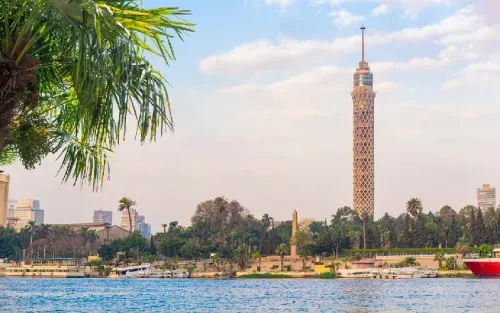
2. History of Cairo: From Ancient Memphis to Modern Capital
Cairo’s history stretches back far further than its official founding date. While the city itself was established in 969 AD, the Giza Plateau — today part of Greater Cairo — was already the site of the Great Pyramid of Khufu some 4,500 years ago. Nearby, the ancient city of Memphis, founded around 3100 BC by the pharaoh Narmer (Menes), served as the capital of ancient Egypt for much of the Old Kingdom period.
📜 From Babylon to Fustat (640 AD)
The Romans established the fortress of Babylon-in-Egypt at what is now Old Cairo, and it was here that the Muslim general Amr ibn al-As founded the city of Al-Fustat in 641 AD, following the Islamic conquest of Egypt. Al-Fustat became the first Islamic capital of Egypt and the site of the Mosque of Amr ibn al-As — the oldest mosque in Africa, still standing today.
🌙 The Fatimid Foundation of Cairo (969 AD)
In 969 AD, the Fatimid general Jawhar al-Siqilli — acting on orders from Caliph Al-Mu’izz — founded a new walled royal city to the northeast of Fustat. He named it Al-Qahirah (“The Victorious”), and it has remained Egypt’s capital ever since. The Fatimids also established the Al-Azhar Mosque and University in 970 AD, which became one of the world’s greatest centres of Islamic learning.
⚔️ Mamluk Greatness and Ottoman Decline (1250–1800)
Under the Mamluk Sultanate (1250–1517), Cairo became arguably the greatest city in the medieval world — a centre of trade, culture, architecture, and scholarship that dazzled medieval travellers including the great explorer Ibn Battuta. The Khan el-Khalili Bazaar was established during this era, in 1382 AD. When the Ottoman Empire conquered Egypt in 1517, Cairo began a long period of relative decline, though it remained the largest city in the Arab world.
🏙️ Modern Cairo (1800–Present)
The transformation of Cairo into a modern city began under Muhammad Ali Pasha (ruled 1805–1848), who reformed Egypt’s military, economy, and architecture on European lines. His grandson Khedive Ismail created an entirely new European-style district in western Cairo to coincide with the opening of the Suez Canal in 1869. In 2015, President el-Sisi announced plans for a New Administrative Capital east of Cairo, currently under construction, which will eventually house Egypt’s government ministries and parliament.
Cairo has served as the capital of Egypt under no fewer than eight distinct political orders: Fatimid, Ayyubid, Mamluk, Ottoman, British, and modern Egyptian. Its 1,000-year-old urban core contains the highest concentration of medieval Islamic architecture in the world, with monuments spanning the Fatimid (969–1171 AD), Ayyubid (1171–1250 AD), and Mamluk (1250–1517 AD) periods. UNESCO has recognised Historic Cairo as a World Heritage Site since 1979.
3. Why Visit Cairo, Egypt?
Cairo is, quite simply, one of the most extraordinary cities on earth. But what specifically makes it worth your time — especially when Egypt also offers the beach resorts of Hurghada, the temples of Luxor, and the monuments of Aswan?
The answer lies in the sheer density and variety of Cairo’s experiences. No other city on the planet allows you to stand before the last surviving Wonder of the Ancient World in the morning, browse a 600-year-old bazaar at midday, eat world-class street food in the afternoon, and explore a mosque built in the 10th century before sundown — all in a single day.
| What Cairo Offers | Why It’s Unmissable | Best For |
|---|---|---|
| Pyramids of Giza | The only surviving Wonder of the Ancient World | All travellers |
| Grand Egyptian Museum | World’s largest archaeological museum (fully open Nov 2025) | History lovers |
| Islamic Cairo | World’s greatest concentration of medieval Islamic architecture | Culture seekers |
| Khan el-Khalili | One of the oldest souks in the Middle East (est. 1382 AD) | Shoppers & foodies |
| Coptic Cairo | Egypt’s oldest churches and 2,000 years of Christian heritage | Religious history fans |
| Nile Cruises | Cairo’s skyline seen from the water — unforgettable at sunset | Couples & families |
| Egyptian street food | Kushari, foul medames, kofta — Cairo’s culinary scene is world-class | Food travellers |
4. Top Attractions in Cairo You Must See
🔺 The Pyramids of Giza & the Great Sphinx
The Pyramids of Giza are the most visited attraction in Egypt, and with good reason. The three pyramids — the Great Pyramid of Khufu (built c. 2560 BC), the Pyramid of Khafre, and the Pyramid of Menkaure — stand on the Giza Plateau on the southwestern edge of Greater Cairo. The Great Pyramid of Khufu, at 138 metres high, held the record as the world’s tallest structure for nearly 4,000 years. Beside the complex stands the Great Sphinx — a 73-metre-long limestone statue of a reclining lion with a human head, carved around 2500 BC.
Alt text: “Pyramids of Giza at sunset — top attraction near Cairo capital of Egypt — hurghadatogo.com”
🏛️ The Grand Egyptian Museum (GEM)
Opened fully in November 2025, the Grand Egyptian Museum near the Giza Plateau is the largest archaeological museum in the world. Its centrepiece is the Tutankhamun Galleries — where all 5,000 objects from the boy pharaoh’s tomb, including the iconic golden death mask, are displayed together for the first time in history. A colossal 11-metre statue of Ramesses II dominates the vast entrance atrium. Plan to spend at least 3 hours here.
🏺 The Egyptian Museum (Tahrir Square)
The original Egyptian Museum at Tahrir Square remains one of Cairo’s most important sites, even after the transfer of Tutankhamun’s golden mask to the GEM. Its Royal Mummies Hall — containing 22 ancient Egyptian kings and queens — alone justifies the visit. The museum’s deliberately old-fashioned atmosphere, with artifacts packed into century-old glass cases, gives it a unique and unrepeatable character.
🕌 The Cairo Citadel & Muhammad Ali Mosque
Perched on a spur of the Muqattam Hills overlooking the city, the Saladin Citadel (built 1176 AD) served as Egypt’s seat of government for nearly 700 years. Its centrepiece is the stunning Muhammad Ali Mosque (also called the Alabaster Mosque), a 19th-century Ottoman masterpiece with twin minarets and a spectacular interior of alabaster and gilded ceilings. The terrace offers panoramic views across Cairo to the pyramids on the horizon.
🛍️ Khan el-Khalili Bazaar
Established in 1382 AD by the Mamluk emir Djaharks el-Khalili, Khan el-Khalili is one of the oldest and largest souks in the Middle East. Its labyrinthine alleyways are filled with spice merchants, gold and silver smiths, papyrus sellers, perfume shops, and antique dealers. The adjacent Al-Muizz Street is lined with extraordinary medieval Fatimid and Mamluk architecture. Sip mint tea at El Fishawy — Cairo’s oldest café, reportedly open continuously for over 200 years.
⛪ Coptic Cairo (Old Cairo)
Coptic Cairo is home to Egypt’s oldest churches and its extraordinary Christian heritage, predating the Islamic era by six centuries. Key sites include the Hanging Church (Al-Muallaqah), built in the 7th century above the Roman Babylon Fortress; the Church of Saints Sergius and Bacchus (4th century), where the Holy Family is said to have sheltered during their flight into Egypt; and the Coptic Museum, housing the world’s finest collection of Coptic Christian art.
🌙 Islamic Cairo & Al-Muizz Street
The Islamic Cairo district is a UNESCO World Heritage Site containing the world’s highest concentration of medieval Islamic architecture. Al-Muizz Street — the oldest street in Cairo — is lined with Fatimid, Ayyubid, Mamluk, and Ottoman monuments, from the 10th-century Al-Azhar Mosque to the elaborate Sultan Hassan Complex (1356 AD). The area is best explored on foot in the late afternoon when the light is golden.
The Historic Cairo district was inscribed as a UNESCO World Heritage Site in 1979. It contains over 600 listed monuments spanning more than 1,000 years of Islamic, Coptic, and Jewish heritage, representing the highest density of medieval Islamic architecture anywhere in the world. Key landmarks include the Al-Azhar Mosque (970 AD), the Sultan Hassan Mosque-Madrassa (1356 AD), and the Bab Zuweila gate (1092 AD) — all still standing in their original locations.
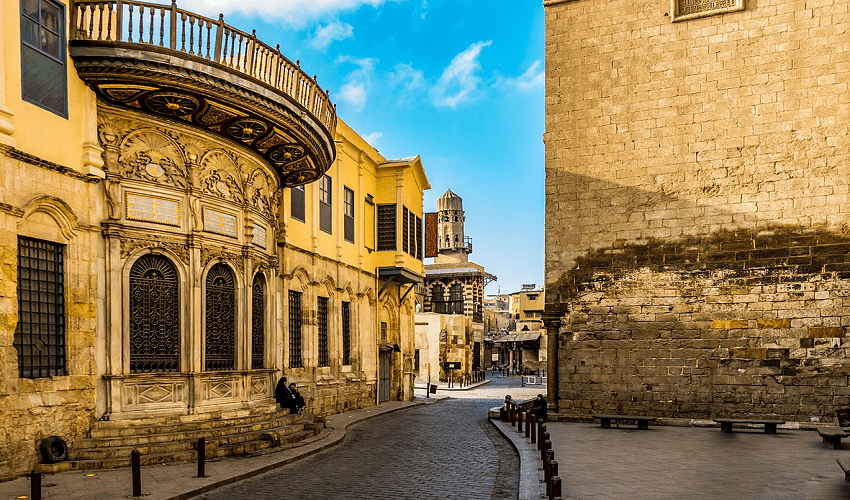
5. How to Get to Cairo from Hurghada & Other Cities
🚌 From Hurghada
For visitors based on the Red Sea coast in Hurghada, Cairo is easily accessible and makes an outstanding day trip or overnight excursion. Hurghada To Go offers guided Cairo day trips and multi-day packages that cover the Pyramids of Giza, the Sphinx, the Grand Egyptian Museum or Egyptian Museum, the Cairo Citadel, Khan el-Khalili Bazaar, and more — with comfortable private transfers included.
| From Hurghada | Travel Mode | Approx. Time | Best For |
|---|---|---|---|
| Hurghada → Cairo | Private transfer (desert highway) | 5–6 hrs | Groups & families |
| Hurghada → Cairo | Domestic flight (HRG → CAI) | ~50 min | Time-conscious travellers |
| Hurghada → Cairo | Organised day trip (overnight) | 2-day package | First-time visitors |
✈️ From International Airports
Cairo International Airport (CAI) is Egypt’s largest and busiest airport, receiving direct flights from London Heathrow, Frankfurt, Paris CDG, Amsterdam, Rome, Madrid, and dozens of other European cities. British Airways, EgyptAir, Lufthansa, Air France, and Ryanair all serve Cairo. Journey time from London is approximately 4.5–5 hours.
🚂 From Luxor & Aswan
Luxor and Aswan are connected to Cairo by daily overnight sleeper trains (approximately 10–12 hours) from Luxor and 13–14 hours from Aswan. These classic train journeys pass through the Egyptian countryside and are an atmospheric way to travel between Egypt’s ancient sites.
| Departure City | Travel Mode | Time | Recommended |
|---|---|---|---|
| Hurghada | Private transfer | 5–6 hrs | ✅ Best for tours |
| Hurghada | Domestic flight | ~50 min | ✅ Fastest option |
| Sharm el-Sheikh | Domestic flight | ~1 hr | ✅ Easy connection |
| Luxor | Sleeper train | 10–12 hrs | ✅ Most scenic |
| Aswan | Sleeper train | 13–14 hrs | ✅ Classic Egypt journey |
| London / Europe | Direct flight | 4.5–5 hrs | ✅ Multiple daily flights |
6. Practical Visitor Information: Tickets, Transport & Tips
🎫 Essential Visitor Facts — Cairo (2025)
- ✅ Pyramids of Giza complex: EGP 360 foreigners / EGP 60 Egyptians
- ✅ Inside Great Pyramid of Khufu: Extra EGP 800 (300 tickets/day only)
- ✅ Grand Egyptian Museum: EGP 1,000 foreigners (all galleries)
- ✅ Egyptian Museum (Tahrir): EGP 450 foreigners
- ✅ Cairo Citadel: EGP 360 foreigners
- ✅ Khan el-Khalili: Free to enter (shopping and tea available)
- ✅ Student discount: 50% off most sites with valid ISIC card
- ✅ Photography: Generally permitted (extra charge inside some sites)
- ✅ Uber & Careem: Both operate in Cairo — safer than unmetered taxis
- ✅ Metro: Fast, cheap (~EGP 10/ride), 3 lines covering key areas
💡 Cairo Safety & Practical Tips
- Cash is king: Carry Egyptian Pounds for markets, tips, and smaller sites. ATMs are widely available in central Cairo and at major hotels.
- Dress modestly: Cover shoulders and knees when visiting mosques and religious sites. Women should carry a scarf for mosque visits.
- Water safety: Drink bottled water only. Avoid tap water and unpeeled raw fruits.
- Licensed guides: Use only Egyptology-certified guides booked through reputable agencies. Unofficial guides at major sites are common and best avoided.
- Bargaining: Expected at Khan el-Khalili and traditional markets. Start at 40–50% of the asking price.
- Photography at people: Always ask permission before photographing individuals. A small tip is appreciated.
7. Best Time to Visit Cairo, Egypt
Cairo’s desert climate means summer (June–August) brings extreme heat, with temperatures regularly reaching 38–42°C. The most comfortable season by far is October through March, when daytime temperatures range from 18–28°C. December and January are mild and pleasant, though evenings can be cool.
| Month | Avg. Temp | Tourist Crowds | Verdict |
|---|---|---|---|
| October – November | 22–30°C | High | ⭐⭐⭐⭐⭐ Excellent |
| December – February | 14–22°C | Peak season | ⭐⭐⭐⭐⭐ Best overall |
| March – April | 20–30°C | Moderate | ⭐⭐⭐⭐ Very good |
| May | 28–35°C | Lower | ⭐⭐⭐ Manageable |
| June – August | 35–42°C | Low | ⭐⭐ Very hot |
| September | 30–38°C | Low | ⭐⭐ Still hot |
The best time of day to visit the Pyramids and outdoor sites is between 7:30 AM and 10:30 AM, when the light is golden, temperatures are lower, and the inevitable tour buses have not yet arrived in force. Afternoons are better suited to indoor sites: the Grand Egyptian Museum, the Egyptian Museum, and the Coptic Museum.
8. Cairo vs Hurghada: Which Should You Visit?
Many visitors to Egypt base themselves in Hurghada for its Red Sea beaches, diving, and resort comfort — and use it as a launchpad for day trips to Cairo and other ancient sites. Others fly directly to Cairo and use the capital as their base. Here is a clear comparison to help you decide:
| Factor | Cairo | Hurghada |
|---|---|---|
| Best for | History, culture, ancient monuments | Beach, diving, relaxation |
| Accommodation | Wide range, central hotels best | All-inclusive resorts widely available |
| Family-friendly | Yes — pyramids, museums, markets | Yes — beaches, water parks, boat trips |
| Top activity | Pyramids of Giza + GEM | Red Sea diving & snorkelling |
| Day trip to other cities | Luxor and Aswan by train | Cairo, Luxor, Aswan by road or flight |
| Ideal trip length | 3–5 days minimum | 5–10 days as a base |
| Best combo | ✅ Hurghada base + Cairo day trip or overnight = perfect Egypt holiday | |
9. Recommended Cairo Itinerary: 1, 2 & 3 Days
⚡ 1-Day Cairo Itinerary (Day Trip from Hurghada)
- 7:30 AM: Arrive Giza Plateau — Pyramids of Khufu, Khafre, Menkaure & the Sphinx
- 10:30 AM: Grand Egyptian Museum (Tutankhamun Galleries, Ramesses II atrium)
- 1:00 PM: Lunch at local Cairo restaurant — try kushari or kofta
- 2:30 PM: Khan el-Khalili Bazaar — browse, haggle, and have tea at El Fishawy
- 4:30 PM: Optional: Cairo Citadel and Muhammad Ali Mosque + city view
- Evening: Return transfer to Hurghada
📅 2-Day Cairo Itinerary
- Day 1: Pyramids of Giza, Sphinx, Grand Egyptian Museum (or Egyptian Museum at Tahrir), Nile dinner cruise
- Day 2: Islamic Cairo (Al-Muizz Street, Al-Azhar Mosque), Khan el-Khalili, Coptic Cairo (Hanging Church, Coptic Museum), Cairo Citadel
🗓️ 3-Day Cairo Itinerary
- Day 1: Giza Plateau (Pyramids + Sphinx) + Grand Egyptian Museum
- Day 2: Islamic Cairo deep dive — Al-Muizz Street, Sultan Hassan Mosque, Khan el-Khalili, Al-Azhar Park sunset
- Day 3: Coptic Cairo, Egyptian Museum (Royal Mummies), downtown Cairo, Cairo Tower, Nile sunset felucca ride
10. Frequently Asked Questions About Cairo, Egypt
Yes. Cairo (Al-Qāhirah) is the official capital and largest city of Egypt. It has served as Egypt’s capital since it was founded by the Fatimid dynasty in 969 AD and remains the country’s political, economic, and cultural centre. The Egyptian government is currently building a New Administrative Capital east of Cairo, but Cairo remains the official capital.
Cairo is famous for the Pyramids of Giza and the Great Sphinx (the only surviving Wonder of the Ancient World), the Grand Egyptian Museum (the world’s largest archaeological museum), the Khan el-Khalili Bazaar, the Cairo Citadel and Muhammad Ali Mosque, Coptic Cairo’s ancient churches, and its extraordinary Islamic architecture. Egyptians also call it “the city of a thousand minarets” and Umm al-Dunya — “Mother of the World.”
The city of Cairo has a population of approximately 10.9 million people (2026 estimate). The Greater Cairo metropolitan area — which includes Giza and surrounding governorates — has a population of over 23 million, making it the largest urban agglomeration in Africa, the Arab world, and the Middle East.
Cairo was officially founded in 969 AD by the Fatimid general Jawhar al-Siqilli on orders from Caliph Al-Mu’izz. However, the broader area has been continuously inhabited for approximately 6,000 years, encompassing the ancient cities of Memphis (founded c. 3100 BC) and Heliopolis, as well as the Giza pyramid complex (c. 2560 BC).
Cairo’s Arabic name is Al-Qāhirah (القاهرة), meaning “The Vanquisher” or “The Victorious.” The name was given by the Fatimid Caliph Al-Mu’izz at the time of the city’s founding in 969 AD, reportedly because the planet Mars — known in Arabic as al-Najm al-Qāhir (“the Conquering Star”) — was rising at the moment the city was established. Egyptians also call Cairo simply Maṣr, which is the Arabic name for Egypt itself.
From Hurghada, Cairo is reachable by private transfer (approximately 5–6 hours via the desert highway), by domestic flight (under 1 hour from Hurghada Airport to Cairo International), or via an organised guided tour. Hurghada To Go offers Cairo day trips and overnight packages from Hurghada with comfortable transportation and English-speaking guides included.
Cairo is generally safe for tourists, with millions of international visitors arriving each year. As with any large city, normal awareness is recommended: use Uber or Careem rather than unmetered taxis, book guides through licensed agencies, and keep valuables secure in crowded markets. Tourist areas including the Pyramids, Khan el-Khalili, and the Egyptian Museum are well-policed. Most visitors experience Cairo as a welcoming and hospitable city.
Cairo is located just south of the Nile Delta, where the Nile River splits into the Rosetta and Damietta branches before flowing into the Mediterranean Sea. The city itself sits primarily on the eastern bank of the Nile in northeastern Egypt, approximately 165 kilometres south of the Mediterranean coast. The Giza Plateau, home to the Pyramids, lies on the western bank.
Egyptian Arabic is the primary language spoken in Cairo, in a dialect known as Cairene Arabic — the most widely understood Arabic dialect in the Arab world due to Egypt’s influential film and television industry. English is widely spoken in tourist areas, hotels, museums, and by licensed guides. French is also used in some professional and cultural contexts.
A minimum of 2 days is recommended to cover Cairo’s essential attractions — the Pyramids and Grand Egyptian Museum on Day 1, and Islamic/Coptic Cairo on Day 2. For a more relaxed and comprehensive experience, 3–4 days allows you to explore Cairo’s neighbourhoods, visit multiple museums, take a Nile cruise, and enjoy the city’s food and culture without feeling rushed.
The currency in Cairo — and throughout Egypt — is the Egyptian Pound (EGP). As of 2025, approximately EGP 50 equals USD 1 (rates fluctuate). Cash is preferred for markets, smaller restaurants, and entrance fees at some historical sites. ATMs are widely available in central Cairo and at major hotels. Credit and debit cards are accepted at larger hotels, restaurants, and the Grand Egyptian Museum.
11. Final Thoughts: Why Cairo, Egypt Belongs on Every Itinerary
Cairo is the capital of Egypt in every possible sense: political, cultural, historical, and emotional. It is a city that rewards patience and curiosity in equal measure — where every alley in Khan el-Khalili hides a story, every mosque on Al-Muizz Street carries a dynasty’s ambition in its stones, and where the Pyramids of Giza manage to exceed every expectation even when you have seen them in photographs a thousand times.
For visitors based in Hurghada, Cairo is the perfect complement to a Red Sea holiday — the city provides the ancient majesty and cultural depth that a beach resort cannot offer, while Hurghada provides the relaxation and sea that Cairo’s hectic energy makes all the more welcome on your return. Together, they form one of travel’s great double acts.
Whether you have one day or four, whether you come for the Pyramids or for the bazaars or for the simple pleasure of sipping tea in a 200-year-old Cairo café — Egypt’s capital will leave its mark on you. Of that, there is no doubt.
🌟 Ready to Explore Cairo, Egypt?
Book your Hurghada to Cairo excursion with Hurghada To Go — expert-guided day trips and overnight packages with comfortable private transfers and English-speaking Egyptologist guides.
✅ Pyramids of Giza ✅ Grand Egyptian Museum ✅ Khan el-Khalili ✅ Cairo Citadel ✅ Coptic Cairo
📧 [email protected] | 🌐 hurghadatogo.com | WhatsApp available 24/7