
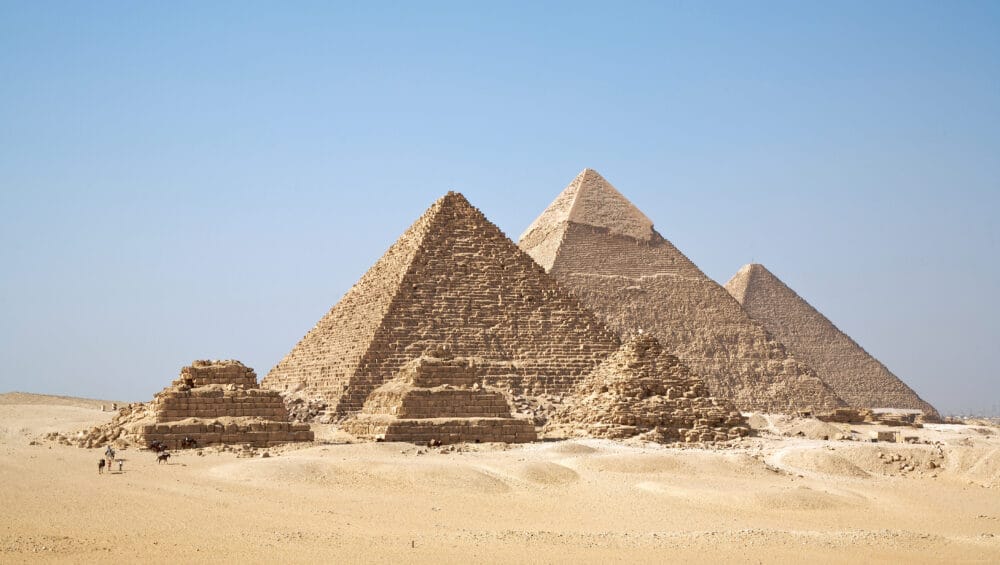
The Secrets of the Egyptian Pyramids: What We Know and What Remains Hidden
The pyramids of Egypt—especially the Great Pyramid of Giza—are among the most mysterious and studied monuments in the world. While many aspects are known, some secrets still puzzle researchers. Here’s what we know and what remains a mystery:
✅ What We Know (The “Revealed Secrets”)
1. Purpose
- The pyramids, especially during the Old Kingdom, were built as tombs for the pharaohs. They were part of elaborate complexes that included temples and causeways, meant to honor and guide the king into the afterlife.
2. Construction Techniques
- Limestone and granite blocks were used—some weighing up to 80 tons.
- Recent discoveries suggest workers used a system of ramps, sleds, and possibly water to reduce friction.
- Labor was done by skilled workers, not slaves. Many workers were housed in nearby cities and treated with respect.
3. Alignment
- The Great Pyramid is incredibly aligned with true north, within 0.05 degrees.
- Its proportions reflect complex mathematical knowledge, possibly tied to the golden ratio, pi, and even astronomical knowledge (like the Orion correlation theory).
❓ What Remains a Mystery (The “Hidden Secrets”)
1. How Exactly Were the Blocks Moved and Placed So Precisely?
- Despite theories, no definitive method has been proven for how the ancient Egyptians achieved such precision without modern tools.
- Some believe the answer lies in lost tools or forgotten techniques.
2. Why So Many Mathematical and Astronomical Alignments?
- The Great Pyramid encodes:
- The dimensions of the Earth
- The distance to the sun
- Relationships like pi and the golden ratio
- Was this intentional, or a coincidence? That’s still debated.
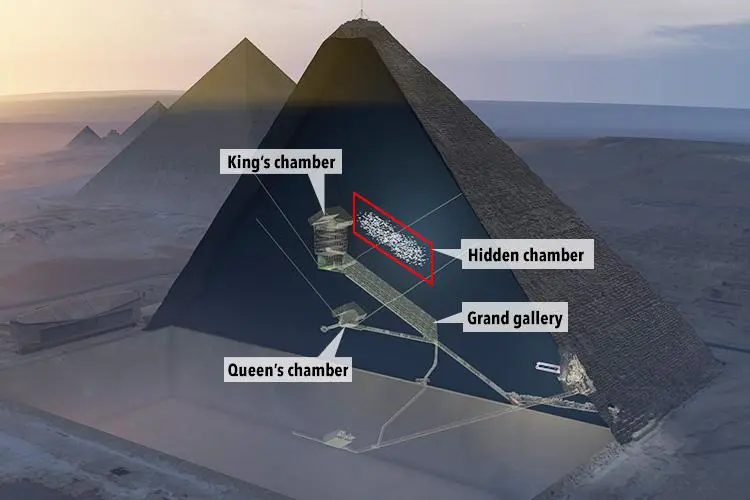
3. What’s Inside the Hidden Chambers?
- In 2017, scientists using muon tomography discovered a large void inside the Great Pyramid above the Grand Gallery.
- No one knows what it contains—it could be symbolic, structural, or hold hidden treasures or texts.
4. Why Such Monumental Effort?
- Why did pharaohs pour such massive resources into tombs? Was it just for religion and power?
- Some researchers suggest deeper meanings—possibly even cosmic, energetic, or initiatory purposes.
🛸 Wild Theories (Not Proven, but Popular)
- Aliens helped build them (no evidence supports this).
- The pyramids are energy generators, not tombs.
- They encode a global message left by a lost advanced civilization.
🧠 The Real Secret Might Be:
The pyramids are not just monuments—they are a bridge between heaven and earth, life and death, science and spirit. Their real secret may be how they unite engineering, astronomy, religion, and mystery into one timeless symbol.
The Secrets of the Egyptian Pyramids
Part 1 : Introduction – A Journey Through Time and Mystery
When you hear the word “Egypt,” what is the first image that comes to your mind?
For most travelers, it’s the majestic pyramids—the timeless stone monuments rising from the desert sands, defying both logic and gravity, whispering stories from thousands of years ago. These structures are not just remnants of an ancient civilization; they are living mysteries that continue to captivate historians, tourists, scientists, spiritual seekers, and adventurers alike.
From afar, the pyramids appear as serene silhouettes on the horizon. But as you get closer—especially when you stand in the shadow of the Great Pyramid of Giza—you are overwhelmed by a feeling that words can hardly capture. It’s as if the stones speak, not just of architecture and royalty, but of something deeper. Of human potential. Of lost wisdom. Of something eternal.
🛕 More Than Stone and Sand
For centuries, the Egyptian pyramids have stood as testaments to a civilization so advanced that even in the 21st century, we are still unraveling their secrets. Built over 4,500 years ago, without the benefit of modern technology, these monuments showcase astonishing precision, alignment, and durability.
How did ancient builders cut and transport stones weighing up to 80 tons?
How were the pyramids so perfectly aligned with true north without a compass?
Why are their dimensions so mathematically significant?
What lies in the chambers still sealed within their hearts?
These are just a few of the burning questions that inspire millions to embark on Egyptian pyramids travel, especially those eager for a pyramids tour from Hurghada—a popular starting point for visitors enjoying the Red Sea before diving into the mysteries of Ancient Egypt via a quick Cairo by flight from Hurghada excursion.
But to truly understand the significance of the pyramids, one must dig deeper—beyond the facts in guidebooks and tourist brochures. The pyramids are not just Egypt’s most famous landmarks; they are doorways into a worldview that saw no separation between science and spirituality, engineering and eternity, kingship and cosmic harmony.
🌍 Why the Pyramids Still Matter Today
In a world racing toward digital transformation and artificial intelligence, the fascination with the pyramids only grows stronger. Why? Because they remind us that even without modern machines, humans were capable of extraordinary things. They call into question our assumptions about progress, civilization, and knowledge.
Some see them as tombs. Others believe they are cosmic libraries or repositories of forgotten technology. For many, they are sacred sites—places of power and initiation, vibrating with ancient energy. Regardless of belief, one thing is clear: no other ancient structure has inspired more theories, documentaries, and pilgrimages than the Egyptian pyramids.
This article is your ultimate guide into their world—not just what the mainstream history books tell you, but also what researchers, archaeologists, mystics, and travelers have discovered over generations. You’ll learn about the confirmed facts, the plausible theories, the unexplained mysteries, and how you can experience them for yourself on a pyramids tour from Hurghada.
🎯 What You Will Discover in This Series
Over the next several sections, we’ll explore:
-
The historical origins of pyramid building and the incredible legacy of the Old Kingdom
-
The construction methods that defy logic and time
-
The architectural and astronomical genius encoded in their design
-
The hidden chambers that still haven’t been explored—and what they may contain
-
The alternative theories—from lost civilizations to energy technology
-
The spiritual and emotional impact of standing before these colossal structures
-
And most importantly: How to plan your own unforgettable pyramids journey from Hurghada
Whether you’re a curious traveler, a lifelong Egypt enthusiast, or planning your very first Egyptian pyramids travel experience, this blog series is designed to be your ultimate resource and inspiration.
✈️ Start Your Journey: From Hurghada to the Heart of Ancient Egypt
Many tourists visiting Egypt start their adventures in the beautiful resort town of Hurghada, famous for its Red Sea beaches, coral reefs, and luxurious resorts. But the call of the pyramids is too strong to ignore, and fortunately, the journey is easier than ever.
With a Cairo by flight from Hurghada, you can be standing in front of the Great Pyramid of Khufu, exploring the Egyptian Museum, or walking along the Sphinx’s ancient gaze within just a few hours. These day trips are becoming increasingly popular—and for good reason. They blend modern comfort with ancient wonder.
Tour operators like HurghadaToGo make it possible for travelers to enjoy sunrise on the beach and sunset at the pyramids—all in the same day.
🏁 Final Words of Part 1
The pyramids do more than stand—they invite. They challenge. They transform.
As you read through this extensive article, prepare to leave behind assumptions and step into a world where stone and spirit become one. The secrets of the pyramids are not just about the past—they are mirrors that reflect the deepest questions of the present and the infinite possibilities of the future.
So, are you ready to uncover the secrets of the Egyptian pyramids?
Let’s begin with the foundations of this mystery—the history of the ancient pharaohs and the origins of pyramid building.
The Secrets of the Egyptian Pyramids
Part 2: The Historical Background of Pyramid Building in Ancient Egypt
🏛️ The Dawn of a Civilization of Stone
To understand the Egyptian pyramids and their profound legacy, we must journey back over 4,500 years—to a time when humanity was taking its first great steps toward civilization, written language, and architectural glory. The pyramids, though silent today, are monuments to a civilization that viewed life, death, and the cosmos as intricately connected.
🌅 Egypt Before the Pyramids
Before the majestic pyramids of Giza, Egypt’s rulers were already building elaborate tombs known as mastabas—rectangular structures with sloping sides. These were constructed during the Early Dynastic Period (c. 3100–2686 BCE). The early kings unified Upper and Lower Egypt, established divine rule, and began the tradition of monumental tombs to ensure their eternal life in the afterworld.
It wasn’t until the Third Dynasty (c. 2686 BCE) that something extraordinary happened—the dawn of pyramid building.
🧱 Djoser and the First Pyramid: A Revolutionary Idea
In Saqqara, near present-day Cairo, the brilliant architect Imhotep changed the course of architectural history forever. Under the rule of Pharaoh Djoser, he designed and built the Step Pyramid—the very first pyramid ever constructed in Egypt.
Key Facts about the Step Pyramid:
-
Built around 2670 BCE
-
6 mastaba-like steps stacked atop each other
-
Height: Approximately 60 meters (197 feet)
-
Made of limestone blocks, not mudbrick—a first in Egyptian history
-
Part of a large funerary complex including courtyards, temples, and ceremonial structures
This pyramid was more than a tomb. It was a symbol of divine power, a stairway to the heavens, and a prototype for all future pyramid construction. Visitors who book a pyramids tour from Hurghada to Cairo can witness this ancient masterpiece alongside the more famous pyramids of Giza.
🧭 The Old Kingdom: Age of the Pyramid Builders
The Fourth Dynasty (c. 2613–2494 BCE) is considered the golden age of pyramid building. This period saw the creation of Egypt’s most iconic structures—the Great Pyramids of Khufu, Khafre, and Menkaure at Giza.
📜 Pharaoh Khufu (also known as Cheops)
-
Ruled around 2589–2566 BCE
-
Commissioned the Great Pyramid of Giza
-
His pyramid was the tallest man-made structure in the world for over 3,800 years
The precision and sheer scale of the Great Pyramid baffle experts to this day. Composed of 2.3 million limestone and granite blocks, each weighing 2 to 80 tons, it rises to a height of 146.6 meters (481 feet) and is aligned almost perfectly with true north.
📜 Pharaoh Khafre (Chephren)
-
Ruled after Khufu
-
Built the second-largest pyramid at Giza
-
Responsible for the construction of the Great Sphinx, the world’s largest monolithic statue
📜 Pharaoh Menkaure
-
Built the smallest of the three pyramids at Giza
-
His pyramid is unique for its granite casing on the lower courses
📍 More Than Giza: Other Notable Pyramids
While Giza is the most visited site on a typical Cairo by flight from Hurghada tour, many other pyramids tell their own compelling stories.
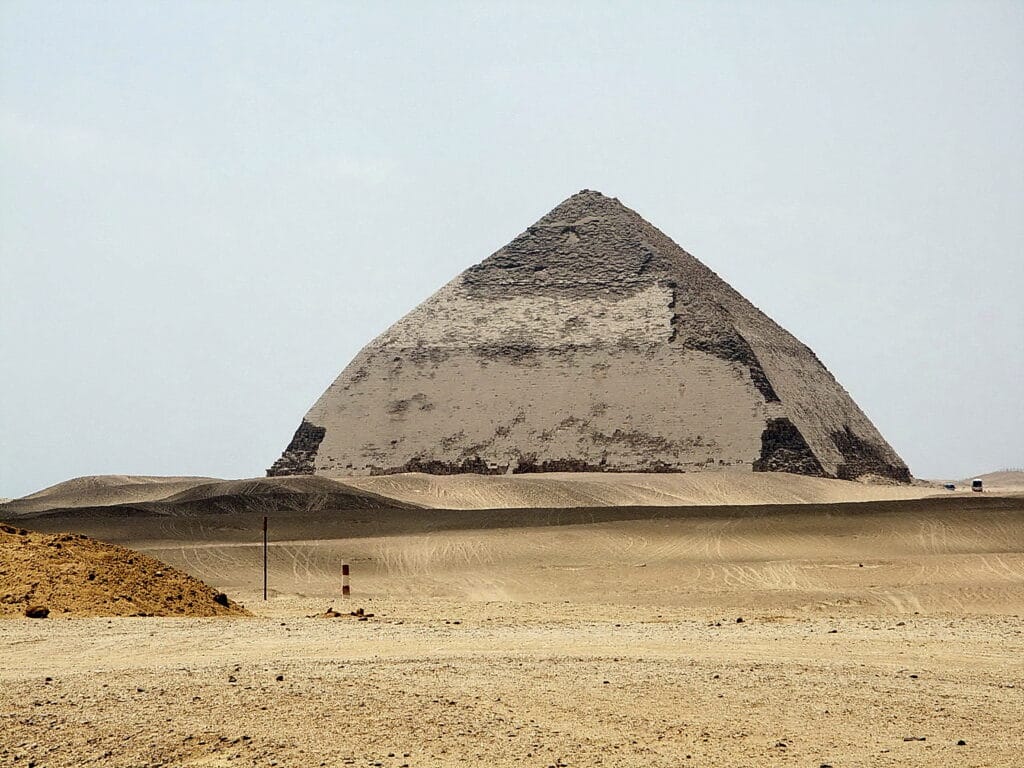
🔺 The Bent Pyramid – Dahshur
-
Built by Pharaoh Sneferu, Khufu’s father
-
Has a sudden change in angle, giving it a “bent” look
-
Possibly the result of structural learning and experimentation
🔺 The Red Pyramid – Dahshur
-
Also built by Sneferu
-
Considered the first true smooth-sided pyramid
-
Its success paved the way for Khufu’s Great Pyramid
🔺 The Pyramid of Unas – Saqqara
-
First pyramid with inscriptions known as the Pyramid Texts
-
These texts are the oldest religious writings in the world
🌌 Pyramids and the Pharaoh’s Afterlife
For the ancient Egyptians, the pyramid was more than a tomb—it was a machine of resurrection. It was designed to help the pharaoh’s ka (spiritual self) ascend to the stars, particularly to Orion and Sirius, which were sacred stars in Egyptian cosmology.
The pyramid’s shape—broad at the base and pointed at the top—symbolized the primordial mound from which all creation sprang, and also the sun’s rays, which the pharaoh would use to ascend to the heavens.
📅 Decline of Pyramid Building
After the Sixth Dynasty, Egypt entered a period of political instability called the First Intermediate Period. Resources grew scarce, and the central authority weakened. While pyramid building continued in a more modest fashion during the Middle Kingdom, it never returned to the grandeur of the Old Kingdom.
Later tombs, such as those in Luxor’s Valley of the Kings, moved underground, focusing on elaborate wall paintings and hidden chambers to deter grave robbers.
Yet the pyramids of the Old Kingdom—especially those at Giza—remained unmatched in size, mystery, and cultural significance.
🌍 Why This History Still Matters to Travelers Today
Understanding the history of pyramid building enhances any visit to Egypt. When you embark on an Egyptian pyramids travel experience or take a pyramids tour from Hurghada, you’re not just seeing ancient stone; you’re witnessing the legacy of one of the most remarkable civilizations in human history.
Every block, corridor, and chamber tells a story:
-
Of a society organized with incredible skill and vision
-
Of beliefs that connected heaven and earth
-
Of pharaohs who dared to challenge time itself
Standing at the base of these pyramids today, with the desert winds in your ears and the Sphinx watching in silence, you’ll feel that legacy—alive, powerful, and timeless.
✅ Next Up: Part 3 – Construction Techniques: What We Know
How did ancient Egyptians move, lift, and perfectly align such massive stones without cranes, steel tools, or computers? In the next section, we’ll dive into the engineering genius behind the pyramids—what archaeologists have discovered and what still remains unexplained.
The Secrets of the Egyptian Pyramids
Part 3: Construction Techniques – What We Know
🏗️ The Eternal Question: How Were the Pyramids Built?
From the moment the first travelers gazed upon the pyramids, one question echoed across generations:
“How did they do it?”
How did the ancient Egyptians—without electricity, cranes, steel, or even wheels—manage to build monuments so massive, so precisely aligned, and so enduring that they still stand today? The Great Pyramid of Khufu, in particular, is a puzzle wrapped in limestone and mystery.
This part of our journey into the secrets of the pyramids dives into the construction methods that historians, engineers, and Egyptologists have studied for centuries. We’ll explore what we know, what we suspect, and what still defies explanation.
⛏️ Materials: More Than Just Stone
The Egyptians had no shortage of materials—but they chose them with deliberate care.
🪨 1. Limestone
-
Used for the core blocks and casing stones
-
Quarried locally, particularly from Tura (white limestone) and Giza plateau
🪨 2. Granite
-
Used in internal chambers, such as the King’s Chamber
-
Sourced from Aswan, over 800 km south of Giza
-
Some blocks weigh 60–80 tons
🪨 3. Basalt
-
Used for flooring, especially in temples or causeways
The choice of stone wasn’t random. It reflected function, symbolism, and aesthetics. Harder stones like granite conveyed durability and divine strength, while gleaming white limestone reflected sunlight—possibly making the pyramids shine like a beacon.
🧰 Tools and Techniques: A Lost Art?
Ancient tools were simple yet effective:
-
Copper chisels and dolerite pounders: used to cut and shape softer stones
-
Levers and sledges: to move blocks into place
-
Ropes made of papyrus or palm fiber
-
Mudbrick ramps: theorized to be essential in lifting blocks
But here’s where the mystery begins: even with these tools, the precision achieved is astonishing.
-
The base of the Great Pyramid is level to within 2 centimeters
-
The sides align with the four cardinal points with an error margin of less than 0.067°
-
The joints between some casing stones are so tight a razor blade cannot fit between them
No modern construction crew would even attempt to do this without lasers or GPS. So how did the Egyptians do it?
🪜 The Ramp Theories: Climbing the Impossible
Most mainstream Egyptologists agree that ramps were used to transport stones up the pyramid as it rose in height. But which kind?
🔁 1. Straight Ramps
-
A straight incline leading from ground to pyramid edge
-
Problem: Would require an enormous amount of material—possibly more than the pyramid itself
🌀 2. Spiral Ramps
-
Wrapped around the structure as it grew
-
Problem: No archaeological evidence remains, and visibility for precision placement would be limited
➕ 3. Internal Spiral Ramp (Jean-Pierre Houdin’s Theory)
-
Proposes a hidden ramp built inside the pyramid
-
Supported by anomalies found in modern scans
-
Still a theory, but it could explain both precision and preservation
Despite decades of debate, no conclusive evidence has confirmed exactly how the massive blocks were lifted into place.
📐 Precision and Alignment: A Celestial Blueprint?
Perhaps the most mind-bending aspect of the pyramids isn’t the size—but the mathematical and astronomical precision.
🧭 1. True North Alignment
-
The Great Pyramid is aligned to true north more accurately than any modern building constructed before GPS
🧮 2. Pi and Phi in the Pyramids?
-
Some believe the pyramid’s proportions encode Pi (π) and the Golden Ratio (Φ)—though others argue it’s a coincidence
-
Height × 2π = Perimeter of base (in meters)
🌠 3. Star Alignments
-
The internal air shafts of the Great Pyramid point to:
-
Orion’s Belt (associated with Osiris)
-
Sirius (linked to Isis)
-
Thuban (pole star around 2600 BCE)
-
These correlations suggest a deeper understanding of celestial mechanics than previously assumed. Some researchers argue that the pyramids were built in perfect harmony with the cosmos, intended to ensure the pharaoh’s soul would ascend to the stars.
🧑🤝🧑 Who Built the Pyramids? Slaves or Citizens?
Forget what you saw in old Hollywood movies—slaves didn’t build the pyramids.
Archaeological discoveries show that the workforce was made up of:
-
Well-fed laborers
-
Highly skilled masons and engineers
-
Rotational teams of farmers during off-seasons
Tombs found near Giza honor the workers as heroes, not prisoners. Recent evidence suggests up to 20,000–30,000 people were involved at any one time in an organized, dignified, and national effort—what we might today call a “mega project.”
🧬 Modern Technologies Reveal More Secrets
Thanks to advanced imaging techniques like muon tomography, ground-penetrating radar, and thermal scanning, new discoveries continue to emerge:
📦 1. The Big Void (Discovered 2017)
-
An unknown cavity the size of a Boeing 747 located above the Grand Gallery
-
Its purpose? Still unknown. Some think it could be a hidden chamber or structural feature.
📸 2. Hidden Anomalies
-
Thermography has revealed temperature differences in blocks, suggesting hollow spaces or air shafts still undiscovered
🎯 Takeaway: A Legacy Beyond Comprehension
The construction of the pyramids reveals a civilization with:
-
Advanced knowledge of engineering
-
Sophisticated understanding of astronomy
-
A spiritual worldview where architecture served cosmic purposes
They were not just tombs. They were machines of eternity, built with a level of coordination, scale, and intention that modern societies still struggle to emulate.
As you prepare for your Egyptian pyramids travel adventure, or book a pyramids tour from Hurghada, remember this: you are not just visiting ruins—you are walking through one of the most profound engineering and spiritual achievements in all of human history.
🔜 Coming Next: Part 4 – The Hidden Engineering Genius
In Part 4, we’ll dive even deeper into the architectural marvels inside the pyramids. We’ll explore the Grand Gallery, relieving chambers, and resonant acoustics, as well as the theories that the pyramids were far more than tombs—they may have been energy machines, vibrational temples, or cosmic gateways.
The Secrets of the Egyptian Pyramids
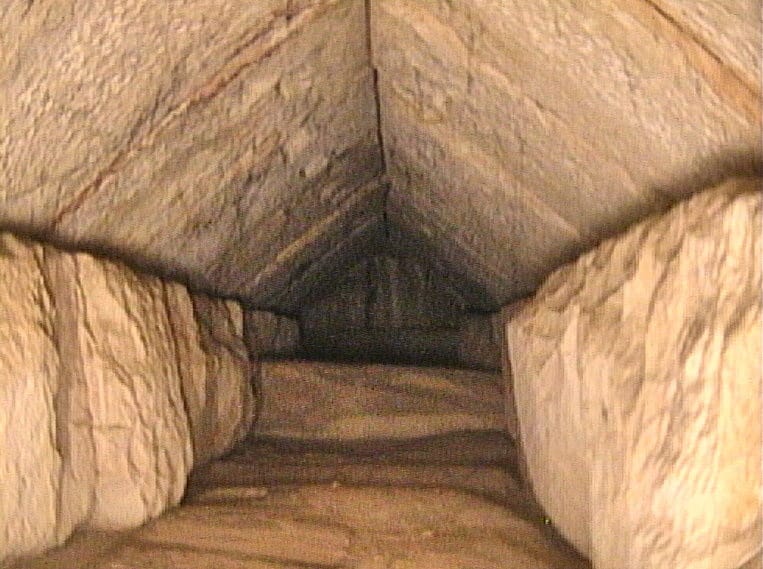
Part 4: The Hidden Engineering Genius Inside the Pyramids
🧠 Introduction: Beyond Stone and Geometry
What lies inside the pyramids is even more extraordinary than their vast outer structure.
Inside the Great Pyramid of Khufu, we find a layout so intricate, so precise, and so advanced that modern scientists, engineers, and mystics alike continue to debate its purpose. This part of our blog uncovers the internal architecture of the pyramid—not just the known rooms and passages, but the innovative features, hidden mechanisms, and possible energetic properties.
Join us as we walk through stone corridors that defy explanation, exploring what makes these internal chambers engineering marvels that still challenge the limits of our understanding.
📐 The Known Interior Layout of the Great Pyramid
Let’s begin with what we know from exploration and confirmed studies.
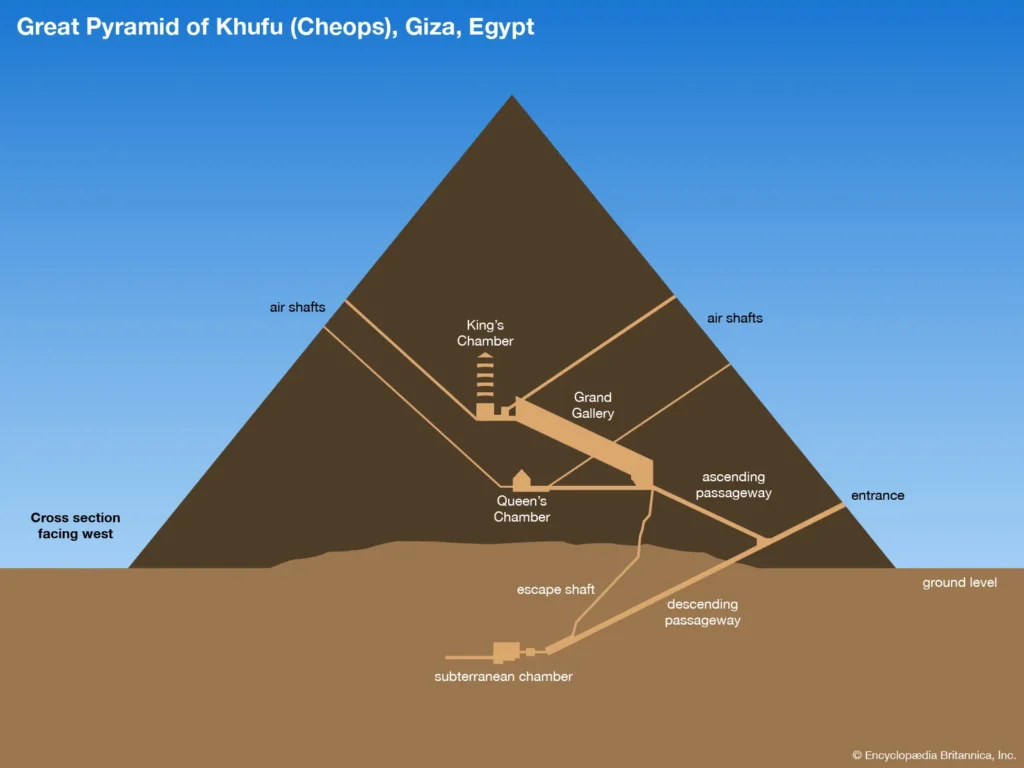
🏛️ 1. Descending Passage
-
Begins at the original entrance on the north face
-
Leads down into the Subterranean Chamber, cut directly into bedrock
-
This unfinished room may have been an early burial chamber or symbolic underworld
🧱 2. Ascending Passage
-
Splits from the descending corridor and rises sharply upward
-
Gives access to the Grand Gallery and the upper chambers
🏗️ 3. Grand Gallery
-
Nearly 9 meters high and 47 meters long
-
Built with precision corbelled stone layers, rising inward with each level
-
Thought to relieve pressure above the King’s Chamber, but its acoustic and energetic features have sparked other theories
🛏️ 4. Queen’s Chamber
-
Located halfway up the pyramid’s core
-
Contains a unique niche and two mysterious air shafts that do not exit the pyramid
-
Purpose remains uncertain—not a burial chamber, possibly symbolic or ritualistic
👑 5. King’s Chamber
-
Constructed entirely of massive red granite blocks
-
Houses a sarcophagus but no inscriptions, no mummy, and no treasure
-
Roof supported by five relieving chambers, each with carefully arranged stone beams to distribute weight
📡 Acoustic and Vibrational Properties: A Hidden Science?
The Grand Gallery is unlike any other internal passageway in the ancient world. It’s acoustically “live,” with:
-
Echo properties
-
Resonance frequencies
-
Rumored vibration effects when tones or chanting occur
Some researchers believe that this was not accidental, suggesting the Egyptians designed the space to resonate with specific frequencies—possibly for spiritual or energetic rituals.
🧬 Pyramid Resonance Theory
-
Posits that the pyramid shape and materials amplify sound and energy
-
Studies (including 2018 research by Russian scientists) show resonant electromagnetic properties within the pyramid
-
This has led to modern speculation about the pyramids as harmonic structures, not just tombs
🧭 The Purpose of the Air Shafts: Cosmic or Practical?
The so-called air shafts in the King’s and Queen’s Chambers are unique in ancient architecture.
-
Two in the King’s Chamber point directly toward Orion’s Belt and Sirius
-
The Queen’s Chamber shafts, long thought to be fake or symbolic, were found to extend deeply through the pyramid
-
A robotic exploration in 2002 discovered a sealed door at the end of one shaft, behind which was another door
What lies beyond them? No one knows for sure.
Some believe the shafts were star portals for the pharaoh’s soul. Others see them as ventilation or symbolic guides. But the precision with which they are aligned to the heavens raises questions that transcend practical explanation.
🪜 The Mysterious “Big Void”
In 2017, researchers using muon radiography—a technique using cosmic rays to scan solid structures—discovered a massive hidden void inside the Great Pyramid.
What We Know:
-
It’s at least 30 meters long, located above the Grand Gallery
-
It’s completely sealed off, with no known entry
-
Could be a relieving space, hidden chamber, or something else entirely
This “Big Void” shocked Egyptologists. No ancient texts mention it. No internal corridors lead to it. It is, at present, one of the greatest unsolved mysteries inside the Great Pyramid.
🔍 Unused Passages and Dead Ends
Many of the pyramid’s internal passageways appear to serve no clear function:
-
Dead-end corridors
-
Sealed niches
-
Chambers too small or impractical for burial
Could they have been:
-
Spiritual in purpose?
-
Acoustic or energetic components?
-
Decoy paths to confuse grave robbers?
Even the so-called Subterranean Chamber has strange features—unfinished rock walls, a small pit, and no formal burial installation. Egyptologists debate whether it was abandoned, symbolic, or part of a larger metaphysical blueprint.
🧱 Structural Genius: Pressure, Load, and Time
The pyramid’s interior isn’t just mystical—it’s a marvel of engineering foresight.
🪨 1. Relieving Chambers Above the King’s Chamber
-
Built with massive granite beams and corbelled ceilings
-
Distribute thousands of tons of weight safely across the structure
-
One beam is cracked—proof the design absorbed stress as intended
🧮 2. Foundation and Substructure
-
Built directly on bedrock for stability
-
Foundation leveling is millimeter-perfect
-
Even the base corner stones have been found resting on pivot sockets, suggesting some form of seismic awareness
Modern engineers admit that replicating the Great Pyramid with the same size, stone mass, and accuracy would be nearly impossible today, even with cranes and computers.
✨ Hidden Symbolism in Layout and Geometry
The pyramid’s internal layout may form a symbolic map of the ancient Egyptian cosmology:
-
The Subterranean Chamber: the underworld (Duat)
-
The Queen’s Chamber: transition or rebirth
-
The King’s Chamber: ascension to the heavens
The Grand Gallery, in this view, is a spiritual corridor, guiding the soul upward through stages of initiation, transformation, and eternal life.
Some esoteric traditions even claim that the layout encodes:
-
The chakra system
-
Earth’s geometry
-
Time cycles or prophecies
While these ideas aren’t confirmed by mainstream archaeology, they reflect the depth of mystery that surrounds the pyramid interiors.
📸 Want to See It for Yourself?
Most Egyptian tours take you to Giza Plateau, but not all allow entry into the pyramid itself. If you’re planning your Egyptian pyramids travel, we highly recommend selecting a pyramids tour from Hurghada that includes:
-
Interior access to the Great Pyramid
-
A visit to the Grand Gallery and King’s Chamber
-
Guides who can explain both mainstream and alternative theories
Few travel experiences on earth match the feeling of standing inside a structure built 4,500 years ago, deep in the heart of a monument that continues to defy explanation and ignite wonder.
The Secrets of the Egyptian Pyramids
Part 5: Lost Knowledge and Fringe Theories
👁️ Introduction: Between Facts and Faith
The mystery of the Egyptian pyramids does not end with archaeology. It expands—into science, mysticism, pseudoscience, and belief systems.
While most Egyptologists focus on rational explanations, a growing community of independent researchers, engineers, and even mystics argue that mainstream theories fail to explain everything. These alternative voices believe the pyramids are not just tombs or monuments, but machines, messages, or even keys to forgotten knowledge.
In this part, we walk the fine line between fact and speculation, exploring the fringe theories, controversial claims, and undeniably thought-provoking mysteries that still surround the pyramids.
⚡️ Theory #1: The Great Pyramid as a Power Plant
Popularized by authors like Christopher Dunn, this theory proposes that the Great Pyramid of Giza was not a tomb at all—but a gigantic energy device.
🔧 How Would It Work?
According to this hypothesis:
-
The descending and ascending passages formed part of a hydraulic system
-
Water from the nearby Nile was channeled into the subterranean chamber to create vibrational resonance
-
The granite King’s Chamber acted as a resonator box
-
Chemical residues found in shafts suggest a possible chemical reaction
-
The result: the pyramid may have generated electromagnetic energy, possibly for wireless transmission
📊 Evidence?
-
Precision-cut granite, a piezoelectric material
-
Absence of soot in the passageways (despite claims of torch use)
-
Complex internal architecture inconsistent with a simple tomb
🚫 Criticism:
-
No documentation or hieroglyphs support the theory
-
No components like wiring or energy receivers have been found
-
Critics argue it reflects modern projection onto ancient structures
Still, the theory remains compelling to engineers who are amazed by the pyramid’s precision.
🛸 Theory #2: Ancient Alien Involvement
One of the most controversial and widespread fringe theories is that the pyramids were not entirely human-made.
Popularized by Erich von Däniken’s Chariots of the Gods and TV shows like Ancient Aliens, this theory claims:
-
Advanced extraterrestrials either built the pyramids or gave the Egyptians the knowledge to do so
-
The precision and scale of the pyramids are “beyond the capabilities” of ancient humans
-
The alignment with Orion’s Belt reflects cosmic awareness inherited from off-world intelligence
👽 Common Arguments:
-
Giant stones were too heavy to move with simple tools
-
No construction blueprints were left behind
-
Similar pyramid-like structures appear in Mesoamerica, Asia, and even Antarctica
🔬 Mainstream Rebuttal:
-
There is archaeological evidence of human labor, tools, quarries, and logistics
-
There’s no hard evidence of alien artifacts or technologies
-
Human ingenuity may be underestimated
While mainstream scholars reject alien theories, these ideas remain popular with the public, fueling global interest in Egyptian pyramids travel.
🗿 Theory #3: The Pyramids Encode Lost Ancient Knowledge
This theory suggests that the pyramids were knowledge vaults—mathematical, astronomical, or spiritual blueprints encoded in stone.
🔢 Key Numbers:
-
Height × 2π ≈ Perimeter (connection to Pi)
-
Golden ratio found in internal chamber layout
-
Coordinates of the Great Pyramid (29.9792°N) correspond to the speed of light (299,792,458 m/s)
Coincidence or encoded message?
🧩 Some Claim the Pyramids Contain:
-
A calendar or zodiac map
-
Knowledge of the precession of the equinoxes
-
Earth’s dimensions and curvature
-
Sacred geometry that connects to other ancient monuments worldwide
While these ideas lack definitive proof, the recurring mathematical synchronicities inspire speculation about a forgotten civilization with knowledge we no longer understand.
🌍 Theory #4: The Pyramids Are Part of a Global Network
Many alternative historians believe the pyramids were not built in isolation—but were part of a planetary grid of ancient energy sites.
-
Sites like Teotihuacan (Mexico), Stonehenge (UK), Easter Island, and Angkor Wat (Cambodia) seem aligned with sacred geometry or ley lines
-
Some claim they form geometric patterns on Earth that reflect stellar constellations
-
The pyramid shape may be a universal symbol of energy and resonance
Though speculative, these connections have led many travelers to explore multiple ancient sites around the globe in search of a deeper, hidden history.
🧬 Theory #5: Atlantean or Pre-Dynastic Origins
Did the ancient Egyptians build the pyramids—or did they inherit them?
This theory claims that:
-
The pyramids, especially those at Giza, pre-date dynastic Egypt
-
Survivors of a lost civilization (often called Atlantis) built or initiated them
-
Evidence such as erosion patterns on the Sphinx enclosure suggests a much older origin (possibly 10,000 BCE)
This idea was first proposed by geologist Robert Schoch and later supported by alternative historians like Graham Hancock, who argue for a lost epoch of human history erased by cataclysm.
Mainstream Egyptologists disagree, citing:
-
Hieroglyphs and dated artifacts that clearly associate the pyramids with Pharaoh Khufu and others
-
Consistent archaeological context
Still, the idea continues to fascinate and has inspired many to view the pyramids as time capsules from an age of giants, floods, or forgotten wisdom.
🔒 What Remains Hidden?
Even after centuries of study, there are still major unanswered questions:
-
What is inside the Big Void?
-
Do more undiscovered chambers lie below or around the pyramid complex?
-
Why were there no definitive inscriptions or decoration inside the Great Pyramid?
-
What were the pyramids really meant to do?
And then there’s the spiritual aspect—a subject rarely covered in academic texts but alive in the hearts of millions of visitors.
🧘♀️ A Personal Perspective: Spiritual Energy and Inner Journey
Many travelers report life-changing experiences after visiting the Great Pyramid:
-
Heightened intuition
-
Vivid dreams
-
Emotional breakthroughs
-
A sense of “coming home”
Whether you believe in spiritual energy or not, there’s no denying the deep emotional and psychological impact of walking into a space designed to outlive empires.
When you embark on a pyramids tour from Hurghada, you’re not just checking off a tourist attraction—you’re stepping into a mystery older than memory, and wiser than the written word.
🧭 Tips for Exploring the Unknown
If you’re planning an Egyptian pyramids travel journey and want to explore both mainstream and fringe perspectives:
-
Hire a guide open to alternative ideas
Many local experts will share both Egyptological facts and deeper mysteries. -
Visit beyond Giza
Explore Dahshur, Saqqara, and the Bent Pyramid, where unusual features abound. -
Enter the King’s Chamber
Lie down in the granite sarcophagus and listen to the silence—it might speak louder than a textbook. -
Read both sides
Explore Graham Hancock, Robert Bauval, and Christopher Dunn—but also read Mark Lehner and Zahi Hawass to compare. -
Trust your own experience
What matters most is what the pyramids awaken in you.
The Secrets of the Egyptian Pyramids
Part 6: Egypt’s Other Pyramids – The Full Picture
🌍 Introduction: Beyond Giza—The Hidden Pyramid Landscape
When we talk about Egyptian pyramids, the Giza Plateau often dominates the conversation. But Egypt is home to over 100 pyramids, many of which remain off the radar for travelers and even some historians.
In this part, we will take you on a journey through the lesser-known yet deeply important pyramid fields of Egypt. From the Step Pyramid of Djoser, the world’s first monumental stone building, to the mysterious Bent Pyramid, these sites hold clues to the evolution of pyramid design—and perhaps even to secrets that Giza itself cannot reveal.
For those planning an Egyptian pyramids travel itinerary or considering a pyramids tour from Hurghada, these hidden wonders are well worth the detour.
🏛️ Saqqara: The Birthplace of the Pyramid Age
Saqqara, just south of modern-day Cairo, is where it all began.
🧱 Step Pyramid of Djoser (c. 2670 BCE)
-
Designed by the brilliant architect Imhotep
-
Built for Pharaoh Djoser, this is the first pyramid ever constructed
-
Originally a mastaba (flat-topped tomb), then expanded into a six-layered pyramid
-
Represents the transformation of mortuary architecture, marking the leap from mudbrick tombs to monumental stone
Secrets of Saqqara:
-
Underground labyrinth of tunnels and chambers, including a blue faience-tiled tomb
-
Contains the world’s oldest complete stone building
-
Thought to symbolize the stairway to the heavens, which the king would ascend in the afterlife
Saqqara also holds dozens of other tombs and pyramids from later dynasties, including:
-
Unas Pyramid, the first to feature Pyramid Texts
-
Teti and Pepi pyramids, which continued the spiritual literary tradition
🏜️ Dahshur: The Evolution of Precision
About 40 km south of Cairo lies Dahshur, where pyramid construction shifted from experimentation to engineering mastery.
🧩 The Bent Pyramid (Sneferu, c. 2600 BCE)
-
Named for its unusual angle change—starts at 54° then shifts to 43°
-
Still has much of its original polished limestone casing
-
Represents a midway point in pyramid evolution
Why the bend?
-
Possibly due to structural instability
-
Some argue it was intentional, reflecting religious symbolism or duality
Visitors can enter the Bent Pyramid, descending through narrow passages to see its unique internal chambers—a rare and humbling experience.
🟥 The Red Pyramid (Sneferu, c. 2590 BCE)
-
Egypt’s first true smooth-sided pyramid
-
Built immediately after the Bent Pyramid
-
Named for its reddish limestone core
Highlights:
-
Standing at 104 meters, it’s almost as tall as Khafre’s pyramid at Giza
-
You can climb inside to explore a series of deep corbelled chambers
-
Considered a perfect precursor to the Great Pyramid
🧱 Meidum: The Collapsed Pyramid
Located south of Dahshur, the Meidum Pyramid is an eerie reminder of trial and error in early pyramid building.
Facts:
-
Likely begun by Pharaoh Huni and finished by Sneferu
-
Initially built as a step pyramid, then covered with smooth casing
-
Collapsed in ancient times, leaving a tower-like core and massive debris
Though partially destroyed, Meidum offers insights into the transition from mastaba to true pyramid—and may reveal design flaws later corrected in Giza.
🏚️ Abu Sir: The Forgotten Royal Necropolis
Located between Giza and Saqqara, Abu Sir features several pyramids from the Fifth Dynasty (c. 2494–2345 BCE).
Notable Pyramids:
-
Sahure’s Pyramid: once surrounded by lush gardens, courtyards, and vivid reliefs
-
Neferirkare’s Pyramid: originally a step pyramid, later transformed
-
Niuserre’s Pyramid: well-preserved mortuary temple
Though not as massive as Giza’s, Abu Sir’s pyramids were part of a spiritual and administrative center, reflecting a shift from raw power to religious ceremony.
Why Visit?
-
Fewer tourists
-
Beautiful reliefs and frescoes
-
A chance to walk among unspoiled ruins of ancient dynasties
🏞️ Other Lesser-Known Pyramid Fields
📍 Abu Rawash
-
Home to the pyramid of Djedefre, son of Khufu
-
Once stood 67 meters tall but was mostly dismantled
-
Located on a hill, offering panoramic views of Cairo
📍 El-Lisht
-
Middle Kingdom pyramids of Amenemhat I and Senusret I
-
Surrounded by mastabas and smaller tombs
📍 Hawara & Illahun
-
Located in Fayoum region
-
Built by Middle Kingdom Pharaohs, especially Amenemhat III
-
Associated with the legendary Labyrinth of Egypt, described by Herodotus
🏛️ Evolution of Pyramid Construction Over Time
| Period | Key Features | Notable Pyramids |
|---|---|---|
| Early Dynastic | Mastabas, stepped tombs | Tomb of King Den |
| Old Kingdom | Large limestone pyramids | Giza, Dahshur, Saqqara |
| Middle Kingdom | Smaller, mudbrick pyramids | El-Lisht, Hawara |
| Late Period | Symbolic or miniature pyramids | Nubian pyramids in Sudan |
Transition to the Valley of the Kings
By the New Kingdom (1550 BCE onward), pharaohs abandoned pyramids in favor of hidden tombs in Thebes, like those in the Valley of the Kings.
Why?
-
Tomb security
-
Changing religious beliefs
-
Shift toward personalized afterlife journeys
Still, the legacy of the pyramid as a spiritual ladder persisted in art, writing, and memory.
🚗 How to Visit These Sites: Pyramids Tour from Hurghada
If you’re staying in Hurghada, most tours focus on the Giza Pyramids, but you can upgrade your experience with a custom excursion to these hidden gems.
Recommended Routes:
-
Hurghada → Cairo (by flight) → Saqqara + Dahshur day trip
-
Multi-day tour covering Giza, Saqqara, Dahshur, Meidum, and Abu Sir
-
Add Luxor or Fayoum for Middle Kingdom tombs and temples
📲 Choose agencies that specialize in Egyptian pyramids travel and can explain the spiritual, architectural, and symbolic richness of each site.
✨ The Broader Picture
What emerges from these lesser-known sites is a story not just of architectural evolution, but of a philosophical shift.
-
From giant monuments to hidden tombs
-
From cosmic kings to individualized afterlives
-
From national symbols to spiritual vessels
And in every phase, the pyramid remained the central image of eternal life, rebirth, and transcendence.

🔜 Coming Next: Part 7 – What the Pyramids Teach Us About Ourselves
The Secrets of the Egyptian Pyramids
Part 7: The Eternal Lessons of the Pyramids
🌅 Introduction: More Than Stone
For over 4,500 years, the pyramids have stood—unmoving, unchanging, but not silent.
These architectural marvels continue to inspire wonder not just for how they were built or who built them, but why. What drove humans to invest such unimaginable labor, resources, and intellect into monuments to the dead? What did the pyramids mean to the ancient Egyptians—and what can they mean to us today?
In this final part, we step back from history and engineering and look at the soul of the pyramid. This is not about archaeology, but about meaning—about what the pyramids teach us about mortality, eternity, purpose, and human potential.
🧭 1. The Pyramid as a Symbol of the Soul’s Journey
The pyramid was not a tomb in the modern sense. It was a cosmic machine—a ladder between worlds, a spiritual launchpad.
-
Its square base symbolized Earth, stability, and the physical body.
-
Its four sides, aligned with the cardinal directions, represented balance and harmony.
-
Its rising shape pointed to the sky, to the Benben stone (primordial hill) and to Ra, the sun god.
To the ancient Egyptian, life on Earth was a trial. Death was not the end but a transition to eternity—a journey filled with perils, tests, and divine judgment.
The pyramid was the gateway through which a king’s soul (ka) could ascend to join the stars, becoming one with the gods.
✨ 2. Immortality Through Legacy
The pharaohs did not build pyramids to defy death—they built them to transcend it.
The ancients believed:
-
A name spoken is a life prolonged.
-
A monument remembered is a soul that never fades.
And in that sense, the pyramid succeeds. It immortalizes. It echoes through time, not only preserving the name of kings like Khufu, but acting as a mirror of human memory itself.
To stand before the Great Pyramid is to confront the idea that perhaps our greatest fear—being forgotten—can be overcome by creation, purpose, and legacy.
This idea resonates deeply with modern humans. In an age where time moves quickly and information is fleeting, the pyramid teaches us the value of permanence.
🛠️ 3. A Testament to Human Ingenuity
The pyramids are often credited to gods or aliens—but that may do a disservice to ancient humanity.
They show us what humans are capable of when:
-
We work together
-
We think long-term
-
We dare to imagine the impossible
Over decades, entire societies were mobilized to pursue a shared vision, driven by belief, ritual, and cosmic purpose.
This is not just an engineering lesson—it’s a moral lesson:
When we aim higher than our own lifespans, we create wonders that last beyond our time.
🌀 4. The Mystery that Endures
Even today, with all our satellites and scans, the pyramids refuse to give up all their secrets.
And perhaps they were meant to be that way.
The unknown chambers, the mathematical riddles, the astrological alignments—these may not be problems to solve but questions to live with.
The mystery itself is part of the message:
-
That there is more than we know
-
That we are part of something greater
-
That eternity is not measured in answers, but in wonder
🧘♀️ 5. A Personal Encounter with Eternity
Every traveler who visits the pyramids walks away changed.
Whether you’re there for:
-
History
-
Photography
-
Exploration
-
Spiritual reflection
The impact is undeniable. In the silence of the King’s Chamber, or under the gaze of the Sphinx at sunset, something inside shifts.
You begin to feel:
-
Small, but also significant.
-
Finite, but connected to the infinite.
-
Curious, and more alive than before.
This is why so many who book a pyramids tour from Hurghada or a full Egyptian pyramids travel package say it was not just a trip—it was a pilgrimage.
🛎️ 6. What the Pyramids Ask of Us Today
The pyramids are not relics—they are messages in stone, addressed to you and me.
They ask us:
-
What are you building?
-
What will you leave behind?
-
What part of you will still speak, 5,000 years from now?
In a noisy world, the pyramids remind us to:
-
Think bigger
-
Live with purpose
-
Aim toward eternity
🧳 Final Reflection: Your Journey Awaits
Egypt isn’t just a destination—it’s an invitation.
The pyramids are calling you. Not just to take photos, but to connect—with the past, with the earth, with something timeless inside yourself.
If you’re planning your visit, don’t stop at Giza.
-
Go deeper.
-
Ask questions.
-
Walk the halls of Saqqara.
-
Crawl through the Bent Pyramid.
-
Sit in silence in front of the Sphinx.
Because in these stones, laid by human hands but blessed by cosmic alignment, lies a truth older than language:
“As above, so below. As within, so without. As the pyramid stands, so too must your spirit rise.”
🌐 Ready to Begin Your Own Pyramid Journey?
From the Red Sea to the sand of Giza, your next step into ancient eternity starts here.
🚐 Book Your Pyramids Tour from Hurghada Today
Our experienced guides will help you uncover:
-
The true stories behind the monuments
-
The hidden chambers of lesser-known sites
-
The spiritual energy many travelers report after visiting the King’s Chamber
-
Custom tour options including Giza, Saqqara, Dahshur, and the Egyptian Museum
✅ Why travel with us?
-
Professional Egyptologists
-
Comfortable transport from Hurghada to Cairo and beyond
-
Options for families, solo travelers, and spiritual seekers
-
Multilingual support
👉 Let the pyramids change you. Let Egypt welcome you.
📞 Contact us now and write your own chapter in the story of the pyramids.
🙏 Thank You for Reading
“The Secrets of the Egyptian Pyramids: What We Know and What Remains Hidden” was written to inspire, educate, and guide those who seek more than just a vacation.
If this journey moved you, please share it, bookmark it, and consider joining us in Egypt—where the past waits patiently for your arrival.