
Jahuti Egypt (Djehuty) in Ancient Egypt
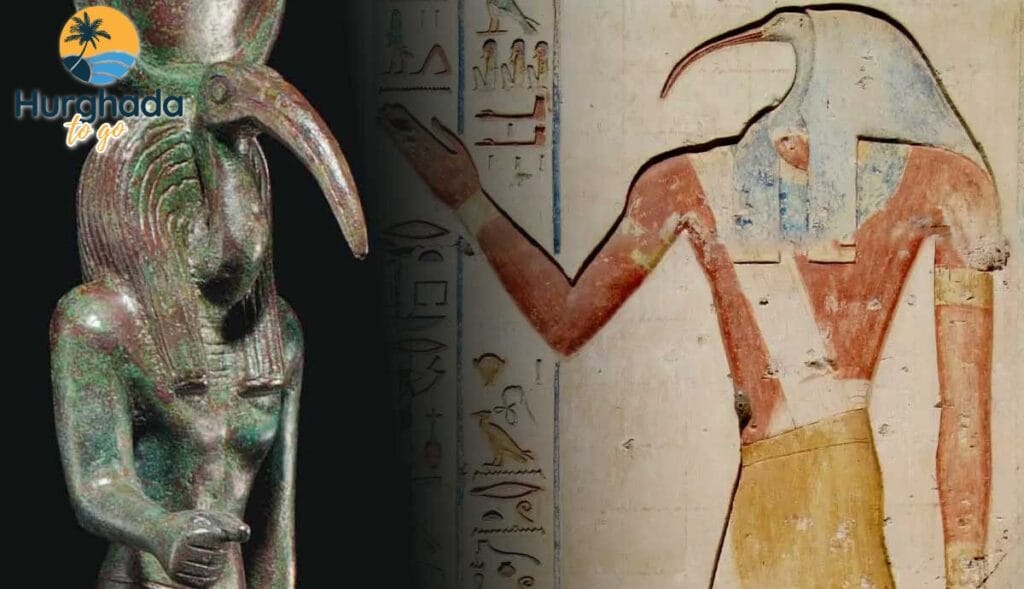
The term “Jahuti” (also spelled Djehuty, Jehuti, or Tahuti) primarily refers to Thoth, one of the most revered deities in ancient Egyptian mythology. Thoth was the god of wisdom, writing, magic, science, judgment, and the moon. His name, derived from Egyptian ḏḥwty, translates to “He Who is Like the Ibis,” reflecting his common depiction as a man with the head of an ibis (a sacred bird symbolizing knowledge) or as a baboon. Thoth’s cult center was Hermopolis Magna (Khemenu), and he played a central role in the pantheon as the scribe of the gods, inventor of hieroglyphs, and mediator in divine disputes—most famously recording the judgment of Osiris after his murder by Set.
Key Roles and Myths
- Scribe and Inventor: Thoth authored the Book of the Dead (properly The Book of Coming Forth by Day), a collection of spells to guide souls in the afterlife. He was patron of scribes, often invoked in writing prayers for skill in literacy.
- Lunar and Cosmic Deity: Associated with the moon, Thoth won five extra days of moonlight from the lunar god Iah through a game of dice, allowing the birth of key gods like Horus and Seth.
- Judge of the Dead: In the Hall of Ma’at, Thoth weighed hearts against the feather of truth alongside Osiris, ensuring cosmic balance.
- Self-Created or Divine Birth: Myths vary; he was sometimes self-born from the forehead of Set or the seed of Horus, emphasizing his role in creation and healing.
Thoth’s influence extended across Egyptian history, from the Old Kingdom (c. 2686–2181 BCE) through the Ptolemaic period, appearing in royal names (e.g., Thutmose, meaning “Born of Thoth”) and amulets. Temples dedicated to him, like Deir el-Hagar in the Dakhla Oasis, highlight his worship into Roman times.
Historical Figures Named After Jahuti
The theophoric name “Jahuti” (meaning “Thoth is satisfied” or similar) appears in several prominent individuals, blending divine reverence with elite status:
- Djehutihotep (c. 1900 BCE): A powerful nomarch (governor) of the 15th Upper Egyptian nome (Hare Nome) during the 12th Dynasty (Middle Kingdom). Ruling under pharaohs Amenemhat II, Senusret II, and Senusret III, he oversaw a prosperous region. His rock-cut tomb at Deir el-Bersha features a famous wall relief depicting the transport of his 60-ton colossal statue on a sledge pulled by 172 men and lubricated with milk—a masterpiece of Middle Kingdom engineering and art, symbolizing regional autonomy before central reforms curbed nomarch power.
- Djehuty the General (c. 1479–1425 BCE): A high-ranking military leader under Thutmose III (18th Dynasty, New Kingdom). Known from the “Taking of Joppa” tale on Papyrus Anastasi I (British Museum), he cleverly captured the rebellious city of Joppa (modern Jaffa) by hiding soldiers in grain baskets, akin to the Trojan Horse myth. His undisturbed Saqqara tomb yielded jewelry like the Ashburnham ring.
- Later Priests and Officials: In the New Kingdom (c. 1550–1070 BCE) and 26th Dynasty (c. 664–525 BCE), figures like Jahuti Miss (supervisor of Amun’s temple bulls), Mrs. Ta-de-Isa (daughter of high priest Eret Haru of Djehuti), and Jahouti Im Hoteb (chief priest of the goddess form of Thoth) held roles tied to Thoth’s cult. Recent excavations at Tuna al-Gebel (Minya) uncovered a 3,500-year-old cemetery with mummies, ushabti statues, and a well-preserved Book of the Dead papyrus linked to these elites, offering insights into funerary practices.
Thoth’s legacy endures in modern culture, influencing Hermeticism, alchemy, and even the ibis-headed Staff of Hermes in Greco-Roman syncretism. For deeper dives, sites like Deir el-Bersha or Hermopolis provide tangible connections to his worship.
The Book of the Dead in Ancient Egypt
(Proper ancient Egyptian name: rꜢw n(w) prt m hrw – “Spells for Going Forth by Day”)
What It Actually Is
The “Book of the Dead” is **not a modern name coined in the 19th century by Egyptologists. The ancient Egyptians never had a single, fixed “book.” Instead, it is a loose collection of approximately 200 magical spells (called “chapters” today) designed to protect and empower a deceased person on their journey through the afterlife and to reach eternal paradise (the Field of Reeds).
It is personalized – no two copies are identical. Wealthy Egyptians commissioned their own version on papyrus scrolls, leather, tomb walls, shrouds, or coffins.
Time Period
Most surviving copies date to the New Kingdom through the Late Period and Ptolemaic era (c. 1550 BCE – 30 BCE), but some spells are already attested in the Pyramid Texts (Old Kingdom, 2400 BCE) and Coffin Texts (Middle Kingdom, 2000 BCE). The classic illustrated papyrus version we recognize today became widespread from the 18th Dynasty onward.
Most Famous Copies (with modern names)
| Name | Owner & Title | Date | Length / Highlights | Current Location |
|---|---|---|---|---|
| Papyrus of Ani | Royal scribe Ani & his wife Tutu | 19th Dynasty (c. 1250 BCE) | 24 m long, magnificent color vignettes; Spell 125 scene is the iconic “Weighing of the Heart” | British Museum (London) |
| Papyrus of Hunefer | Royal scribe Hunefer | 19th Dynasty (c. 1300 BCE) | Superb quality; one of the best Spell 125 scenes | British Museum |
| Papyrus of Nu | Overseer of the house of Amun, Nu | 18th Dynasty | British Museum | |
| Greenfield Papyrus | Princess Nesitanebetasheru (daughter of Pinudjem II) | 21st Dynasty (c. 950 BCE) | Longest known (37 metres), over 100 chapters | British Museum |
| Papyrus of Nebseni | Scribe Nebseni | 18th Dynasty | Very early illustrated version | British Museum |
| Papyrus of Any (Leiden) | Scribe Any | Late 19th–early 20th Dynasty | Beautiful vignettes | Rijksmuseum van Oudheden (Leiden) |
| Papyrus of Qenna | Recently discovered (2024–2025) at Tuna el-Gebel | 18th Dynasty | 16 m long, exceptionally well preserved | Grand Egyptian Museum (in prep.) |
Key Spells (Chapters)
| Spell | Ancient Name / Purpose | Famous Scene / Content |
|---|---|---|
| 1 | Beginning of the spells for going forth by day | Procession to the tomb |
| 17 | “I am yesterday, today, and tomorrow…” | Creation and solar theology |
| 30B | Spell for not letting the heart oppose the deceased | Heart scarab inscription |
| 125 | Declaration of Innocence (the “Negative Confession”) & Weighing of the Heart | The most famous scene: heart weighed against Ma’at’s feather; Thoth records, Ammit waits |
| 110 | Arrival in the Field of Reeds (paradise) | Farming, boating, eternal happiness |
| 149 & 150 | Spells for the 14–15 mounds of the underworld | Gates and guardians |
| 162–165 | Hypocephalus spells (placed under the head of the mummy) | Protection and rebirth |
| 189 | Preventing the deceased from eating feces or walking upside-down in the afterlife (yes, really) |
Structure of a Typical Papyrus
- Opening vignettes (funeral procession, mourning, offering scenes)
- Spells 1–16 (funeral rites and resurrection)
- Spells 17–63 (transformation into birds, gods, light, etc.)
- Spells 64–129 (protection, knowledge of names of power)
- Spell 125 (judgment scene – almost always present and lavishly illustrated)
- Spells 130–190 (sun hymns, underworld journey through the night hours, arrival in paradise)
- Closing vignettes of the deceased in the afterlife
Materials & Cost
- Cheapest version: short papyrus with only Spell 125 and a few others (middle-class officials).
- Luxury version: 15–40 metres long, full colour on both sides, gold leaf on vignettes (royalty and high priests).
- Some elite individuals had the spells painted directly on their coffin or tomb walls instead of (or in addition to) a papyrus roll.
Recent Discoveries (2023–2025)
- Tuna el-Gebel necropolis (2024,000-year-old cemetery near Hermopolis, cult center of Thoth): In 2024–2025, archaeologists uncovered dozens of elite burials from the late 18th Dynasty containing intact papyri, including the beautifully preserved Papyrus of Qenna (16 m long) and several others still being studied.
- Saqqara 2024: A painted linen “Book of the Dead” shroud from the Ptolemaic period, the first complete example on fabric.
Spell 125 The single most famous chapter of the Book of the Dead
Ancient Egyptian title
“Spell for entering into the Hall of the Two Truths (or Two Ma’ats), and for separating a man from his sins when he is in the realm of the dead.”
When it appears
From the beginning of the New Kingdom (c. 1550 BCE) onward, Spell 125 is almost always present and is usually the most lavishly illustrated scene in any Book of the Dead papyrus. If a person could only afford one spell, it was often this one.
The scene everyone recognizes
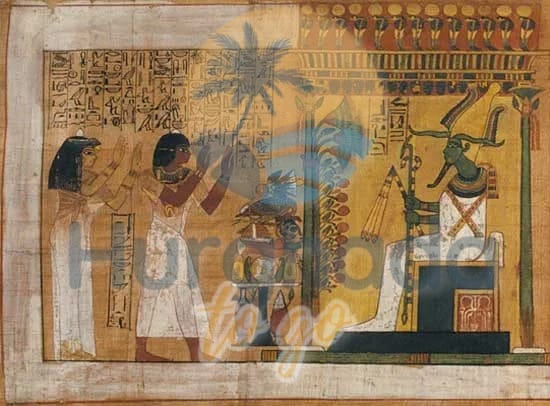
The deceased stands in the majestic Hall of Two Truths before Osiris (green-faced, mummiform, holding crook and flail). In the centre is the great balance scale.
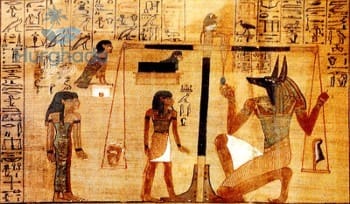
- On one side: the heart of the deceased (in a jar or directly on the pan)
- On the other side: the feather of Ma’at (truth, justice, cosmic order)
- Anubis (jackal-headed) adjusts or watches the scale
- Thoth (ibis-headed, palette and reed pen in hand) stands ready to write the verdict
- Ammit (“Devourer of the Dead”), the terrifying hybrid (crocodile head, lion forequarters, hippo rear) waits below the scale, hoping for a guilty heart to eat
- Above Osiris sit the 42 divine judges (sometimes named, sometimes just shown as seated deities)
The ritual in three parts
- The Negative Confession (Declaration of Innocence) The deceased addresses Osiris, then turns to each of the 42 judges in turn and denies having committed one specific sin assigned to that judge. Example lines (translated from the Papyrus of Ani): “Hail Strider, coming forth from Heliopolis: I have not committed wrongdoing.” “Hail Embracer-of-Flames, coming forth from Kher-aha: I have not stolen.” “Hail Bone-Breaker, coming forth from Heracleopolis: I have not killed people.” “Hail Eater-of-Shadows, coming forth from the caverns: I have not committed sodomy.” “Hail You-of-the-Darkness, coming forth from the darkness: I have not uttered lies.” (Full list has 42 denials – no ancient person was expected to be literally sinless; the speech is magical and performative.)
- Address to the Heart (Spell 30B – almost always paired with 125) The deceased speaks directly to their own heart on the scale: “O my heart of my mother! O my heart of my different ages! Do not stand up against me as a witness! Do not oppose me in the tribunal! Do not be hostile to me before the keeper of the balance!”
- The Weighing and Verdict If the heart balances perfectly with the feather → the deceased is declared maa-kheru (“true of voice” = justified). They are then led by Horus to Osiris and granted eternal life in the Field of Reeds. If the heart is heavier (burdened with sin) → Ammit devours it → second death (total annihilation).
Funerary reality vs. magical ideal
- In practice, the Egyptians rigged the system:
- Heart-scarab amulets (chapter 30B inscribed on the base) were placed over the heart with the plea “Do not testify against me.”
- Some papyri even show the scale already perfectly balanced or Anubis secretly pushing the pan down with his paw – magical cheating was allowed!
Best preserved / most beautiful versions of Spell 125 (you can look up high-resolution images)
| Papyrus / Owner | Why it’s special | Where to see it |
|---|---|---|
| Papyrus of Ani (c. 1250 BCE) | The gold standard – textbook scene used in every documentary | British Museum |
| Papyrus of Hunefer (c. 1300 BCE) | Unbelievably vivid colours, Ammit in bright red and blue | British Museum |
| Papyrus of Nakht (c. 1300 BCE) | Rare version where Thoth himself places the heart on the scale | British Museum |
| Papyrus of Qenna (discovered 2024) | Newly excavated, colours still brilliant after 3,400 years; Ammit has gold leaf | Grand Egyptian Museum (opening 2026) |
| Tomb of Sennedjem (Deir el-Medina) | Spell 125 painted on the wall instead of papyrus – same scene, monumental scale | Theban Tomb TT1 |
Modern pop-culture afterlife
Spell 125 is the direct inspiration for:
- The judgment scene in the 1999 movie The Mummy
- The weighing of hearts in Neil Gaiman’s American Gods and Rick Riordan’s Kane Chronicles
- Countless heavy-metal album covers and tattoo designs
Spell 30B The “Heart Scarab” Spell – the ancient Egyptian’s magical insurance policy against damnation
Official ancient title
“Spell for preventing the heart of a man from opposing him (or betraying him) in the realm of the dead.”
Core text (standard version, translated from the Papyrus of Ani and most heart scarabs)
O my heart of my mother! O my heart of my different forms! Do not stand up against me as a witness! Do not oppose me in the tribunal! Do not be hostile to me in the presence of the Keeper of the Balance! You are my ka which is in my body, the god Khnum who makes my limbs sound. Go forth to the happy place whereto we speed! Do not make my name stink to the courtiers who create men! Do not tell lies about me in the presence of the god! It is indeed good that you should hear: Let it be decreed that I am justified! Let the verdict be “True of Voice” before the Great God!
Physical object: the Heart Scarab
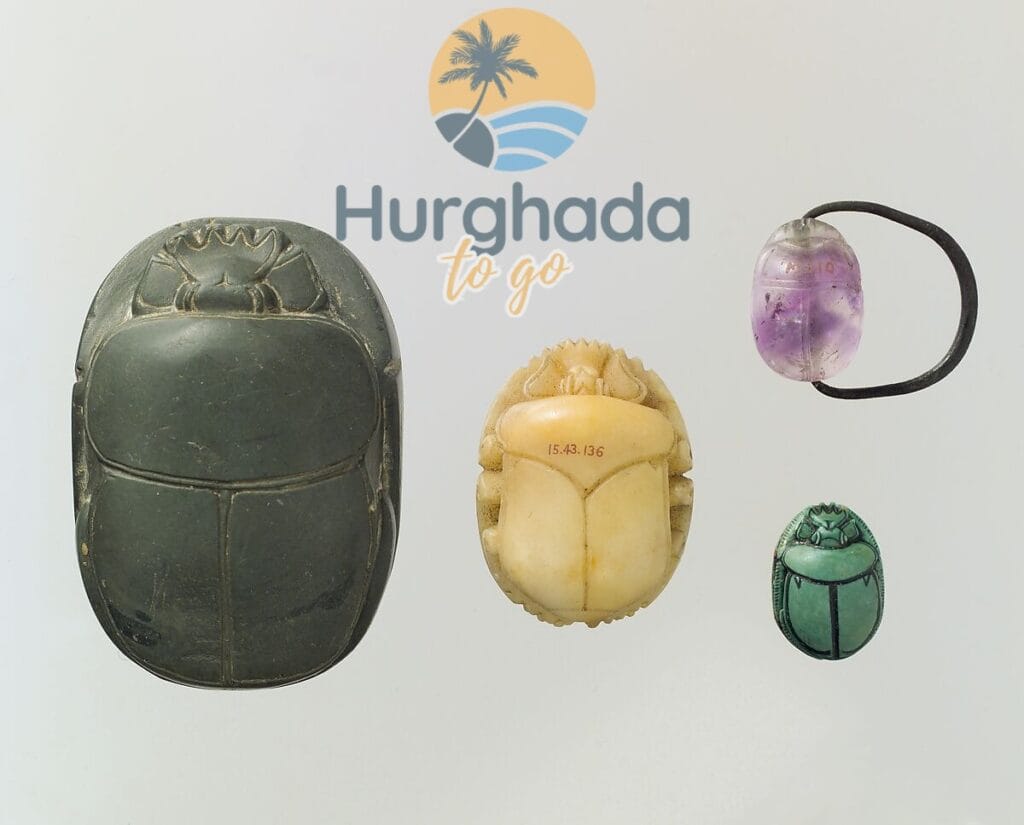
Spell 30B was almost never written in the papyrus scroll itself. Instead, the spell was engraved on the flat underside of a large scarab beetle made of stone, placed directly over the heart of the mummy (either on the chest or actually inserted inside the thoracic cavity after the real heart was removed).
Typical specifications of a classic heart scarab (New Kingdom – Late Period):
| Feature | Details |
|---|---|
| Material | Dark green or black basalt, green jasper, serpentine, or steatite; sometimes glazed faience |
| Size | Large: 4–10 cm long (much bigger than jewellery scarabs) |
| Shape | Realistic scarab beetle with detailed legs and wing cases |
| Base | Flat, engraved with Spell 30B in neat hieroglyphs (7–12 horizontal lines) |
| Chapter heading | Almost always begins with a tiny human-headed bird (the ba-soul) |
| Suspension | Pierced lengthwise so it could be sewn or tied onto the mummy bandages |
| Extra protection | Many have the name and titles of the owner added at the end |
Famous Heart Scarabs You Can Still See Today
| Owner | Date | Material & Size | Special Features | Location |
|---|---|---|---|---|
| King Sobekemsaf II | 17th Dynasty | Black serpentine, 8 cm | Royal uraeus on the beetle’s head | British Museum |
| Queen Tiye (wife of Amenhotep III) | 18th Dynasty | Green jasper, 6.5 cm | Gold cloisonné wings added | Ägyptisches Museum, Berlin |
| General Djehuty (the “Trojan Horse” general) | Thutmose III | Green stone, 7 cm | Discovered still inside his mummy in Saqqara 2006 | Cairo Museum |
| Hatnofer (mother of Senenmut) | Hatshepsut period | Huge (10 cm) black stone | One of the largest known | Metropolitan Museum, New York |
| Unknown woman (2024 Tuna el-Gebel) | 18th Dynasty | Green jasper with gold | Found still sewn onto bandages, perfect condition | Grand Egyptian Museum (in preparation) |
Why the scarab shape?
The scarab beetle (Scarabaeus sacer) rolls balls of dung and lays its eggs in them → the Egyptians saw this as a perfect metaphor for:
- Self-creation
- Rebirth
- The sun god Khepri rolling the sun across the sky every morning So the scarab itself was already a resurrection symbol before the spell was even added.
Magical “hacks” built into heart scarabs
Egyptians did not trust blind justice. They stacked the deck:
- The scarab physically silences the heart – it’s literally gagged by a giant stone beetle.
- Some scarabs were often wrapped in gold leaf or had gold wings – gold was the flesh of the gods and therefore indestructible.
- Some late examples (26th Dynasty and later) add extra lines like: “Even if I did commit these sins, do not mention them!”
- The name of the owner is often written in a cartouche or surrounded by protective signs (ankh, djed, was) to make the spell owner-specific.
What happened if the spell failed?
If the heart still “spoke up” and outweighed the feather, the heart scarab had served its purpose anyway – the heart was now trapped inside stone and gold and could no longer be devoured by Ammit. A final fail-safe.
Spell 30B heart scarabs are one of the most common elite funerary objects to survive intact because they were too large and hard to be robbed in antiquity. Today more than 300 well-preserved examples are known in museums worldwide.