
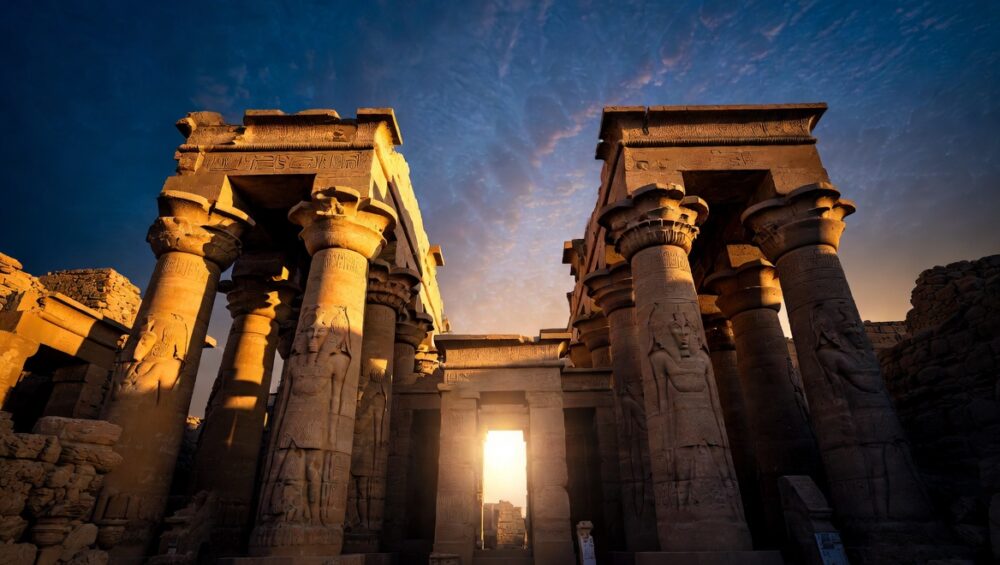
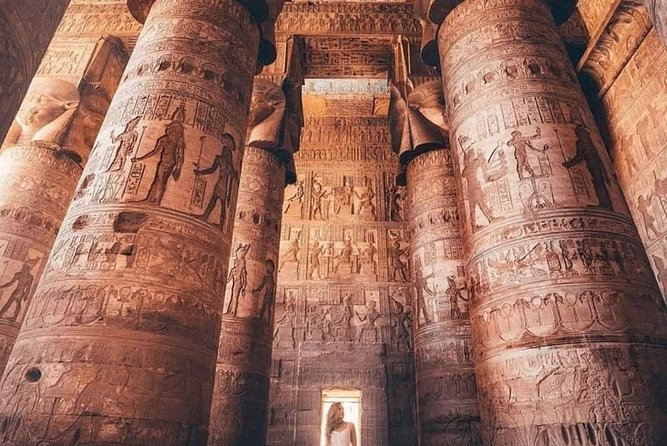
The breathtaking Hypostyle Hall of Dandara Temple, with its iconic Hathor-headed columns and celestial ceiling.
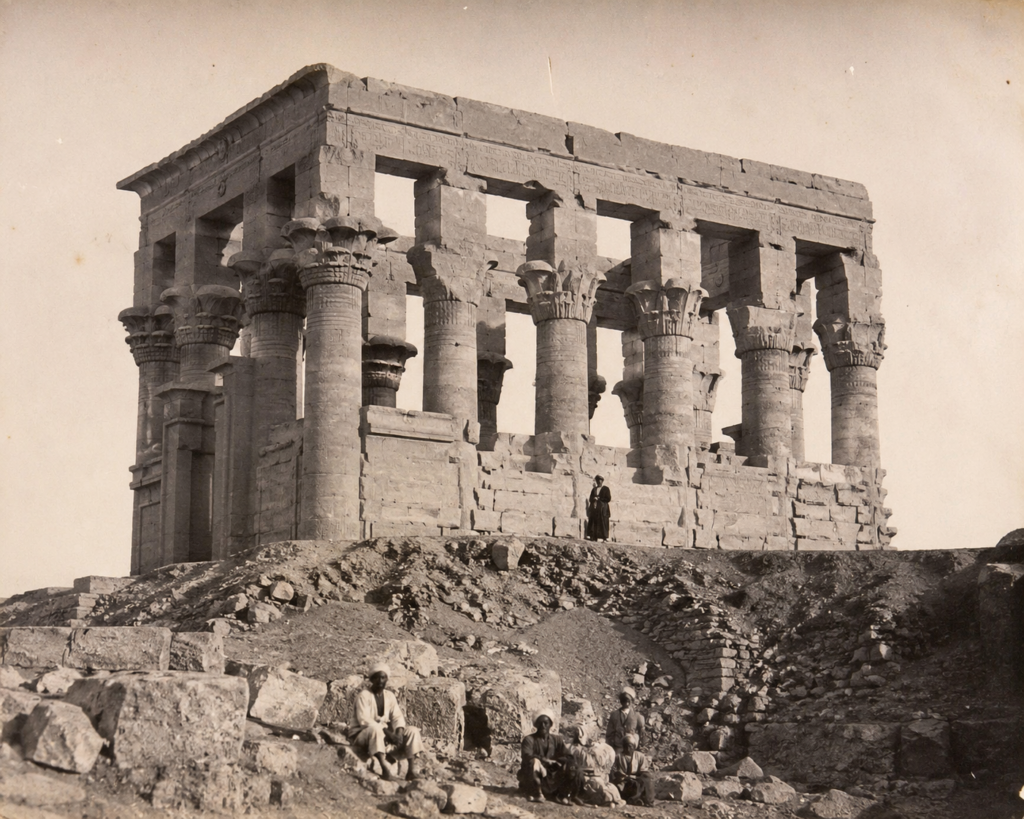
Introduction: Why Dandara Temple Deserves a Place on Every Egypt Itinerary
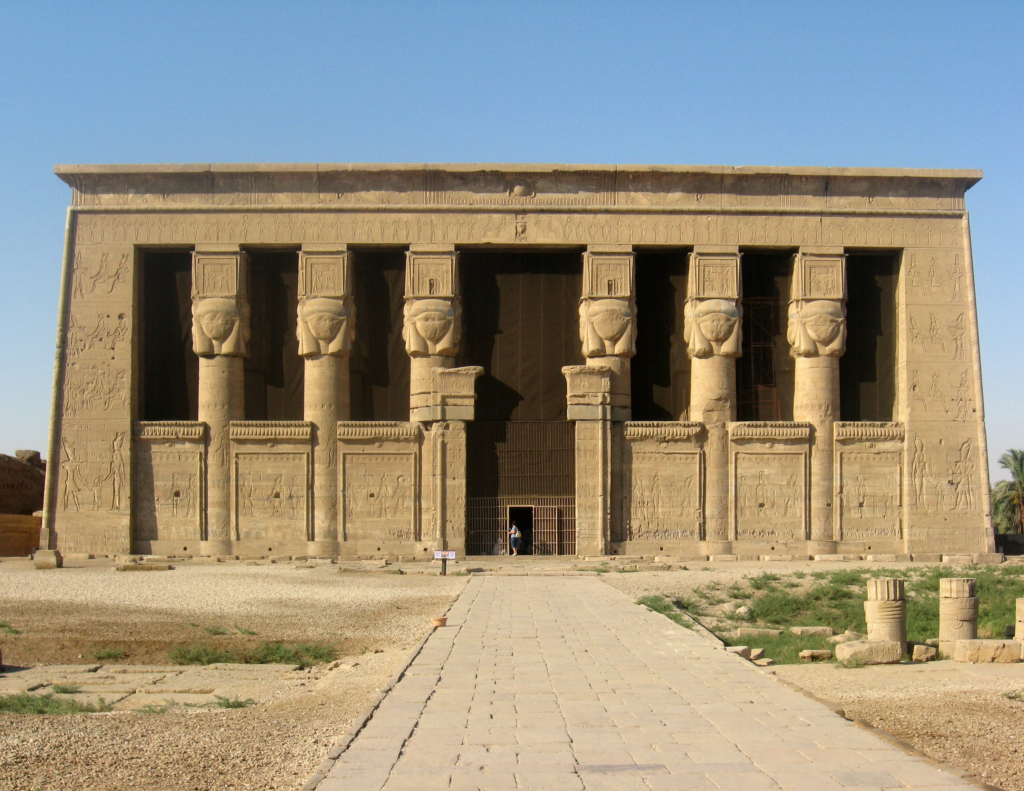
Dandara Temple stands almost entirely intact — a rare survivor among Egypt’s ancient sanctuaries.
There are temples in Egypt that attract enormous crowds — Karnak, Luxor Temple, the Valley of the Kings — and then there is Dandara Temple, a place that most travelers overlook entirely. Yet those who make the journey consistently rank it among the most breathtaking ancient sites they have ever seen. It is a temple that whispers rather than shouts, and its quiet majesty leaves visitors permanently transformed.
Dandara Temple, also spelled Dendera, is a vast religious complex situated on the west bank of the Nile in Upper Egypt, just north of the city of Qena. It is home to the most complete and best-preserved temple in the entire country: the Temple of Hathor, a magnificent structure dedicated to the goddess of love, music, beauty, and motherhood. Unlike many Egyptian monuments that have been reduced to fragments of their former glory, Dandara’s main temple stands almost entirely intact.
Its roof is still in place. Its original ceilings retain vivid celestial blue pigments. Its carved reliefs are so sharply detailed that they look as though they were cut into stone just a few centuries ago — not thousands of years in the past.
“To stand inside the Temple of Hathor at Dandara is to step into a moment when the ancient world is no longer ancient — the colors blaze, the gods watch, and time itself seems to pause.”
Yet for all its wonders, Dandara Temple remains off the standard tourist trail. It is rarely included in the package tours that shuttle visitors from Cairo to Luxor and Aswan. It does not appear on the glossy brochures that fill hotel lobbies. And that, paradoxically, is one of its greatest gifts: the chance to walk through one of the most extraordinary sacred spaces ever constructed by the human hand, in something close to solitude.
This complete guide covers everything you need to know about Dandara Temple — its deep history, its stunning architecture, its mysterious features, its practical travel logistics, and the insider tips that will help you make the most of your unforgettable visit.
💡 Did You Know?
The Temple of Hathor at Dandara is one of the only ancient Egyptian temples in the country where the original roof is still completely intact — allowing visitors to see celestial ceiling paintings exactly as ancient priests saw them more than 2,000 years ago.
The History of Dandara Temple: From Pre-Dynastic Origins to Roman Rule
Hieroglyphic inscriptions trace Dandara’s sacred role through more than 4,000 years of devotion.
Ancient Roots Beneath the Present Temple
The site of Dandara has been considered sacred for far longer than the existing structure suggests. The town itself, known in ancient times as Tentyris or Iunet, was one of the most important religious centers in all of Egypt. It served as the capital of the sixth nome (administrative district) of Upper Egypt, and its spiritual significance dates back to the very earliest periods of Egyptian civilization.
Archaeological evidence confirms that religious activity at Dandara stretches at least as far back as the Old Kingdom — specifically the Sixth Dynasty, around 2345–2181 BCE. Successive pharaohs over many centuries recognized the sanctity of the site, and it is believed that earlier temples were constructed, demolished, and rebuilt repeatedly in the same location. The present complex sits atop the foundations of these earlier buildings — a palimpsest of devotion stretching across millennia.
The inscriptions within the current Dandara Temple itself reference older structures that preceded it. One text mentions that temple plans were discovered during the reign of Pepi I of the Sixth Dynasty, and that construction on that version of the sanctuary followed designs from the time of the god-king Thoth — suggesting Dandara was regarded as a site of primordial sanctity rooted in myth rather than mere history.
⏳ Timeline of Dandara Temple
Sixth Dynasty — earliest known religious activity at the site under Pepi I.
Thirtieth Dynasty — older birth house (mammisi) constructed.
Construction of the present Temple of Hathor begins under Ptolemy XII Auletes, father of Cleopatra VII.
Egypt becomes a Roman province; building work continues under Augustus.
Emperor Tiberius adds the Great Hypostyle Hall.
The original Dandara Zodiac is removed by French archaeologists and taken to the Louvre Museum in Paris.
The Ptolemaic Period: Building the Temple We See Today
The spectacular structure that visitors explore today was built primarily during the Ptolemaic period — the era when Egypt was ruled by a dynasty of Greek kings descended from Ptolemy I, one of Alexander the Great’s generals. Construction began in earnest around 54 BCE during the reign of Ptolemy XII Auletes, who was also the father of the famous Cleopatra VII. Work continued through Cleopatra’s own reign and extended into the Roman imperial era.
Despite its Greco-Roman origins, the Temple of Hathor at Dandara is thoroughly Egyptian in style, symbolism, and religious character. The Ptolemaic rulers were careful to present themselves as legitimate Egyptian pharaohs rather than foreign kings, and they expressed this through monumental architecture that faithfully followed ancient Pharaonic traditions. The result is a temple that looks, feels, and functions as an ancient Egyptian sacred space, even though it was built long after the height of the Pharaonic civilization.
Roman Contributions and Completion
After Egypt became a Roman province following the defeat of Mark Antony and Cleopatra VII in 30 BCE, construction at Dandara continued under Roman emperors who similarly presented themselves on the temple walls as traditional pharaohs making offerings to the Egyptian gods. The great Hypostyle Hall, which forms the imposing front section of the Temple of Hathor, was added by the Emperor Tiberius during the first century CE. Augustus and other emperors also contributed reliefs and decorative elements.
The Romans completed the temple complex, and for a period, Dandara continued to function as an active place of worship. The site eventually fell into disuse following the spread of Christianity through Egypt, and a Coptic Christian church was later built within the precinct walls — its presence a visible reminder of the transition between religious eras that swept through the ancient world.
The Dandara Temple Complex: What to See and Explore
The famous Hathor-headed columns — serene faces with the ears of a sacred cow.
The Dandara complex is enormous, covering approximately 40,000 square meters and surrounded by a formidable mudbrick enclosure wall. Within this perimeter lie multiple structures, each with its own history and significance. The centerpiece is, of course, the Temple of Hathor — but the complex rewards thorough exploration.
The Temple of Hathor: The Crown Jewel
The Temple of Hathor is the building that will leave you speechless. From the outside, its façade is imposing: a massive stone structure fronted by the Hypostyle Hall, with six enormous columns bearing the characteristic face of the goddess Hathor — a serene human face with the ears of a cow, her sacred animal. These Hathor-headed columns are among the most distinctive architectural elements in all of ancient Egypt, and seeing them in person is an unforgettable experience.
The Great Hypostyle Hall
Step through the entrance and you enter the Great Hypostyle Hall — the first and largest interior chamber of the Dandara Temple. This hall contains eighteen monumental columns arranged in three rows, each rising approximately fifteen meters to meet the ceiling above. Every column capital features the four-faced image of Hathor, and the capitals cleverly mimic the sistrum — a sacred musical rattle that was one of Hathor’s primary symbols.
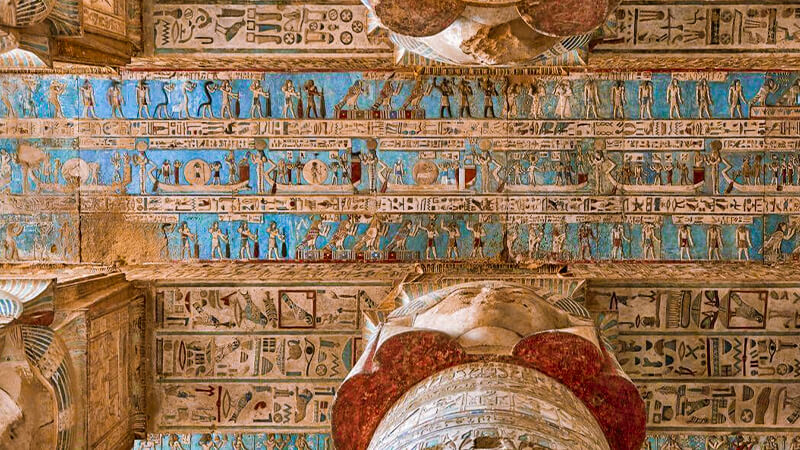
Look up. The ceiling of the Hypostyle Hall is one of the most awe-inspiring surfaces in the ancient world. Against a deep celestial blue background, the sky goddess Nut stretches across the width of the ceiling, her body arching over the universe. Around her are painted astronomical depictions — zodiac symbols, deities, stars, and celestial bodies — rendered in colors so vivid they seem almost newly applied. In many Egyptian temples, ceilings have crumbled or faded entirely. At Dandara, this masterpiece has survived intact.
The walls of the hall are covered in elaborate carved reliefs showing rituals, processions, divine offerings, and mythological scenes. Roman emperors appear here in the guise of Egyptian pharaohs, depicted in the traditional pose of a king presenting offerings to the gods. It is a fascinating fusion of two civilizations united by the power of religious imagery.
The Inner Sanctuary and Sacred Chambers
Beyond the Hypostyle Hall lies a second, smaller hall with six additional columns. From there, a sequence of increasingly sacred inner chambers leads deeper into the temple. These rooms grow progressively darker and more intimate as you move toward the heart of the building — a deliberate architectural technique meant to intensify the sense of approaching the divine. The innermost sanctuary, known as the naos, was the most sacred space in the temple — the room where the cult statue of Hathor was housed and where only the highest priests could enter.
The walls throughout these inner chambers are covered in detailed carvings that narrate mythological stories, priestly rituals, and scenes from the divine life of Hathor. The craftsmanship is extraordinary — faces, figures, hieroglyphs, and decorative motifs pressed into the stone with meticulous precision. Some sections retain their original paint, adding another layer of richness to an already spectacular interior.
🏛 Quick Facts about Dandara Temple
West bank of the Nile, near Qena — about 60–70 km north of Luxor.
Approximately 40,000 square meters surrounded by a mudbrick enclosure wall.
Hathor — goddess of love, music, beauty, motherhood, and the sky.
Daily, approximately 7:00 AM – 5:00 PM (seasonal variations apply).
The Famous Dandara Zodiac
A reproduction of the legendary Dandara Zodiac — a celestial map merging Egyptian and Hellenistic astrology.
Of all the remarkable features of Dandara Temple, perhaps none has captured the imagination of scholars, historians, and travelers more than the Dandara Zodiac. This circular astronomical ceiling relief, originally located in one of the rooftop chapels of the Temple of Hathor, depicts the Egyptian sky in a form that blends ancient Egyptian cosmology with Hellenistic astrological symbolism.
The zodiac shows the twelve signs of the zodiac as they were known in the Greco-Roman world, alongside Egyptian constellations and deities — a remarkable synthesis of two traditions. In the center of the composition, the sky goddess Nut once again appears, surrounded by a procession of celestial figures moving in an eternal cosmic dance.
“The Dandara Zodiac is more than a star map — it is a vision of how ancient Egyptians understood the eternal harmony between heaven and earth.”
The original Dandara Zodiac was removed by French archaeologists in 1820 and taken to Paris, where it now resides in the Louvre Museum. In its place at Dandara, visitors can examine a high-quality replica that conveys the complexity and beauty of the original. Scholars continue to debate whether this ancient map served primarily religious, agricultural, or astrological purposes — or all three simultaneously, which seems most likely given the holistic nature of ancient Egyptian knowledge.
The Underground Crypts & the Mysterious “Light Bulb”
The mysterious “Dandara Light Bulb” relief — a cosmological scene that continues to fascinate.
One of the most extraordinary and least expected features of Dandara Temple is the system of underground crypts hidden beneath the temple floor. These are not large, dramatic underground chambers like the tombs in the Valley of the Kings. They are narrow, low-ceilinged passages accessible through hidden openings concealed behind sliding stone slabs and secret doors.
The crypts at Dandara served as secure storage spaces for the temple’s most sacred objects: cult statues of the deities, ceremonial tools used in religious rituals, precious offerings, and sacred papyri containing the temple’s most important religious texts. The sheer effort invested in concealing and protecting these spaces reflects how critically important these objects were to the temple’s function.
The crypts are also home to one of the most debated images in the entire complex: the famous Dandara “Light Bulb” relief. In one of the crypt corridors, a carved scene depicts an elongated oval shape, somewhat resembling a light bulb or elongated vessel, from which a serpent emerges. Beneath it, priests appear to be manipulating or interacting with the object. This image has attracted enormous attention from alternative history enthusiasts who suggest it depicts ancient Egyptian knowledge of electricity.
However, Egyptologists have consistently and convincingly explained the image as a purely mythological scene: the oval shape represents the sky (or a lotus flower), while the serpent is the god Harsomtus, a form of Horus associated with the primeval moment of creation. The image is an illustration of cosmological myth, not a technical diagram. The fascination it generates, though, is entirely understandable — it is a genuinely mysterious and unusual composition.
💡 Did You Know?
There are 12 known crypts beneath Dandara Temple. Only a few are accessible to visitors today, but each was carefully designed with hidden entrances, narrow passageways, and concealed niches to protect the temple’s most precious treasures from thieves and invaders.
The Rooftop Chapels & the Sacred Mammisi
The rooftop of Dandara Temple offers panoramic views and houses two sacred chapels.
Climbing to the Roof of Heaven
A staircase inside the temple — decorated with relief carvings of priests carrying sacred objects in procession — leads to the rooftop of the Temple of Hathor. This elevated space, open to the sky and offering views across the surrounding landscape toward the Nile, contains several small chapels that played an important role in the temple’s annual ritual calendar.
Most significant is the Chapel of Osiris, located in the eastern section of the roof. Its walls are decorated with scenes related to the death and resurrection of Osiris, the god of the afterlife and the divine counterpart to Hathor in certain theological traditions. This is the chapel where the famous Dandara Zodiac was originally installed.
On the western side of the roof stands the Chapel of Hathor, where one of the most important annual rituals took place. During the New Year celebration, the cult statue of Hathor was carried up the staircase and placed in this rooftop chapel so that the first rays of the New Year’s sun could fall upon the goddess’s face — spiritually recharging her divine power in a ceremony that merged religion, astronomy, and royal ideology into a single magnificent act.
The Sanctuary of the Birth House (Mammisi)
In front of the main Dandara Temple stands the birth house, known in Egyptology by the Coptic-derived term mammisi. Birth houses were a standard feature of Ptolemaic temple complexes, used to celebrate the divine birth of the god who was worshipped at the site — in Dandara’s case, this was Ihy, the young son of Hathor and Horus, depicted as a child god playing the sistrum.
There are actually two birth houses at Dandara: an older one built during the Thirtieth Dynasty, and a newer one constructed during the Roman period. The Roman birth house is particularly well preserved and features lovely carved reliefs illustrating the story of Ihy’s divine conception and birth, with scenes of nursing, celebration, and the presentation of the infant god to the divine community.
The Temple of Isis and the Sacred Lake
Behind the main Temple of Hathor lies a smaller Temple of Isis, built during the reign of the Emperor Augustus. This structure is less elaborate than the main temple but retains significant carved reliefs connecting it to the mythology of Isis, one of the most widely worshipped goddesses in the ancient world.
Within the complex there is also a sacred lake — a feature common to major Egyptian temple complexes — used for ritual purifications. Though no longer filled with water, the outline of the lake is clearly visible, and it adds to the overall sense of the complex as a self-contained sacred city.
⚡ Ready to Walk Through Dandara Temple?
Let our expert local guides take you inside the most preserved temple in Egypt — with hassle-free transfers from Hurghada or Luxor.
The Cleopatra Relief: A Unique Historical Treasure
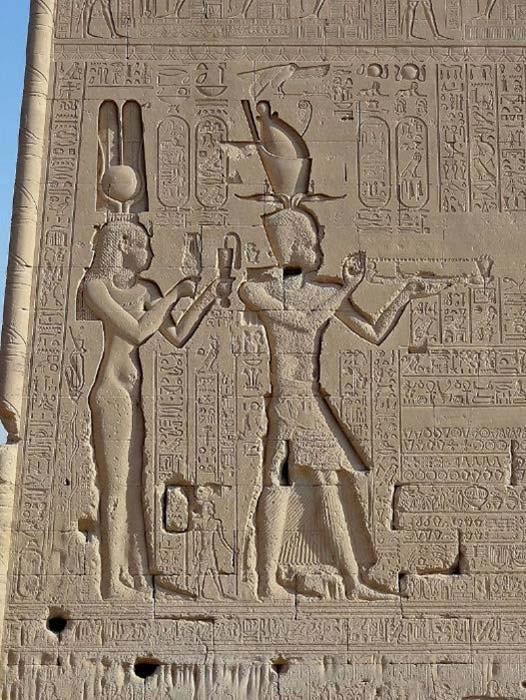
Cleopatra VII and her son Caesarion presenting offerings to Hathor — a rare authentic Egyptian image of the legendary queen.
On the southern exterior wall of the Temple of Hathor, visitors will find one of the most historically significant carvings anywhere in Egypt: what is believed to be the only surviving large-scale image of Cleopatra VII in an Egyptian temple context. She appears alongside her son Caesarion — the child she bore with Julius Caesar — both making offerings to the goddess Hathor.
This relief is historically extraordinary for several reasons. Cleopatra VII is one of the most famous figures in all of ancient history, yet authentic portraits of her are remarkably rare. The Dandara carving, though damaged, offers a rare glimpse of how the queen presented herself in the context of Egyptian religious art rather than in the Greek or Roman artistic style seen on coins and other artifacts. She is shown wearing Egyptian royal regalia, fully embracing the Pharaonic tradition she sought to embody as the last ruler of Ptolemaic Egypt.
“On the walls of Dandara, Cleopatra is not Hollywood’s seductress. She is a pharaoh — presenting offerings, claiming Egypt’s eternal sky as her own.”
Dandara Temple and the Goddess Hathor
Hathor — goddess of love, music, joy, and the sky — reigned at Dandara for over three thousand years.
To fully appreciate Dandara Temple, it helps to understand the goddess to whom it is dedicated. Hathor was one of the most beloved and widely worshipped deities in the entire Egyptian pantheon, revered for approximately three thousand years across virtually every period of Egyptian history.
Hathor embodied a remarkable range of divine qualities: she was the goddess of love, beauty, music, dance, joy, motherhood, fertility, and the sky. She was associated with the sun — sometimes depicted as the eye of Ra, the sun god — and with the Milky Way, described in ancient texts as the milk of a celestial cow. Her symbols included the sistrum (a musical rattle), the menat necklace, and the cow, an animal she was sometimes depicted as directly.
As a goddess of music and celebration, Hathor was patron of festivals, and the annual feast of Hathor at Dandara was one of the great religious celebrations of the ancient Egyptian calendar. Pilgrims traveled from across the country to participate, and the temple served not just as a place of worship but as a center of healing, music, and communal spiritual renewal.
Hathor’s connection to love and beauty also made Dandara a place where people came seeking blessings for romantic relationships, fertility, and family. The temple functioned, in a sense, as both a divine hospital and a center of cultural life — not merely a place of solemn ceremony, but a living institution embedded in the rhythms of daily Egyptian existence.
Architecture and Artistic Style at Dandara
The Temple of Hathor at Dandara is a masterwork of late Egyptian temple architecture, constructed according to the established Pharaonic formula while incorporating subtle Greek and Roman influences. Understanding its architectural logic deepens the experience of visiting it enormously.
Egyptian temples were designed to represent the universe in miniature, with specific zones corresponding to different levels of sacred reality. The outermost areas — the entrance pylons, open courts, and the Hypostyle Hall — corresponded to the visible, accessible world. As one moved deeper into the temple, the ceilings lowered, the chambers narrowed, and the floor gradually rose, reflecting the journey from the ordinary world toward the divine inner sanctum where the god resided.
At Dandara Temple, this spatial theology is executed with great refinement. The transition from the grand public space of the Hypostyle Hall to the intimate inner sanctuary is palpable — you feel the change in atmosphere, the shift from grandeur to mystery, from openness to enclosure. It is one of the best places in Egypt to experience the full logic of ancient Egyptian sacred architecture.
The artistic quality of the carvings throughout the complex is exceptional. The relief work is deeply and precisely cut, with extraordinary attention to detail in the rendering of faces, clothing, headdresses, and hieroglyphic inscriptions. The Ptolemaic and Roman periods were not in any sense a decline in Egyptian artistic achievement — if anything, the sheer quantity and quality of carved surface at Dandara represents one of the most ambitious artistic programs in Egyptian history.
Practical Information: How to Visit Dandara Temple
The journey to Dandara passes through palm-fringed villages and rich agricultural landscapes along the Nile.
Location and Getting There
Dandara Temple is located approximately 60 to 70 kilometers north of Luxor, near the city of Qena in Upper Egypt. It sits on the west bank of the Nile, slightly removed from the modern town of Dandara.
The most common and convenient way to reach the temple from Luxor is by private car or taxi, a journey of roughly one hour. Many tour operators in Luxor offer day trips to Dandara, frequently combined with a visit to the Temple of Seti I at Abydos further north. These combined tours make for a full but rewarding day, spending approximately two hours at each temple complex.
For those traveling from Hurghada on the Red Sea coast, Dandara Temple can be reached by crossing to the Nile Valley via the desert highway — a journey of roughly three to four hours depending on traffic. Several Hurghada tour operators run day trips to Dandara, making it an accessible excursion for beach holiday visitors who want to experience the cultural riches of the Nile Valley without undertaking a full Egypt tour. You can explore our curated Egypt tour packages to find the right combination for your travel style.
Dandara Temple Visitor Information at a Glance
Best Time to Visit Dandara Temple
The best time of day to visit Dandara is early morning, as soon as the gates open. The light at dawn is beautiful, the temperature is cooler, and the site is at its most peaceful before tour groups begin arriving from Luxor. The interiors of the temple are dark at any time of day, so morning is particularly good for exterior photography.
In terms of the broader calendar, the cooler months from October through March are the most comfortable for exploring any outdoor archaeological site in Egypt. Temperatures in Upper Egypt during summer can be extreme, with midday heat well above 40°C. If you must visit during the summer months, an early start and a late afternoon return are strongly advisable.
Tips for Getting the Most from Your Visit
Combining Dandara with Abydos: The Perfect Day Trip
The painted reliefs of Abydos — the perfect complement to a Dandara Temple visit.
For travelers with a genuine interest in ancient Egypt, combining a visit to Dandara with the Temple of Seti I at Abydos is one of the most rewarding day trips available from Luxor. These two sites, separated by about 100 kilometers, together offer an unparalleled immersion in Egyptian religious history and artistic achievement.
Abydos was one of the holiest cities in ancient Egypt — the mythological burial place of Osiris, god of the underworld and resurrection. The Temple of Seti I, built during the Nineteenth Dynasty around 1279 BCE and completed by Ramesses II, is among the finest examples of New Kingdom temple art anywhere in Egypt. Its painted reliefs, in particular, are extraordinary — colors that have survived three thousand years in conditions of almost perfect preservation, vivid and immediate in a way that takes the breath away.
Most day trips from Luxor that combine both temples start at Abydos (the further destination) in the morning and visit Dandara Temple in the afternoon on the return journey. The logistics work well, and the two temples complement each other beautifully: Abydos represents the most glorious period of Pharaonic power, while Dandara shows the remarkable vitality of Egyptian religious culture during the later Ptolemaic and Roman eras.
The driving route between Luxor, Abydos, and Dandara passes through agricultural landscapes alongside the Nile — green fields, date palms, mud-brick villages, and the daily rhythms of rural Egyptian life. This landscape itself is part of the experience, a reminder that the ancient world these temples represent grew from the same fertile soil and riverine rhythms that still define life in the Nile Valley today.
Dandara Temple as a Living Center of Healing and Joy
To visit Dandara Temple is to encounter not just an extraordinary building but an entire civilization’s relationship with the sacred. The Temple of Hathor was not merely a museum of ancient beliefs — it was a living institution, a functioning center of religious, social, and cultural life for the community it served.
Pilgrims came to Dandara from across Egypt seeking healing, blessing, and divine intercourse. The temple hosted festivals that combined religious ceremony with music, dance, feasting, and communal celebration in ways that reflected Hathor’s nature as a goddess of joy and abundance. Priests conducted elaborate daily rituals to care for the goddess’s cult statue — washing it, dressing it, presenting it with offerings of food and flowers — maintaining the divine presence that animated the sacred space.
The healing dimension of Dandara deserves particular attention. The ancient Egyptians believed that the goddess Hathor, through the medium of her temple, could cure illness and affliction. The complex functioned in part as a sanatorium, with patients sleeping within the sacred precinct in the hope of receiving divine healing visions during the night. This practice of incubation, as scholars call it, was also known in Greek healing temples, and Dandara may represent an important point of connection between Egyptian and Greek medical and spiritual traditions.
“When you stand in the Hypostyle Hall and look up at that painted ceiling, you are standing in a space once filled with song, sistrums, incense, and the joyful presence of thousands of worshippers.”
Why Dandara Temple Is Still Underrated
It is genuinely puzzling that Dandara Temple remains so little known outside of Egypt enthusiasts and dedicated ancient history travelers. By almost any measure, it should be considered one of the must-see wonders of the ancient world.
It is better preserved than most temples in Greece or Rome. Its painted ceilings are more complete than anything surviving in the Valley of the Kings. Its architectural integrity gives visitors a clearer picture of what an ancient Egyptian temple actually felt and functioned like than almost any other site in the country. And yet it is consistently left off the standard tourist itinerary, overshadowed by sites that in some respects are less spectacular — simply because they are more famous.
Part of the reason is logistical: Dandara requires a deliberate journey north from Luxor rather than fitting neatly into the standard Luxor East Bank or West Bank day-trip circuit. Part of it is the peculiar way that fame feeds itself — famous sites attract visitors because they are famous, and their fame grows because they attract visitors, while extraordinary places outside this loop remain undiscovered.
Whatever the reason, Dandara’s relative obscurity is a gift to those who do make the journey. To walk through the great Hypostyle Hall with only a handful of other visitors, to climb to the rooftop and look out across the Nile Valley in near-solitude, to descend into the crypts and examine the carved reliefs by torchlight in complete quiet — these are experiences of extraordinary rarity and power in the modern world of mass tourism.
Dandara Temple in the Context of Egypt’s Spiritual Heritage
The Dandara Temple Complex stands as a testament to one of the most remarkable characteristics of ancient Egyptian civilization: its extraordinary continuity. For more than three thousand years, the site of Dandara was recognized as sacred. Pharaohs of the Old Kingdom, the Middle Kingdom, the New Kingdom, the Late Period, the Ptolemaic era, and the Roman Empire all contributed to its sanctity, its architecture, or its artistic program. The Coptic Christians who later built a church within its walls were, in their own way, continuing the same recognition of this place as spiritually significant.
This continuity is deeply moving to contemplate. The world has changed beyond recognition since the first priests performed their rituals on this spot four thousand years ago. Empires have risen and fallen. Languages have been born and gone extinct. Yet the great Temple of Hathor still stands, its columns still upright, its ceilings still painted with the stars of the ancient sky, its walls still speaking in carved stone about the gods and the humans who sought their favor.
To visit Dandara Temple is to step into this river of time and feel, briefly but powerfully, your own connection to the deep human past — to the longing for beauty, for meaning, for the divine, that has animated human beings since the very beginning.
Frequently Asked Questions about Dandara Temple
Inner chambers of Dandara Temple, where carved reliefs still hold their ancient pigments.
Where exactly is Dandara Temple located?
Dandara Temple is located on the west bank of the Nile, near the city of Qena in Upper Egypt — approximately 60–70 km north of Luxor and roughly 290 km from Hurghada via the desert highway.
Can I visit Dandara Temple as a day trip from Hurghada?
Yes. Several Hurghada-based tour operators run organized day trips to Dandara Temple, often combined with Luxor or Abydos. The journey takes 3–4 hours each way by private car, so an early start is essential.
How long should I plan to spend at Dandara Temple?
Allow at least 2–3 hours to fully appreciate the Hypostyle Hall, inner chambers, crypts, rooftop chapels, and the surrounding complex including the Mammisi and Temple of Isis.
Is the original Dandara Zodiac still at the temple?
No. The original Dandara Zodiac was removed by French archaeologists in 1820 and is now displayed at the Louvre Museum in Paris. A high-quality replica is on display at the temple in its original location.
Can I visit the underground crypts at Dandara?
Yes — some of the crypts are open to visitors. The passages are narrow and dim, so bring a flashlight (or use your phone torch) and be prepared to crouch through low openings to see the famous reliefs.
Is the “Dandara Light Bulb” really evidence of ancient electricity?
No. Egyptologists agree the carving depicts a mythological scene featuring the god Harsomtus emerging from a lotus blossom. The image represents creation cosmology, not technology, though it remains one of the most fascinating reliefs in the temple.
When is the best time to visit Dandara Temple?
Early morning is ideal for cooler temperatures and fewer crowds. The cooler months from October through March offer the most comfortable weather for exploring this open-air site in Upper Egypt.
Should I hire a guide for Dandara Temple?
Absolutely. A knowledgeable Egyptologist guide will transform your visit by decoding hieroglyphs, explaining the mythology behind the carvings, and revealing details you would otherwise miss entirely.
Is photography allowed inside Dandara Temple?
Photography is generally permitted in most areas of the complex. Some restrictions may apply — always check with on-site staff and respect any signs prohibiting flash or photography in specific zones.
Final Thoughts: Don’t Miss Dandara Temple
If you are planning a trip to Egypt and your itinerary currently does not include Dandara Temple — add it. If you are based in Luxor or Hurghada and looking for an excursion that will genuinely astonish you, Dandara Temple is it.
This is a place that changes how you think about ancient Egypt. It is not ruins — it is a temple, still standing, still magnificent, still capable of producing genuine awe in those who walk through its doors. The Hypostyle Hall, the painted ceilings, the crypts, the rooftop chapels, the Cleopatra relief, the astronomical zodiac — together they constitute one of the most complete and extraordinary experiences available anywhere in the ancient world.
Go to Dandara Temple. Hire a guide. Bring a torch. Allow yourself time. And prepare to be astonished.
Discover Dandara Temple With Us
From private guided day trips to multi-stop Egypt adventures, Hurghada To Go offers seamless tours with expert Egyptologists, comfortable transfers, and unforgettable experiences. Book today and let us plan your perfect journey through ancient Egypt.
✍ About the Author
Hurghada To Go Editorial Team — Egypt travel specialists offering guided temple tours, private excursions, and curated experiences across Hurghada, Luxor, Cairo, and Aswan. Our writers combine local expertise with deep historical research to bring ancient Egypt to life for modern travelers.
Explore more articles in our Code of Egyptian Civilization series.
📧 Join Our Egypt Travel Insider Newsletter
Get hidden gems, exclusive itineraries, and travel tips delivered directly to your inbox.
🌍 Follow Hurghada To Go
Stay connected for daily Egypt travel inspiration: